Baraat Outfit Ideas for Women: Dance-Friendly Looks
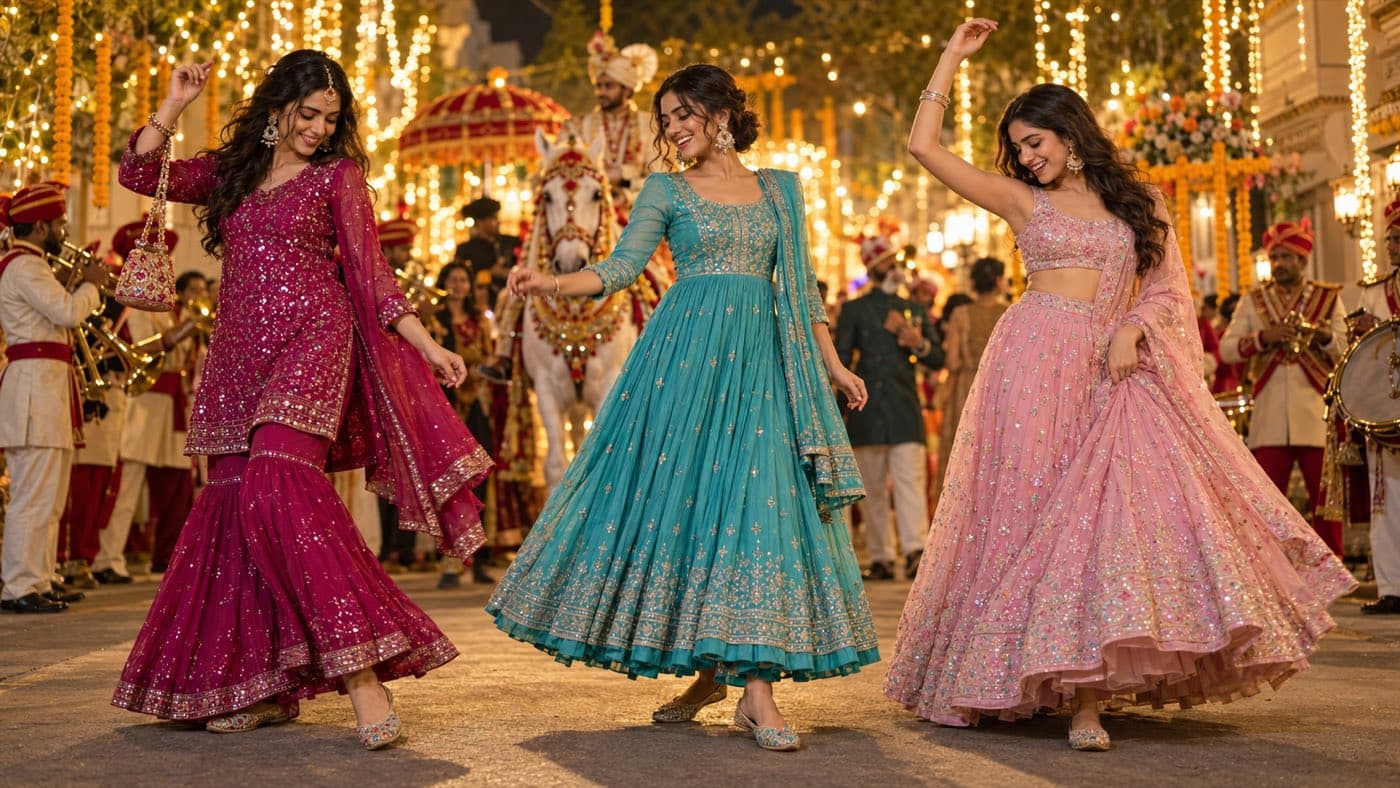
What to wear to a baraat: sharara sets, flared anarkalis, light lehengas and festive co-ords you can dance in, with the colours, shoes, dupatta tricks and bags that work.
For a baraat, wear something you can dance in for an hour on your feet: a sharara set, a flared anarkali or a light lehenga in silk blend, organza or georgette, in a bright colour that is not bridal red. Keep the dupatta pinned, the jewellery light, the shoes flat or block-heeled, and the bag small enough to wear on your wrist. The baraat is a moving, outdoor, dancing event, so choose comfort and movement first and sparkle second.
Key takeaways
- A sharara set is the easiest baraat outfit to dance in, because the flare starts at the hip and never catches your feet.
- Pick silk blend, organza, georgette or chanderi over heavy brocade or velvet; the baraat is a walking, dancing event, often outdoors.
- Choose bright, photo-friendly colours such as magenta, fuchsia, turquoise, pink or sea green, and leave heavy bridal red to the bride.
- Pin your dupatta at one shoulder, or wear it across the body, so both hands stay free for dancing.
- Wear flat juttis, kolhapuris or block heels; stilettos sink into lawns and get stepped on in a crowd.
- Carry a potli or a small clutch on a wrist cord that fits a phone, a lipstick and some cash.
What is a baraat, and why it changes what you wear
The baraat is the groom's wedding procession. His family and friends walk, and mostly dance, from a starting point to the wedding venue, usually behind a band or a DJ on wheels, with the groom on a horse, in a car or on foot. It can last anywhere from half an hour to well over an hour, and it often happens on a road, a driveway or a lawn rather than inside a hall.
That shapes your outfit in four ways:
- You will be standing and dancing the whole time. Anything that needs holding up, adjusting or lifting off the ground gets in the way.
- It is often outdoors and in a crowd. Long trains, trailing dupattas and delicate fabrics get stepped on, caught and dusty.
- It is heavily photographed under lights. Bright colours and a little shine read well in photos and videos taken at night.
- You go straight into the wedding afterwards. The outfit still has to look right at the varmala and dinner.
If you are on the bride's side, you will not be in the procession, but you will be greeting it at the gate. The same advice still works for you, with a little more room for a heavier outfit, since you will not be dancing down the road.
Best baraat outfits for women: a quick comparison
| Outfit | Dance comfort | Formality | Best fabric | Best for |
|---|---|---|---|---|
| Sharara set | Excellent; the flare moves with you | High | Silk blend, georgette | Dancing the whole way, all ages |
| Flared anarkali with trousers | Very good; the skirt swings, nothing to hold up | High | Organza, chanderi | A twirl-friendly look with more coverage |
| Light ready-to-wear lehenga | Good, if it clears the ground | Highest | Light embroidered fabrics | Close family who want the most festive look |
| Embroidered co-ord with palazzos | Excellent | Medium to high | Silk blend | Younger guests and modern families |
| Kurta set with palazzos and dupatta | Very good | Medium | Silk blend, dupion silk | Older guests and a simpler look |
| Saree | Fair; needs secure pleating | High | Georgette, chiffon | Experienced saree wearers only |
Sharara sets: the easiest outfit to dance in
If you only take one idea from this guide, take this one. A sharara is a wide-legged bottom that flares from the waist or hip, so it moves the way a skirt does when you spin, but it is divided, so it never wraps around your legs. It is usually paired with a short or knee-length kurta and a dupatta. For the full difference between the styles, see our guide to sharara vs gharara vs palazzo.
Look for a sharara that sits just at or above your ankle in flat shoes. One that pools on the floor will be stepped on in the first five minutes of a baraat. A drawstring or elasticated waist is a real advantage when you are dancing and eating on the same night.
Sharara sets in stock:
- The magenta embroidered sequinned silk blend kurta with sharara and dupatta at ₹2,304 has the bright, light-catching colour that looks good in night photographs.
- The black embroidered sequinned silk blend kurta with sharara and dupatta at ₹3,304 is the same idea in black, a good pick for an evening baraat if your family is comfortable with black at a wedding.
- The red thread-work silk blend kurti with sharara and dupatta at ₹2,354 is a lighter, guest-friendly red: a short embroidered kurti rather than a heavy bridal look.
Flared anarkalis: twirl without holding anything up
An anarkali is a long kurta that is fitted to the chest and then flares out into a skirt. Worn with trousers or churidar, it gives you the swing of a lehenga with nothing to hold up, nothing to tuck and no waistband to adjust. That makes it a strong choice for anyone who wants full coverage and still plans to dance.
Choose an anarkali that ends between mid-calf and ankle, so the hem moves freely without touching the ground. Light, crisp fabrics like organza and chanderi hold the flare beautifully without adding weight.
An anarkali set in stock:
- The turquoise blue embroidered pleated organza anarkali kurta with trousers and dupatta at ₹2,854 has a pleated skirt that swings when you move, in a colour that stands out in a crowd.
Lehengas: yes, but keep it light
A lehenga is the most festive option, and if you are the groom's sister or cousin you may want the full look. The trick is to choose a light, ready-to-wear lehenga rather than a heavy, can-can-filled one. A heavy lehenga is tiring to dance in after twenty minutes, and a long, wide hem is easy for other dancers to step on.
Check three things before a baraat: the hem clears the floor in the shoes you will wear, the waist sits firmly without needing to be hitched up, and the blouse lets you lift your arms fully. Dance for two minutes at home; if you are adjusting it, choose something else.
A light lehenga in stock:
- The pink embroidered thread-work ready-to-wear lehenga with blouse and dupatta at ₹3,886 is a ready-to-wear set, so there is no stitching or fitting to arrange before the wedding.
Co-ords and kurta sets: the modern and the simple options
Many younger guests now wear an embroidered co-ord to the baraat: a festive top or shirt with wide palazzos. It is the most comfortable outfit on this list, because there is no dupatta to manage at all, and it still looks dressy in silk blend with embroidery.
A festive co-ord in stock:
- The fuchsia embroidered silk blend shirt with palazzos at ₹3,281 is bright enough for a wedding procession and easy to move in.
A classic kurta set with palazzos and a dupatta is the other easy option, especially for older guests who want something familiar. Pick silk blend or dupion silk with some embroidery so it reads as wedding wear rather than daywear. You can browse more options in kurta sets.
What colours to wear to a baraat
The baraat is loud, bright and photographed from every angle, so colour is your friend. Good choices include:
- Magenta, fuchsia and hot pink: the classic dancing colours, and they look rich under warm lights.
- Turquoise, teal and peacock green: bright without competing with the bride.
- Sea green, mint and lime: fresh options for a day baraat.
- Orange, marigold and mustard: festive and very photogenic.
- Black with sequins or gold: stylish for an evening baraat in families that are comfortable with it.
What to avoid: a heavy red bridal lehenga, which can read as copying the bride, and all-white, which some families associate with mourning. If you are unsure, ask the host or check our guide to colours not to wear to an Indian wedding.
How to make any outfit baraat-proof
A few small things make a big difference once the dhol starts:
- Pin the dupatta. Drape it over one shoulder and pin it at the shoulder and at the waist, or wear it across the body like a sash. A loose dupatta over both arms will slip every time you raise your hands.
- Check the hem in your actual shoes. Hold the hem at the height it will sit when you are wearing the shoes, and make sure it clears the ground by a few centimetres.
- Choose flat or block-heeled shoes. Embellished juttis, kolhapuris and block heels are made for this. Stilettos sink into grass and are painful within half an hour.
- Keep jewellery light. Heavy earrings pull on your ears while you dance. Choose light jhumkis or studs, a few bangles and skip anything with long chains that can snag.
- Layer for winter. For a November or December evening baraat, a fitted jacket or shrug over a sharara set, or a light shawl you can hand to someone once you warm up, keeps you comfortable.
- Try it on and dance first. Two minutes of dancing at home shows you what slips, pinches or drags.
What bag to carry to a baraat
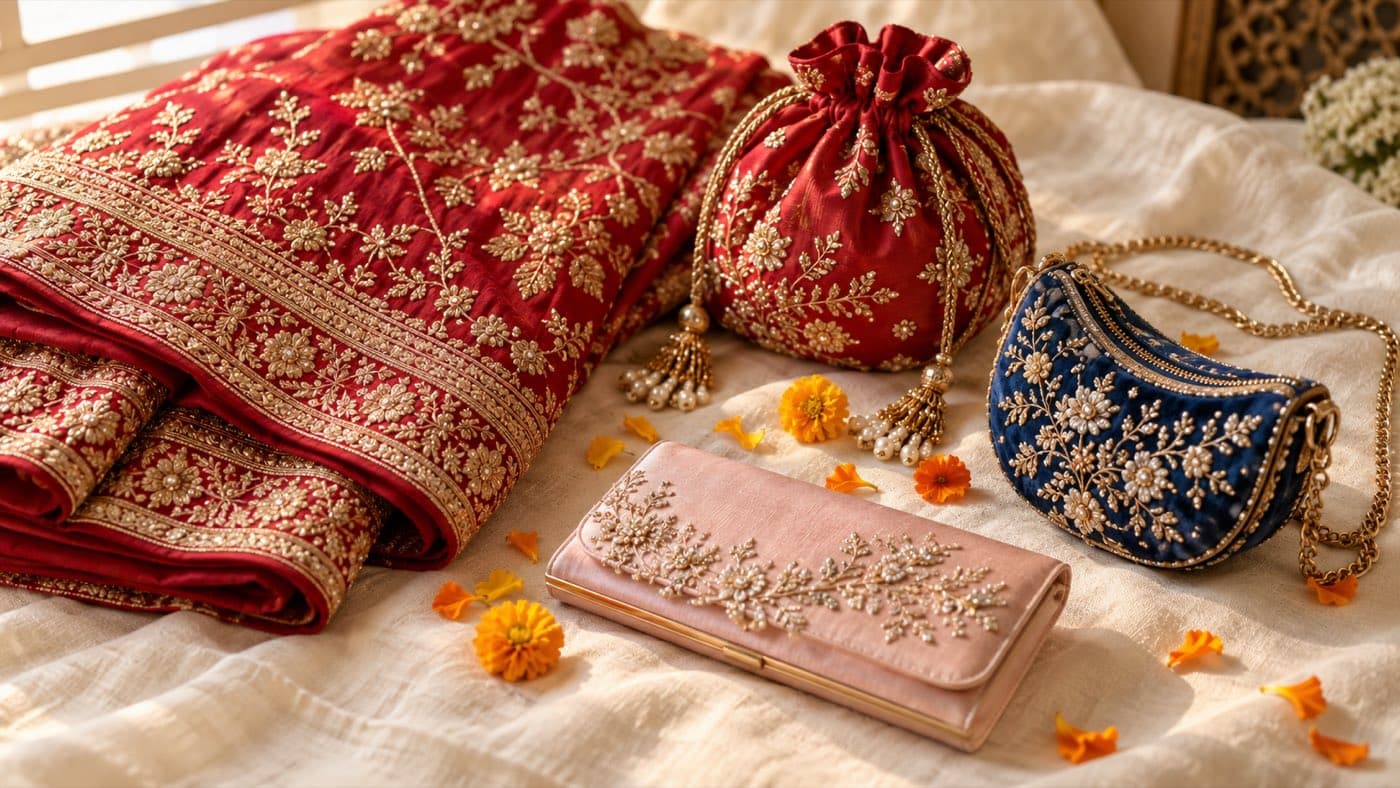
You need your hands free, so the right bag is small and stays on your wrist or across your body. A potli with a drawstring cord is the classic baraat bag: it hangs from your wrist, holds a phone, lipstick and some cash for the band, and matches ethnic wear. A small clutch with a strap works if you prefer something structured. For more ideas, see our guide to the best clutch for a wedding.
Bags in stock:
- The Silchic embellished embroidered potli clutch in multi colour at ₹3,333 goes with almost any bright outfit.
- The Urban Souled purse clutch in pink at ₹1,464 is a compact, simple option.
Sizing and returns
Wedding outfits that need constant adjusting are usually a size issue, so measure yourself and compare against the size chart before you order. Shipping is free on orders over ₹799, and if the fit is not right you have 7 days to return it.
Related guides
- Sangeet Outfit Ideas for Women: Dance-Friendly Looks
- Wedding Season 2026 Outfit Ideas for Women: Guest Looks by Function
- How to Repeat Outfits at a Wedding: One Kurta Set, Three Looks
Frequently asked questions
What should a woman wear to a baraat?
A sharara set, a flared anarkali, a light lehenga or an embroidered co-ord in silk blend, organza or georgette works best. Choose a bright colour that is not bridal red, and pick a length that clears the ground in your shoes. Comfort for dancing matters more than heavy embellishment.
Can I wear a lehenga to a baraat?
Yes, as long as it is light and short enough not to drag. A ready-to-wear lehenga with a firm waist and a blouse that lets you lift your arms is ideal. Avoid very heavy, wide lehengas that tire you out and get stepped on in a crowd.
What colour should I avoid at a baraat?
Avoid heavy bridal red, which can look like you are matching the bride, and all-white, which some families avoid at weddings. Black is fine in many families for an evening baraat, but ask the host if you are unsure. Bright pinks, teals, greens and oranges are the safest picks.
What shoes are best for dancing at a baraat?
Flat juttis, kolhapuris, embellished sandals or block heels are best. The baraat often moves along roads and lawns, so stilettos sink in and become painful quickly. If you want height, choose a low, wide block heel.
How do I keep my dupatta in place while dancing?
Drape it over one shoulder and pin it at the shoulder and at the waist, or wear it across your body like a sash and pin it at the hip. Safety pins on the inside of the fabric hold it without showing. You can also leave the dupatta with a family member and wear it again for the wedding.
Is a sharara good for a baraat?
Yes, it is one of the best choices. The flare starts at the hip, so it moves freely when you dance and does not wrap around your legs. Choose an ankle-length sharara with a comfortable waist, and pair it with a short or knee-length kurta.