Colours Not to Wear to an Indian Wedding (and What to Wear Instead)
Bridal red, all-white and, in some communities, all-black are the colours guests usually avoid at an Indian wedding. Here is why, how customs vary, and what to wear instead.
As a guest at an Indian wedding, the colours to avoid are usually bridal red, all-white or ivory, and in some communities all-black. Red is traditionally the bride's colour, white is linked with mourning in many Hindu families, and black is seen as inauspicious at some ceremonies. Wear jewel tones, pastels, pink, yellow or green instead, and always follow any colour theme the hosts set.
Key takeaways
- Avoid bridal red, especially the bride's exact shade, so you are not mistaken for her in photographs.
- Avoid all-white or all-ivory outfits at most Hindu ceremonies, where white is associated with mourning.
- Black is avoided at the ceremony in some communities but is widely worn at evening receptions in cities.
- Safe alternatives are maroon, wine, purple, pink, sea green, turquoise, mustard and olive.
- Customs vary by region, religion and family, so the hosts' colour theme always overrides general rules.
- Neon shades and outfits that match the bride's palette closely are also best skipped.
Colours to avoid at an Indian wedding: quick reference
| Colour | Why guests usually avoid it | When it may be fine | Wear instead |
|---|---|---|---|
| Bridal red | Traditionally the bride's colour in many communities | When the hosts set a red theme, or as a small accent | Maroon, wine, rust, magenta |
| All-white or ivory | Linked with mourning in many Hindu families; the bride's colour at Christian weddings | Some South Indian weddings where cream and gold is traditional; daytime functions with colour added | Pastels, champagne with colour, off-white with bright dupatta |
| All-black | Seen as inauspicious at ceremonies in some communities | Evening receptions and cocktail functions in cities | Navy, deep purple, emerald, charcoal with colour |
| Neon | Can look loud next to traditional colours | Themed parties | Clear brights: pink, yellow, turquoise |
| The bride's exact palette | Competes with her in photographs | Never at the main ceremony | A neighbouring shade |
This is general guidance. If you are unsure, ask someone in the family; they will appreciate the question.
Why guests don't wear red to an Indian wedding
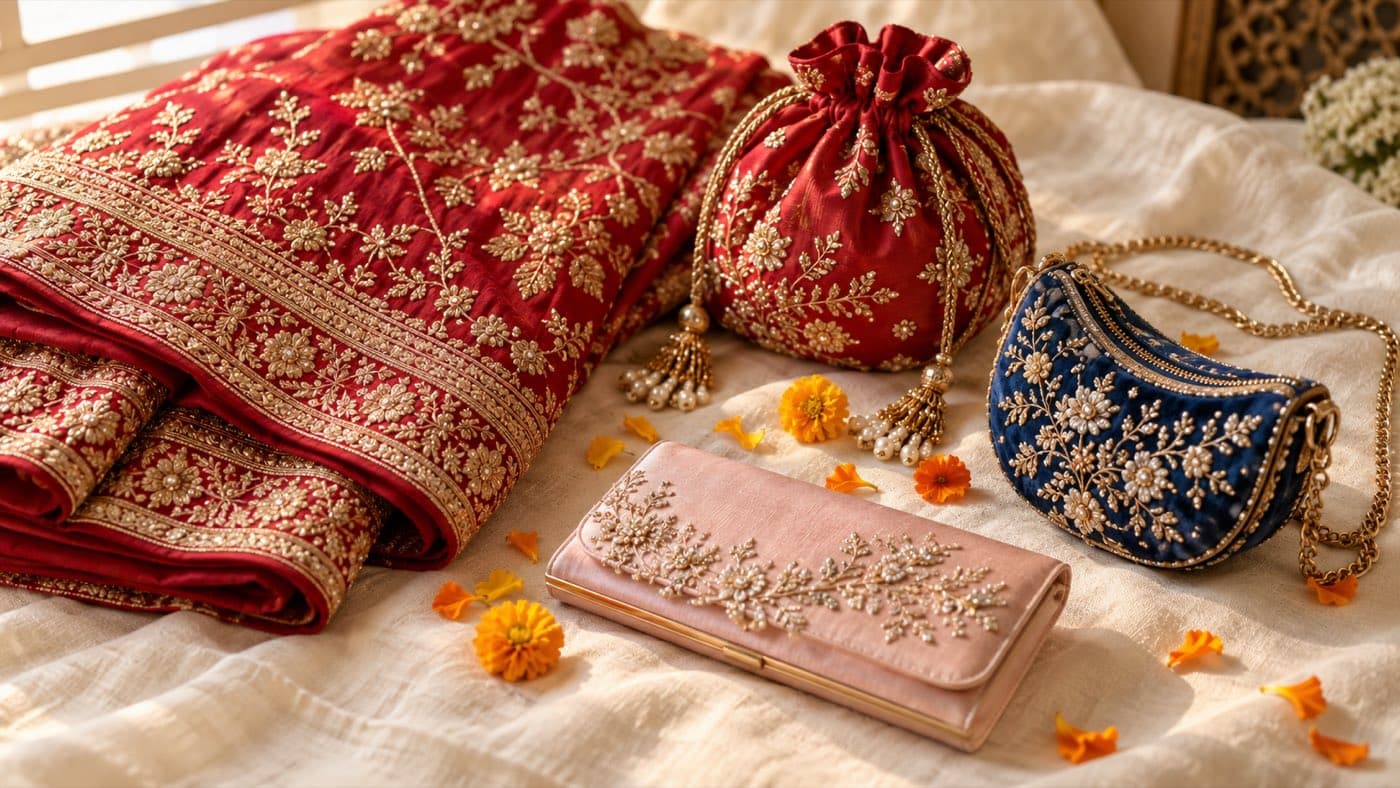
In many Hindu, Sikh and Muslim communities, red is the bride's colour. It stands for prosperity, love and new beginnings, and many brides wear a red lehenga or saree at the ceremony. A guest in head-to-toe bridal red can be mistaken for the bride in the crowd and in photographs.
The concern is mostly about the main outfit in the bride's exact shade. Red in a print, a dupatta border or embroidery is usually fine. Some brides now wear pink, gold, ivory or pastel, so the colour you most need to avoid is whatever she is wearing; ask if you can.
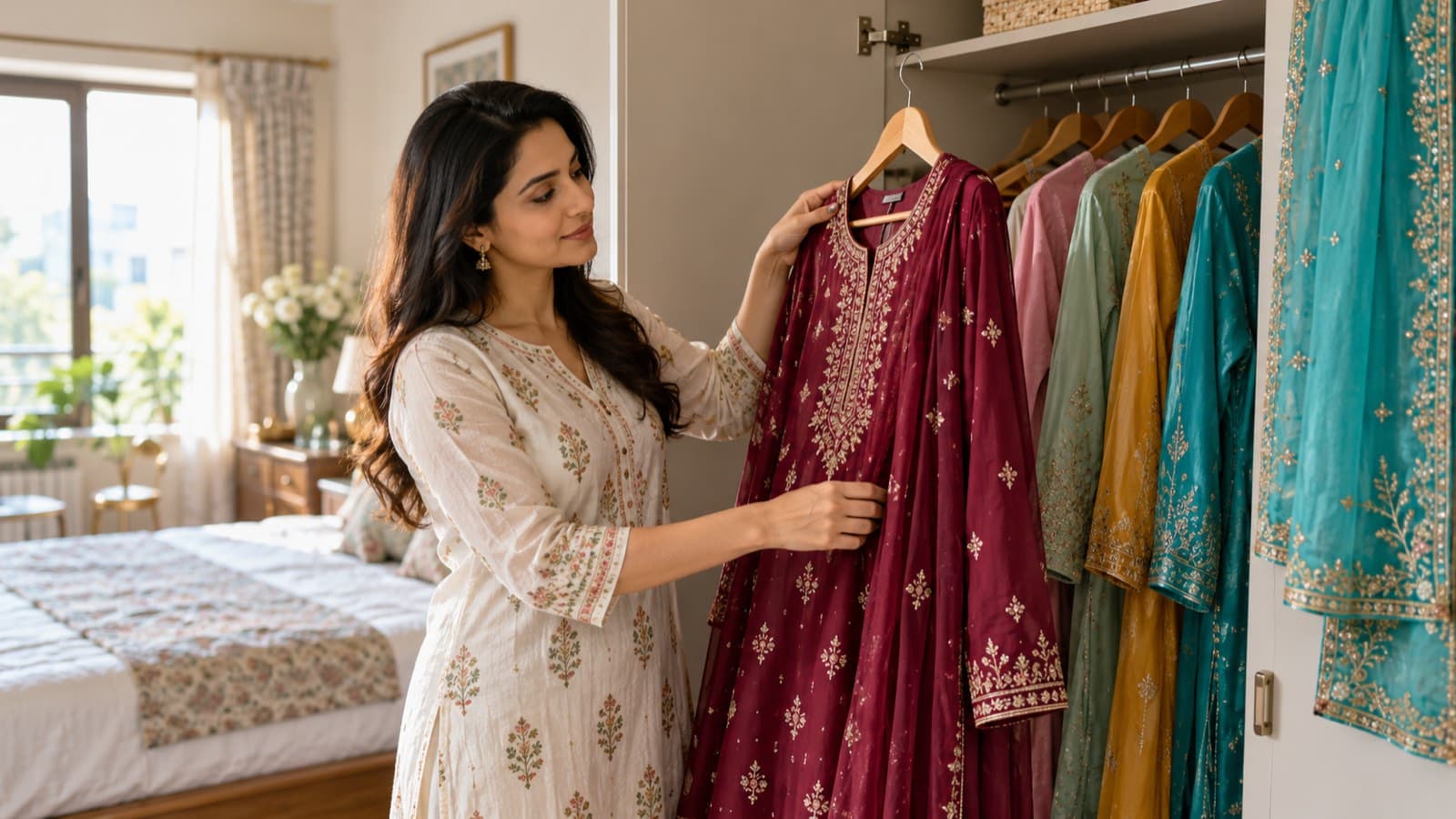
What to wear instead of red: shades that sit near red without copying it.
- The maroon embroidered dupion silk kurta with palazzos and dupatta at ₹2,704 is rich and festive but clearly not bridal.
- The orange embroidered silk blend kurta with palazzos and dupatta at ₹2,854 gives warmth and colour without reading as red.
Can you wear white to an Indian wedding?
In many Hindu families, especially in north India, white is associated with mourning and with widowhood, so an all-white or all-ivory outfit at a wedding ceremony can be seen as inappropriate. At a Christian wedding, white is the bride's colour, so guests avoid it there too.
There are exceptions. In parts of south India, especially Kerala, cream and off-white with a gold border is traditional festive wear, and guests often wear it to weddings. Some families also choose a white or pastel theme for a daytime function such as the mehendi. Very pale pastels can read as white in photographs, so add a coloured dupatta or jewellery if you are unsure.
At the haldi, white is a poor choice for a practical reason too: turmeric stains it immediately. Our haldi guest guide covers that function in detail.
What to wear instead of white: soft pastels that stay clearly coloured.
- The sea green embroidered organza kurta with palazzos and dupatta at ₹2,854 has the light, fresh feel of white while staying clearly coloured.
- The turquoise blue pleated organza anarkali with trousers and dupatta at ₹2,854 is airy enough for a day function.
Is it okay to wear black to an Indian wedding?
Black is the most contested of the three. In many Hindu communities it is considered inauspicious for religious ceremonies, so a black outfit at the pheras or the main ritual may be frowned upon. At the same time, black sequinned and embellished outfits are now common at city receptions, cocktail nights and sangeets.
A safe rule: avoid all-black at the ceremony and during the day, and treat it as acceptable at an evening reception unless the family suggests otherwise. If you want a dark look for the ceremony, choose navy, deep purple, emerald or charcoal instead.
What to wear instead of black: deep colours that read as dark at night.
- The purple chanderi silk knee-length kurta with trousers and dupatta at ₹1,613 is a deep shade that works for an evening ceremony.
- The blue ombre dupion silk kurta with palazzos and dupatta at ₹2,704 gives a rich dark tone with silk sheen.
Regional and religious differences in wedding colours
Colour rules are not the same across India, so treat the points below as general guidance only:
- North Indian Hindu weddings: red is bridal; white and black are usually avoided at the ceremony.
- South Indian weddings: cream and gold is traditional in some regions, so off-white may be welcome; check with the family.
- Bengali weddings: red and white together are traditional bridal colours, so guests usually avoid that pairing.
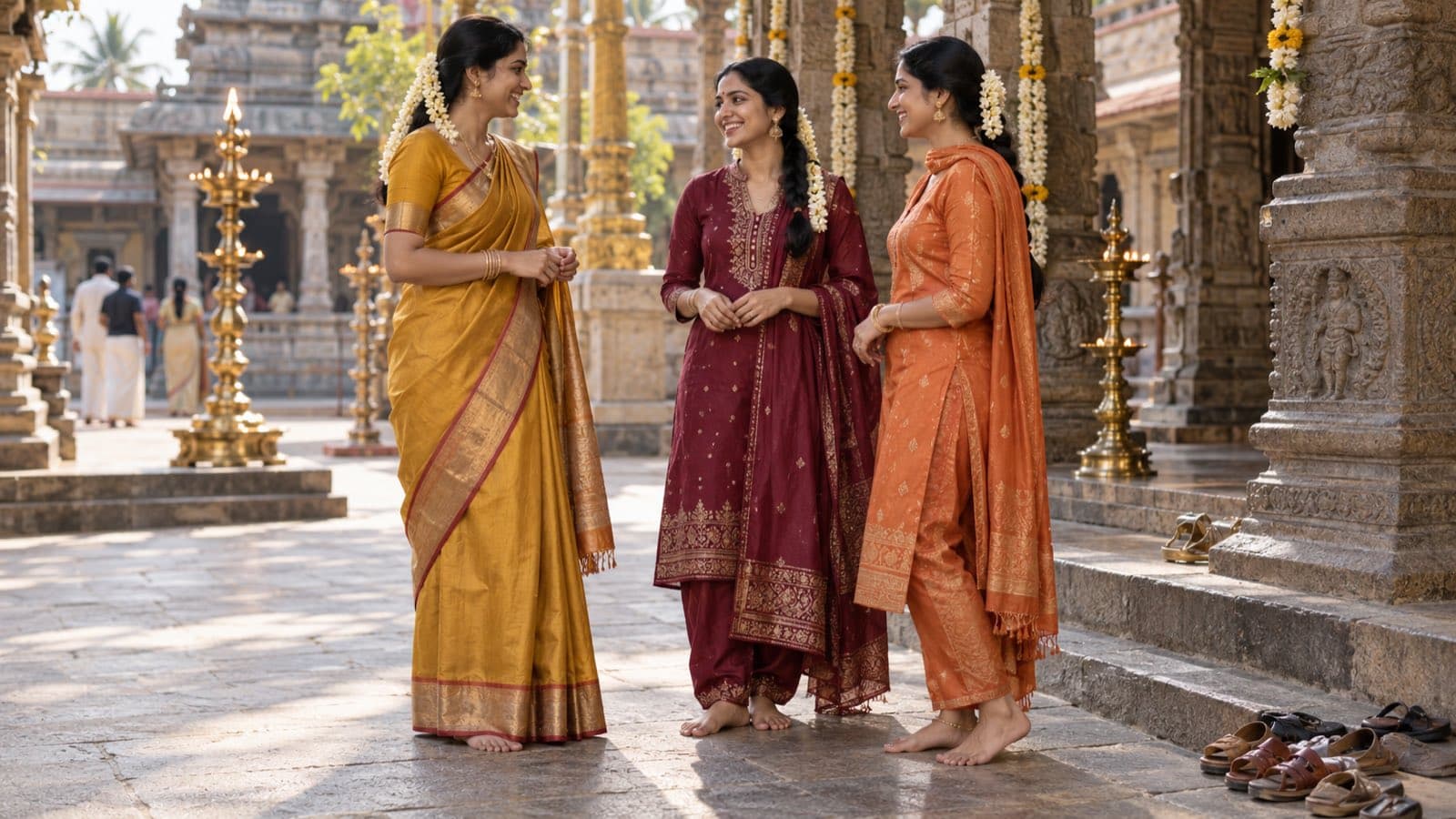
- Sikh weddings: the Anand Karaj is a daytime ceremony at a gurudwara; wear bright or pastel colours and carry a dupatta to cover your head.
- Christian weddings: white belongs to the bride; any other colour is generally fine.
- Muslim weddings: guidance varies by family; modest, colourful outfits are a safe default.
When in doubt, ask the family or follow what the invitation says.
Best colours to wear to an Indian wedding as a guest
Almost every colour outside the three above is welcome. These are the easiest to get right:
- Pink and rose: festive, flattering and suitable for every function.
- Yellow and mustard: perfect for the haldi and daytime ceremonies.
- Green, sea green and olive: the natural choice for the mehendi.
- Jewel tones: maroon, wine, purple and royal blue for evening functions.
- Turquoise and teal: bright without competing with bridal colours.
More safe colours in stock:
- The mustard floral zari saree at ₹2,999 is a warm, traditional colour for the wedding or reception.
- The olive embellished ready-to-wear lehenga with blouse and dupatta at ₹6,587 is a rich alternative to red for the sangeet or wedding.
Browse more options in kurta sets and lehenga choli. For what to wear to each function, see our Indian wedding guest outfit guide.
Before you order, check your fit on our size chart. Shipping is free over ₹799, and you have 7-day returns if it is not right.
Related guides
- Wedding Season 2026 Outfit Ideas for Women: Guest Looks by Function
- Saree vs Lehenga vs Kurta Set for a Wedding Guest: Which to Choose
- Wedding Outfit Ideas for the Bride's or Groom's Sister and Family
Frequently asked questions
What colours should you not wear to an Indian wedding?
Guests usually avoid bridal red, all-white or ivory, and in some communities all-black at the ceremony. It is also wise to avoid neon and the bride's exact outfit colour. Always follow the colour theme if the hosts have set one.
Why can't you wear white to an Indian wedding?
In many Hindu families, white is associated with mourning and widowhood, so an all-white outfit at a wedding can seem inappropriate. In parts of south India, cream and gold is traditional and welcome, so customs vary by region.
Can I wear red to an Indian wedding as a guest?
It is best to avoid a full outfit in bridal red, because red is the bride's colour in many communities. Red in a print, border or dupatta is usually fine, and maroon, wine or rust are good alternatives.
Can you wear black to an Indian wedding reception?
Usually yes. Black is widely worn at evening receptions and cocktail functions in cities, though some families still prefer guests avoid it at religious ceremonies. Ask the family if you are unsure.
What is the best colour to wear to an Indian wedding?
Pink, yellow, green and jewel tones such as maroon, purple and royal blue are the safest and most festive choices. Match lighter shades to daytime functions and deeper shades to evening ones.