Sangeet Outfit Ideas for Women: Dance-Friendly Looks
What to wear for a sangeet when you plan to dance: sharara, lehenga, co-ord or dress compared for movement and comfort, plus hems, dupattas, shoes and colours that shine under stage lights.
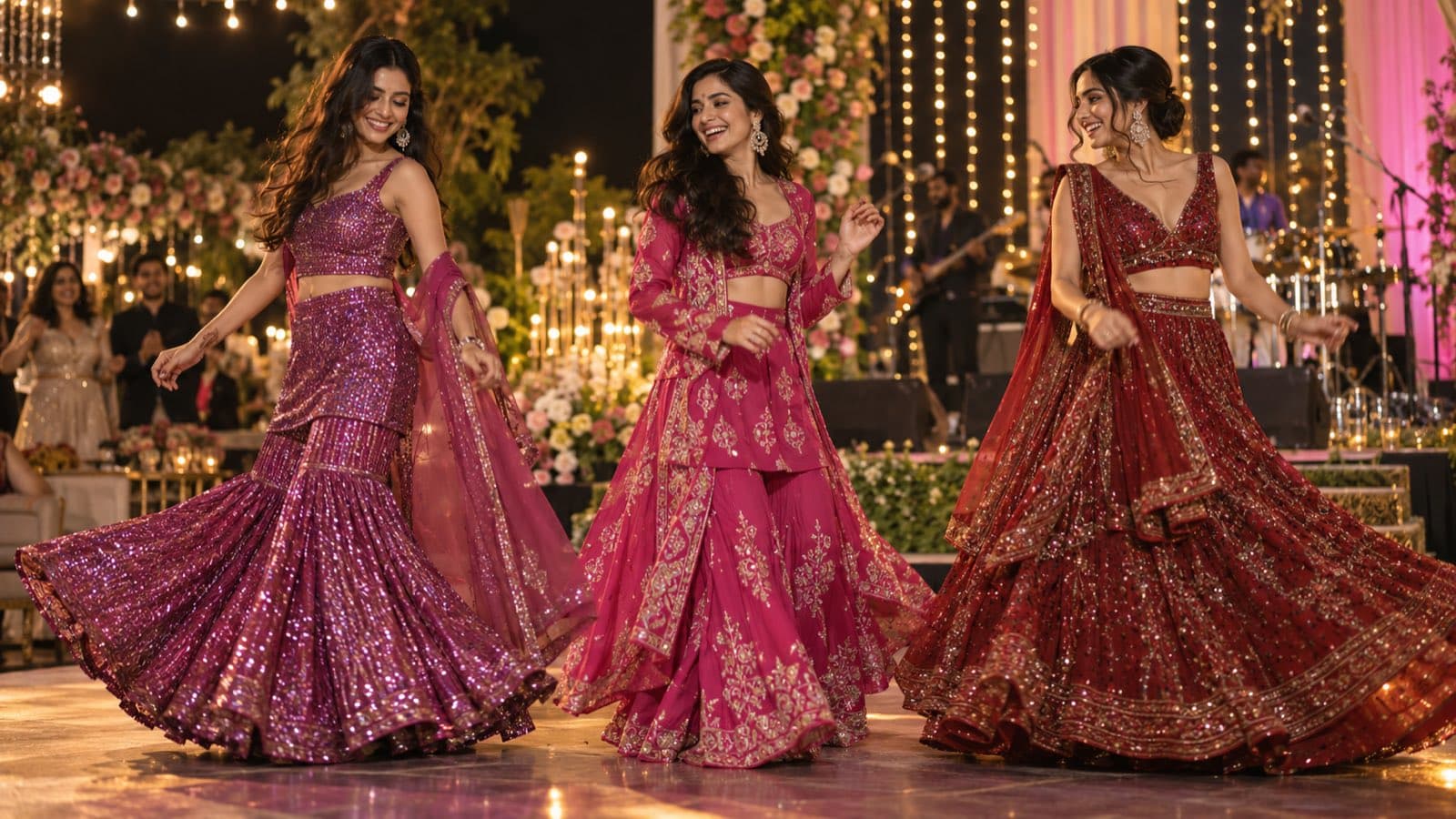
The best sangeet outfit for women is one you can dance in for hours: a sharara set, a light lehenga, an embroidered co-ord or a flowing maxi dress, with a hem that clears the floor and embellishment light enough not to drag. Jewel tones, sequins and metallic thread work photograph best under stage lights. Pin your dupatta before the music starts, wear block heels or juttis, and if you are performing, consider a lighter outfit for the routine and a dressier one for the rest of the evening.
Key takeaways
- The easiest sangeet outfits to dance in are a sharara set, a light ankle-length lehenga, an embroidered co-ord with palazzos or a fit-and-flare maxi dress.
- A sangeet hem should clear the floor by about a finger's width with your dancing shoes on.
- Jewel tones such as emerald, magenta, fuchsia and royal blue hold their colour under warm stage lights; pastels can look washed out.
- Thread work, light sequins and foil print are lighter to dance in than dense stone, zardozi or mirror work.
- Pin the dupatta at one shoulder with two safety pins, or leave it off for the routine and put it back on for photographs.
- Juttis, block heels or wedges you have danced in before are safer than stilettos on stage floors and lawns.
What makes a good sangeet outfit
A sangeet is a long evening of music, dancing and photographs. Whether you are a guest on the dance floor or part of a family performance, the same few things decide whether your outfit works:
- Movement. Can you spin, step and raise your arms without the outfit fighting you?
- Weight. Heavy embellishment looks rich standing still but tires you out within an hour of dancing.
- Length and hem. A hem that sweeps the floor will catch your heel the first time you turn.
- The dupatta. It needs a plan, or it ends up on a chair.
- Footwear. Your feet decide how long you stay on the floor.
- Light. Sangeet stages and halls are lit with coloured spots, so fabric and colour behave differently from daylight.
Sangeet outfit comparison: which moves best
| Outfit type | Movement | Comfort for 4 hours | Best for |
|---|---|---|---|
| Sharara set | Excellent; the flare swings with every step | High; light silk blend sits easily seated or standing | Performers and anyone who plans to dance all night |
| Lehenga | Good if the skirt is light and ankle-length; heavy can-can limits turns | Medium; depends on skirt weight and blouse fit | Close family, photographs and a traditional look |
| Co-ord (top with palazzos) | Excellent; no dupatta, no long hem | Very high; the most comfortable of the four | Choreographed routines with lots of footwork |
| Maxi dress | Good; a fit-and-flare or A-line skirt moves well | High; one piece, nothing to adjust | Guests at a modern or cocktail-style sangeet |
Sharara vs lehenga vs co-ord vs dress for a sangeet performance
Sharara. The flare starts at the waist or hip, so it moves beautifully when you turn, and it is divided, so you can step wide without stepping on your own hem. A short kurti keeps your legs visible for footwork. For most performers this is the safest choice. If you're unsure how a sharara differs from a gharara or palazzo, our sharara vs gharara vs palazzo guide explains the cuts.
Lehenga. A lehenga gives the most dramatic twirl, which is why it is popular for a solo or couple dance. It needs a light skirt and an ankle-length hem. A heavily embellished lehenga with a stiff can-can is better for the photographs before and after your routine than for the routine itself.
Co-ord. An embroidered top with palazzos has no dupatta and no long hem, so nothing can trip you or come undone. It is the easiest outfit for a high-energy, choreographed number, and it still looks festive in silk blend with thread work.
Dress. A georgette or satin maxi dress in a fit-and-flare or A-line cut moves well and needs no adjustment. It suits a cocktail-style sangeet and guests who want to dance without managing several pieces.
Sharara sets in stock
- The black embroidered sequinned silk blend kurta with sharara and dupatta is ₹3,304. Sequins on black catch every stage light.
- The red floral embroidered silk blend kurta with sharara and dupatta is ₹2,304, with an above-knee kurta that keeps your legs free for footwork.
Lehengas in stock
- The red foil print embellished ready-to-wear lehenga with blouse and dupatta is ₹6,637. The foil print gives shine without heavy embellishment.
- The white sequinned ready-to-wear lehenga with blouse and dupatta is ₹20,387, a statement piece for close family and the photographs.
Co-ords and dresses in stock
- The fuchsia embroidered silk blend tunic with palazzos is ₹2,281, a dupatta-free co-ord in a jewel tone.
- The red floral print georgette maxi dress is ₹3,281, light enough to dance in all evening.
How heavy should the embellishment be?
Heavy zardozi, thick mirror work and dense sequins look wonderful, but they add real weight and can scratch your arms when you move. For an outfit you will dance in:
- Choose thread work, light sequins or foil print over dense stone and mirror work.
- Keep heavy work on the top half, such as the kurta or blouse, rather than all over a full skirt.
- Check the inside of the sleeves and the waist. Embellishment that rubs at the armpit or waist will bother you within the first song.
- Avoid loose hanging tassels or latkans near the hands if your routine includes clapping or hand movements.
For looking after sequinned and embroidered pieces after the night, see caring for embroidery and sequins.
Length and hem: the trip test
Before the sangeet, wear the outfit with the exact shoes you will dance in and walk up and down a staircase. Then turn on the spot.
- The hem should clear the floor by about a finger's width with your shoes on.
- A lehenga or sharara that pools on the floor will catch your heel on a spin. Have it hemmed, or wear a slightly higher block heel.
- Ankle-length is ideal for performers; floor-length is better left to the bride.
- A short kurti over a sharara shows off footwork and reduces the fabric around your knees.
How to secure your dupatta while dancing
An unsecured dupatta is the most common outfit disaster on a sangeet stage. Decide before you dance:
- Pin it at one shoulder with two safety pins, one at the front and one at the back, and let the rest fall behind you.
- Drape it across the body from one shoulder to the opposite hip and pin it at the waist.
- Tie it at the waist for an energetic number, then release it for photographs.
- Leave it off entirely for the routine and put it back on afterwards. A co-ord avoids the question altogether.
Our guide on how to drape a dupatta 8 ways shows each of these drapes step by step.
Footwear for dancing at a sangeet
Stilettos sink into lawns and slip on stage floors. For a night of dancing:
- Embroidered juttis or mojaris are flat, light and traditional.
- Block heels give you height with stability; keep them to a comfortable height you have actually danced in before.
- Wedges work well on grass at an outdoor sangeet.
- Break in new shoes at home for a few evenings before the function, and pack a pair of flats in your bag for the end of the night.
Quick change: performance outfit vs the rest of the evening
If you are part of a family performance, you don't have to dance in the outfit you want to be photographed in all night. Many performers wear a lighter co-ord or sharara for the routine, then change into a heavier lehenga for the photographs and the rest of the evening.
To make the change fast:
- Choose the same colour family for both outfits, so your jewellery works with each.
- Keep the jewellery the same and switch only the outfit and dupatta.
- Pack the second outfit on a hanger with its pins already in the dupatta.
- Carry a small bag that holds your phone, safety pins and tissues so you aren't looking for things between sets.
Colours and fabrics that photograph well under stage lights
Sangeet lighting is usually warm, coloured and uneven, and the photographs are often taken in low light. Some choices consistently look better:
- Jewel tones such as emerald, magenta, fuchsia, royal blue and deep red hold their colour under warm light, where pastels can look washed out.
- Sequins and metallic thread catch the spotlights and give movement in photographs and video.
- Black with sequins or gold work reads as dramatic and clean on stage.
- Silk blend, satin and georgette have a soft sheen that photographs well and moves with you. Stiff fabrics look boxy in motion.
- White and ivory look striking but show every mark from a long night, so save them for the photographs rather than the dance floor.
Bags for the sangeet
You will want your phone close for videos and your hands free for dancing. A sling stays on your body; a potli or clutch is for the moments you are seated.
- The blue embroidered fabric potli clutch is ₹3,333 and suits jewel-toned outfits.
- The blue embellished fabric half moon sling bag is ₹3,392 and keeps your phone on you while you dance.
Free shipping applies on orders over ₹799, and you have 7-day returns. Check the size chart so the blouse or kurta lets you raise your arms comfortably.
Related guides
- Wedding Season 2026 Outfit Ideas for Women: Guest Looks by Function
- How to Repeat Outfits at a Wedding: One Kurta Set, Three Looks
- Republic Day Outfit Ideas: Tricolour and White Looks for 26 January
Frequently asked questions
What should I wear to a sangeet as a guest?
A sharara set, a light lehenga, an embroidered co-ord or a flowing maxi dress in a jewel tone. Choose a hem that clears the floor and comfortable footwear, because a sangeet is mostly about dancing.
Is a lehenga or a sharara better for dancing at a sangeet?
A sharara is easier to dance in because the flare is divided and lighter, so you can step wide without catching the hem. A lehenga gives a bigger twirl but needs a light skirt and an ankle-length hem to be safe on the dance floor.
How do I keep my dupatta from falling while dancing?
Pin it at one shoulder with two safety pins, drape it across the body and pin it at the waist, or tie it at the waist for the routine. You can also leave it off while you dance and put it back on for photographs.
What colours look best at a sangeet?
Jewel tones such as emerald, magenta, fuchsia and royal blue, and anything with sequins or metallic thread. They hold their colour under warm stage lights, while pastels can look washed out in low-light photographs.
What shoes should I wear to dance at a sangeet?
Juttis, mojaris, block heels or wedges that you have broken in at home. Avoid stilettos, which slip on stage floors and sink into lawns, and carry a pair of flats for the end of the night.
Should I change outfits after a sangeet performance?
It helps if your performance outfit is very different from what you want in photographs. Dance in a light co-ord or sharara, then change into a heavier lehenga in the same colour family and keep the same jewellery for a quick switch.