Temple Wedding Guest Outfit in South India: What to Wear
What to wear as a guest at a south Indian temple wedding: silk and silk-blend sarees or kurta sets, colours that work, modesty, footwear removal and flowers in the hair.
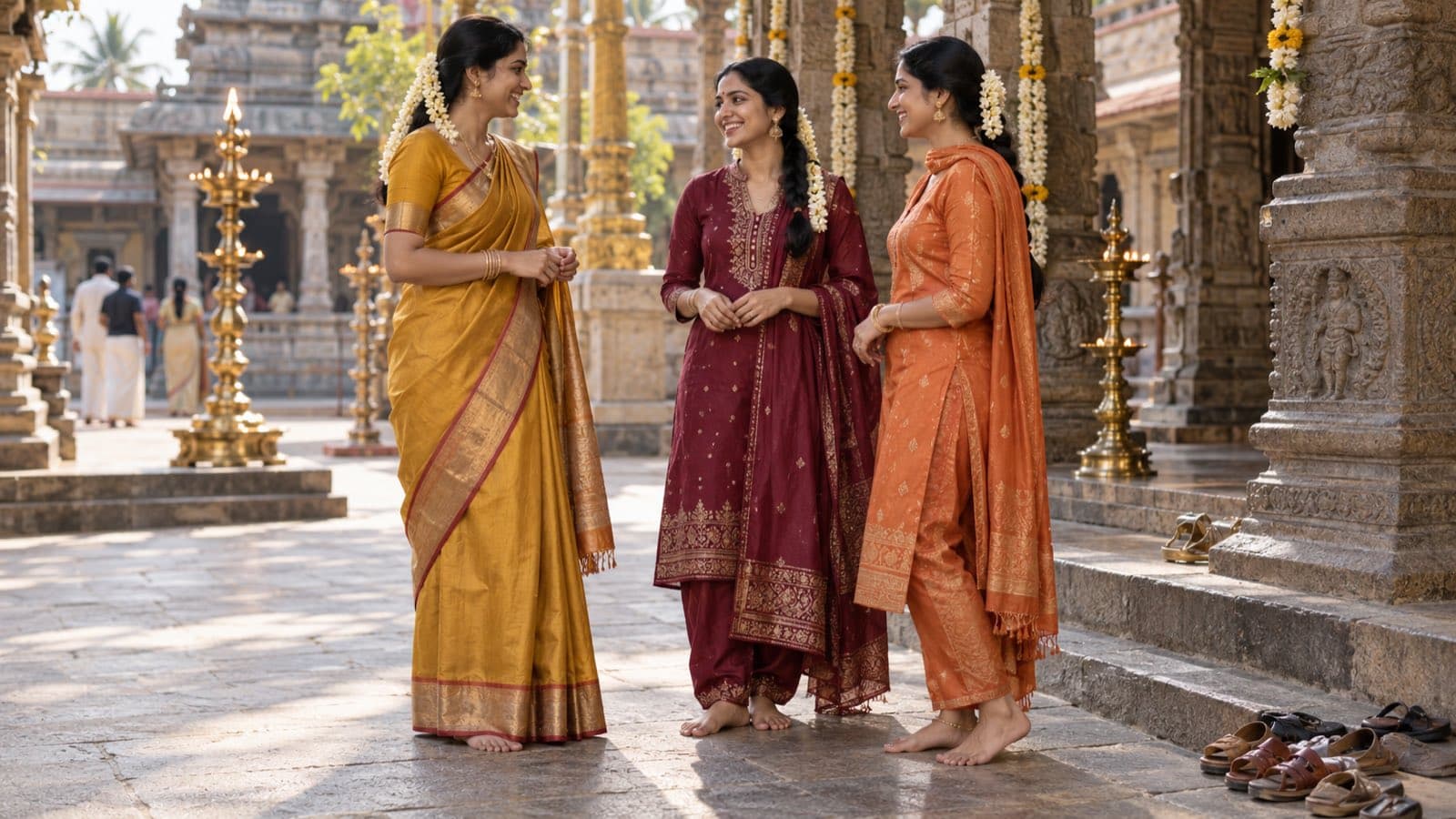
As a guest at a south Indian temple wedding, wear a silk or silk-blend saree, or a modest silk kurta set with a dupatta, in a warm festive colour such as maroon, mustard, red, green or orange. Keep shoulders covered, choose an outfit you can sit in cross-legged on the floor, and expect to leave your footwear outside the temple. Customs differ by community and by temple, so treat this as general guidance and check with the family before the day.
Key takeaways
- A silk or silk-blend saree is the classic guest choice; a silk kurta set with a dupatta is equally respectful.
- Warm, auspicious colours such as maroon, red, mustard, green and orange are safe; all-black is best avoided, and all-white depends on the community.
- Covered shoulders and a modest neckline are expected inside a temple, so carry a dupatta even with a saree.
- Footwear is left outside the temple, so pick shoes you can slip off and on easily.
- Many ceremonies happen early in the morning, so plan a daytime look and an early start.
- Fresh flowers in the hair are a traditional finishing touch, but ask the family first if you are unsure.
South Indian temple wedding guest dress code: quick reference
| Question | General guidance |
|---|---|
| Best outfit | Silk or silk-blend saree; silk kurta set with dupatta; a lehenga or half-saree style for younger guests |
| Colours that work | Maroon, red, mustard, gold, green, orange, deep pink, purple |
| Colours to check first | All-black (often avoided); all-white or off-white (traditional in some communities, avoided in others) |
| Neckline and sleeves | Covered shoulders; elbow-length or three-quarter sleeves are safest |
| Footwear | Left outside the temple; choose slip-on sandals or juttis |
| Sitting | Often on the floor or low seating for a long ceremony |
| Hair | Flowers such as jasmine are common; a neat braid or bun works well |
| Bag | Small potli or cloth bag; some temples prefer no leather inside |
| Timing | Often early morning; check the invitation for the muhurtham time |
What to wear to a south Indian temple wedding
Temple weddings tend to be more traditional than banquet-hall weddings. The ceremony happens in a sacred space, often with priests, family elders and a strict sequence of rituals. A guest outfit should feel festive but never flashy, and it should let you sit, stand and move through a crowded temple courtyard comfortably.
The safest choices, in order:
- A silk or silk-blend saree with a blouse that covers the shoulders. This is the traditional choice across Tamil Nadu, Karnataka, Andhra Pradesh, Telangana and Kerala.
- A silk kurta set with a dupatta. Perfectly acceptable for guests, especially if you are not comfortable draping a saree for several hours.
- A lehenga or half-saree style outfit for younger guests. In many south Indian families, unmarried girls traditionally wear a long skirt with a blouse and a draped half-saree, so a modest lehenga with a dupatta reads as familiar.
Avoid anything short, sleeveless without a cover, backless or sheer. Western dresses are generally out of place at a temple ceremony even if they would be fine at the reception.
Silk sarees for a temple wedding
Silk is the fabric most associated with south Indian weddings. A zari border or a woven motif adds the festive feel without heavy embellishment, which suits a temple better than sequins.
Sarees in stock:
- The mustard floral zari saree at ₹2,999 is in one of the most traditional colours for a south Indian wedding, with zari work that catches the light in a temple courtyard.
Pair it with a blouse that has elbow-length sleeves, and drape the pallu so it can also cover your head if a ritual or an elder calls for it. Browse all sarees for more.
If you do not wear sarees often, practise the drape the day before. A ceremony can involve a lot of sitting on the floor and getting up again, and a pinned, secure pleat makes that much easier.
Silk kurta sets for a temple wedding
A kurta set is a comfortable alternative for a long ceremony and is entirely appropriate for a guest. Look for a dupatta, a kurta that reaches at least the knee, and a fabric with some sheen, such as dupion silk, chanderi silk or silk crepe.
Silk and silk-blend kurta sets in stock:
- The maroon embroidered dupion silk kurta with palazzos and dupatta at ₹2,704 is a deep, auspicious colour that looks right beside traditional silk sarees.
- The orange embroidered silk blend kurta with palazzos and dupatta at ₹2,854 is a bright, festive shade for a morning ceremony.
- The yellow gotta patti silk crepe kurta with trousers and dupatta at ₹1,189 brings a turmeric-yellow tone at a gentler price.
- The rust embroidered chanderi silk kurta set at ₹1,370 is light enough for a warm, crowded temple.
- The purple chanderi silk knee-length kurta with trousers and dupatta at ₹1,613 is a solid colour that you can dress up with temple-style jewellery.
Palazzos and wide trousers are kinder than a slim churidar when you sit cross-legged for a long time.
What colours to wear to a south Indian wedding
Bright, warm colours are seen as auspicious at most south Indian weddings. Maroon, red, mustard, turmeric yellow, green, orange, deep pink and purple are all reliable choices, especially with a gold or zari border.
Two colours need a little thought:
- Black: often avoided at weddings and inside many temples, as it is linked to mourning or considered inauspicious in some traditions. Skip an all-black outfit unless the family says otherwise.
- White and off-white: this is where communities differ most. In parts of Kerala, an off-white saree with a gold border is the traditional festive wear and is worn proudly at weddings. Elsewhere, plain white is associated with mourning. When in doubt, ask, or add a strong colour through the blouse, dupatta or border.
Also avoid matching the bride. Red and deep gold are common bridal colours, so if you choose red, keep it lighter in embellishment. Our guide to colours not to wear to an Indian wedding covers this in more detail.
Footwear at a temple wedding
Shoes are almost always removed before entering the temple's inner areas, and often before entering the premises at all. You may walk barefoot on stone floors, sometimes across a hot courtyard by late morning.
- Choose slip-on footwear: flat sandals, juttis or kolhapuris you can take off and put back on without bending and unbuckling in a saree.
- Skip expensive or delicate shoes: you will be leaving them in a shared shoe stand.
- Keep your feet in mind: a pair of thin socks in your bag can help on hot or cold stone, where they are allowed. Check, because some temples expect bare feet.
Flowers as styling
Fresh flowers in the hair are part of the traditional look at many south Indian weddings. A string of jasmine pinned around a bun or down a braid is the most common choice, and many families hand them out to women guests at the entrance.
A few things to keep in mind:
- Let the outfit stay simple if you are wearing flowers; they add colour and fragrance on their own.
- Pin them securely with a few U-pins, because you will be bowing, sitting and standing through the ceremony.
- Ask if unsure: in some families, flowers in the hair carry meaning tied to marital status or the occasion. Follow the family's lead.
Jewellery works the same way. Temple-style gold or gold-toned pieces suit a silk saree, but keep it to a few pieces so the look stays respectful rather than showy.
What bag to carry
Keep it small. Temples are crowded, and you want your hands free for receiving prasad, offering flowers and folding your palms. A potli or a soft fabric bag is ideal, and fabric avoids any question about leather inside the temple.
The red embroidered potli clutch at ₹3,333 sits well with a maroon, mustard or green silk outfit and holds your phone, some cash for offerings and a handkerchief. For more on matching bags to traditional outfits, see our puja and temple visit dress guide.
Regional differences, and why you should ask
South India covers many communities, languages and temple traditions. A Tamil Brahmin ceremony, a Kannadiga wedding, a Telugu wedding and a Kerala temple wedding can differ in timing, colours, rituals and what guests are expected to wear. Some temples have formal dress codes even for visitors.
The simplest rule: ask the family. A quick message to the host about the dress code, any colours to avoid and whether flowers will be provided saves you guessing. If you are travelling for the wedding, our Makar Sankranti and Pongal outfit guide has more on dressing across the southern states.
For fit, check the size chart, and leave a little room in the kurta if you will be sitting on the floor. Shipping is free over ₹799, with 7-day returns.
Related guides
- Winter Wedding Outfits for Women in India: Stay Warm as a Guest
- Saree vs Lehenga vs Kurta Set for a Wedding Guest: Which to Choose
- Farmhouse Wedding Guest Outfit for Winter: What to Wear on the Lawn
Frequently asked questions
What should a female guest wear to a south Indian temple wedding?
A silk or silk-blend saree is the traditional choice, with a blouse that covers the shoulders. A silk kurta set with a dupatta is equally appropriate. Choose warm, festive colours and avoid anything short, sleeveless without a cover or sheer.
Can I wear a kurta set to a south Indian wedding?
Yes. A silk or silk-blend kurta set with a dupatta is respectful and comfortable, especially for a long ceremony with floor seating. Pick a knee-length or longer kurta and a festive colour.
Can I wear black to a south Indian temple wedding?
It is best avoided. Black is often linked to mourning or seen as inauspicious at weddings and in many temples. If you love dark shades, choose maroon, deep green or purple instead, or check with the family.
Is white okay for a south Indian wedding guest?
It depends on the community. An off-white saree with a gold border is traditional festive wear in parts of Kerala, while elsewhere plain white is linked to mourning. Ask the family, or add a strong colour through the border, blouse or dupatta.
Do you have to remove shoes at a temple wedding?
Usually, yes. Footwear is left outside the temple or its inner areas, so wear slip-on sandals or juttis that are easy to take off and put back on, and avoid delicate or costly shoes.