How to Repeat Outfits at a Wedding: One Kurta Set, Three Looks
How to restyle one festive kurta set for mehendi, sangeet and the wedding: three looks, the colours and fabrics that repeat best, a planning table and a packing plan for multi-day weddings.
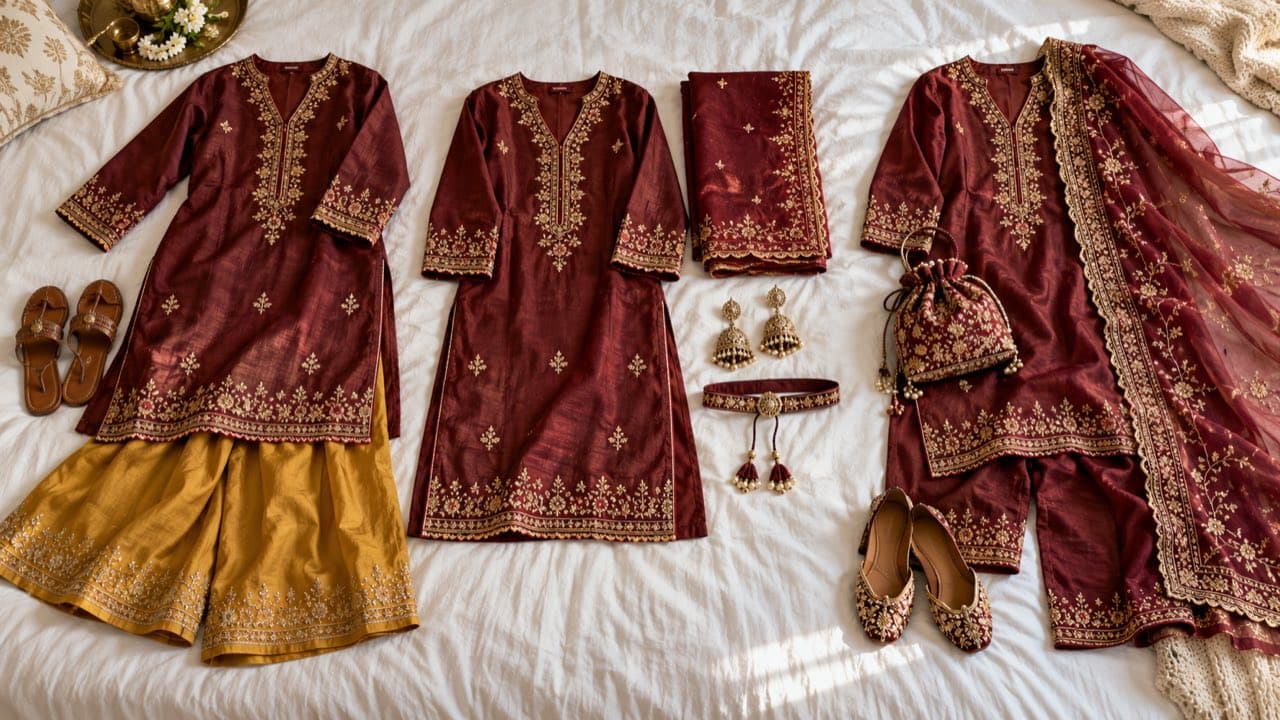
Yes, you can wear one kurta set to three wedding functions without anyone feeling they have seen it before. Pick a festive set in a deep jewel tone with a solid base and an embroidered yoke, then change one or two things for each event: wear the kurta with a contrast bottom and flats for the mehendi or haldi, belt the dupatta and add statement earrings for the sangeet, and wear the full set with a heavier drape and a clutch for the wedding or reception. Mixing the dupatta and bottom with other pieces you own stretches it even further.
Key takeaways
- One festive kurta set (kurta, bottom and dupatta) can give you three distinct looks for mehendi, sangeet and the wedding.
- Deep jewel tones such as maroon, purple, royal blue and emerald repeat best because they suit day and night functions.
- A solid kurta with an embroidered yoke is easier to restyle than an all-over print, which is memorable after one wear.
- Changing the dupatta drape, the bottom and the footwear changes the look more than changing the jewellery alone.
- A dupatta and a palazzo from one set can each be paired with a different kurta, which turns three pieces into five or six outfits.
- For a three-day wedding, two festive kurta sets and one extra dupatta usually cover every function.
How to repeat outfits at a wedding without it looking repeated
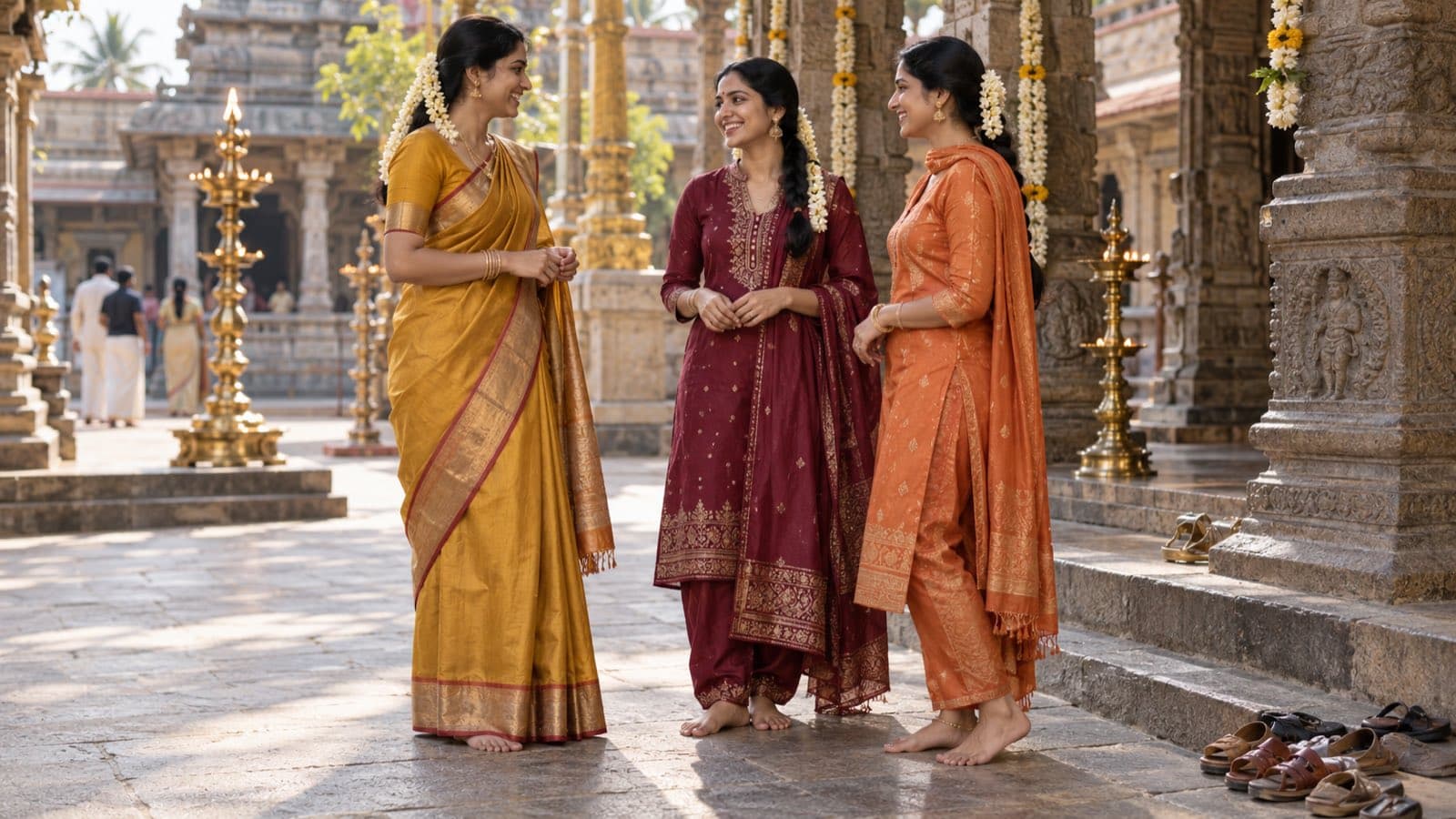
Guests remember silhouettes and colour blocks, not individual pieces. If the mehendi photographs show a kurta with a contrast palazzo and no dupatta, and the wedding photographs show the same kurta in a full matching set with a dupatta draped over both shoulders, most people will read them as two different outfits.
Three things do most of the work:
- The outline. A dupatta pinned on one shoulder, belted at the waist or draped over both shoulders gives three completely different shapes.
- The bottom. Swapping a matching palazzo for a contrast pant or sharara changes the colour story from head to toe.
- The finish. Flats and small studs read as daytime; heels, a statement earring and a clutch read as evening.
This post is about doing that across a wedding. If you want everyday and office ways to rewear a set, our guide on how to style a kurta set five ways covers those.
Choose the right kurta set to restyle
Not every set repeats well. Check the colour, the fabric and the embroidery.
Colours that repeat best
Deep jewel tones are the easiest. Maroon, wine, purple, royal blue, emerald and deep teal look rich in daylight at a mehendi and still hold their colour under warm lights at a sangeet or reception. They also pair with gold or silver jewellery, so one set of earrings and bangles can travel with you.
Pastels and whites are lovely but harder to repeat. They look best in daylight and show every mark from a long day of haldi and food stalls.
Fabrics that repeat best
- Dupion silk and silk blend have a soft sheen that dresses up easily and does not look out of place in the afternoon.
- Chanderi silk is lighter and works well for a day function, while still looking festive.
- Organza dupattas add drama to an evening look and can be swapped onto a different kurta.
Embroidery that repeats best
A solid kurta with an embroidered yoke or neckline is the most versatile. The embroidery sits near your face, which is where photographs focus, while the plain body pairs easily with other bottoms and dupattas. All-over heavy work looks wonderful once, but it fights with contrast pieces.
One kurta set, three wedding functions
To make this concrete, take one set: the maroon embroidered dupion silk kurta with palazzos and dupatta at ₹2,704. It has a jewel-toned base, embroidery near the neckline and a matching dupatta, so it ticks every box above. The same approach works with any festive set in your wardrobe.
Look 1: mehendi or haldi day look
Day functions are relaxed, often outdoors and usually involve sitting on the floor, eating and getting henna done. You want comfort and fewer pieces to manage.
- Wear the kurta without the dupatta, or with a light cotton or chanderi dupatta in a contrast colour. Wet henna and a long dupatta do not mix.
- Swap the matching palazzo for a contrast bottom. A mustard, pink or off-white palazzo or straight pant under a maroon kurta looks fresh and suits daylight.
- Wear flats. Kolhapuris, juttis or simple sandals work on grass and floor seating.
- Keep jewellery small: studs or small jhumkas and a few glass bangles.
For haldi, if you would rather not risk your silk set, wear an older cotton kurta for the ceremony and change afterwards.
Look 2: sangeet look
The sangeet is the evening for dancing and photographs, so this look needs movement and a bit of drama.
- Belt the dupatta. Drape it over one shoulder, bring it across the body and secure it at the waist with a slim belt. It stays in place while you dance and changes the outline completely.
- Add statement earrings such as long jhumkas or chandbalis. Keep the neck bare so the yoke embroidery shows.
- Switch to block heels or embroidered juttis that you have already danced in.
- Try a different bottom if you have one. A sharara or a flared palazzo moves beautifully when you turn.
Our dupatta draping guide shows the belted drape step by step, along with seven others you can rotate across the trip.
Look 3: wedding or reception look
This is the most formal function, so wear the full set and dress it up.
- Wear all three matching pieces for a clean, head-to-toe colour block.
- Use a heavier drape: the dupatta over both shoulders, or pleated on one shoulder and pinned at the back. If you have a heavier organza or embroidered dupatta, swap it in here.
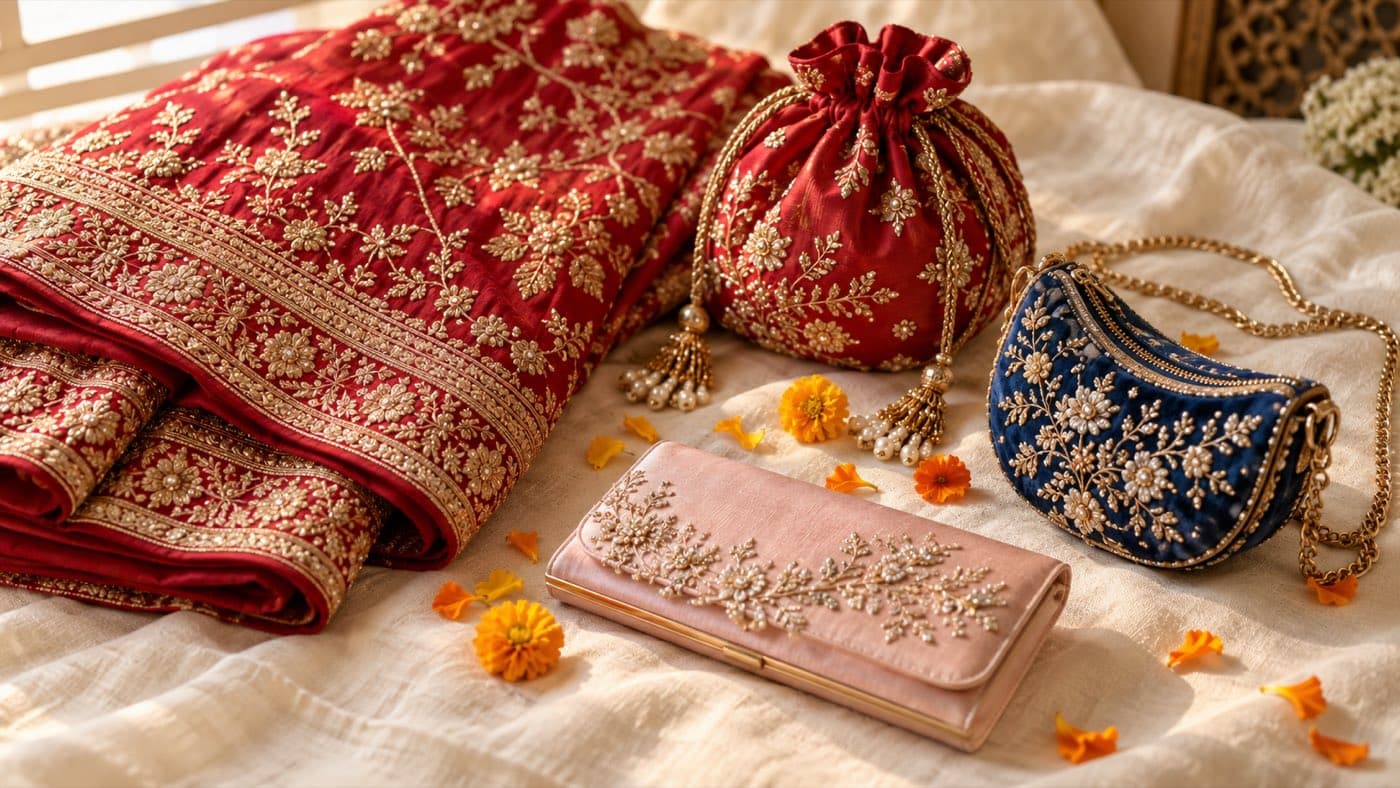
- Carry a clutch or potli instead of the sling you used earlier.
- Choose your boldest jewellery, such as a choker or a statement necklace, and a sleek bun or open, styled hair.
A small bag makes the evening easier. The multi embroidered fabric potli clutch is ₹3,333 and its embroidery suits a jewel-toned set.
The planning table: pieces by function
Use this as a quick-reference plan before you pack.
| Piece | Mehendi / haldi | Sangeet | Wedding / reception |
|---|---|---|---|
| Festive kurta | Yes, sleeves pushed up | Yes | Yes |
| Matching palazzo or pant | No, swap for a contrast bottom | Optional; a sharara works too | Yes |
| Matching dupatta | Skip, or use a light contrast one | Belted across the body | Heavier drape over both shoulders |
| Extra dupatta | Light cotton or chanderi | Not needed | Organza or embroidered, if you have one |
| Footwear | Flats or kolhapuris | Block heels or juttis | Heels or embellished juttis |
| Jewellery | Studs, small jhumkas | Statement earrings | Choker or necklace set |
| Bag | Small sling | Sling that stays on while dancing | Clutch or potli |
Mix and match: the dupatta and bottom can travel too
The pieces of a kurta set do not have to stay together. Treat each one as a separate item and you get more outfits from the same suitcase.
- Wear the dupatta with a different kurta. A maroon or purple dupatta lifts a plain off-white or gold kurta for a puja or a family lunch on the wedding trip.
- Wear the palazzo or pant with another top. A solid festive palazzo works under a short embroidered kurti, or with a simple silk blouse for a pre-wedding dinner.
- Wear the kurta with a different dupatta. A contrast organza dupatta makes the same kurta look new on day two.
Festive kurta sets in stock that mix and match well:
- The purple embroidered silk blend kurta with trousers and dupatta is ₹2,304, a jewel tone whose dupatta works on a plain kurta too.
- The blue floral embroidered silk blend kurta with trousers and dupatta is ₹2,304, a royal blue that suits both day and night functions.
- The purple solid chanderi silk kurta with trousers and dupatta is ₹1,613. A solid base makes it the easiest of these to pair with other dupattas.
- The green embroidered silk blend kurta with palazzos is ₹1,800 and comes without a dupatta, so you can borrow one from another set.
- The magenta embroidered sequinned silk blend kurta with sharara and dupatta is ₹2,304, and its sharara can stand in for a palazzo on sangeet night.
Browse all kurta sets to find a base colour that suits your wardrobe.
Packing tip for a multi-day wedding
- Pack by function, not by piece. Put each look in its own garment bag or zip pouch with its pins, dupatta and jewellery, labelled with the day.
- Roll the kurtas and fold the dupattas with tissue between the layers to reduce creasing on embroidery.
- Carry a travel steamer or ask for an iron at the venue. Silk blend and dupion recover quickly with steam.
- Keep a small kit of safety pins, a slim belt, double-sided tape and a stain pen.
- Pack one spare dupatta. It weighs almost nothing and can rescue a look if a dupatta gets stained at the haldi.
How many outfits do you actually need for a wedding?
Fewer than you think. For a typical three-function wedding as a guest, this covers everything:
- Two festive kurta sets in different jewel tones, so you can rotate the kurtas, bottoms and dupattas between them.
- One extra dupatta, ideally organza or embroidered, for the most formal function.
- One contrast bottom in a neutral or bright day colour.
- Two pairs of shoes: flats for the day and block heels or juttis for the evening.
That is enough for three distinct looks and a spare outfit for an extra dinner or a puja. For what to wear to each function in more detail, see our Indian wedding guest outfit guide.
Check the size chart before you order so the kurta sits well with every bottom you plan to pair it with. Shipping is free over ₹799 and you have 7-day returns if the fit is not right.
Related guides
- Saree vs Lehenga vs Kurta Set for a Wedding Guest: Which to Choose
- Wedding Season 2026 Outfit Ideas for Women: Guest Looks by Function
- Wedding Outfit Ideas for the Bride's or Groom's Sister and Family
Frequently asked questions
Is it okay to repeat an outfit at a wedding?
Yes. Repeating an outfit across functions is practical and increasingly common, especially at multi-day weddings. Changing the dupatta drape, the bottom and the accessories makes each look feel different in person and in photographs.
How do I restyle a kurta set for different wedding functions?
Wear the kurta with a contrast bottom and flats for the mehendi or haldi, belt the dupatta and add statement earrings for the sangeet, and wear the full set with a heavier drape and a clutch for the wedding or reception. Changing the outline of the dupatta makes the biggest difference.
What colour kurta set is best for multiple wedding functions?
Deep jewel tones such as maroon, purple, royal blue and emerald repeat best. They look rich in daylight and hold their colour under evening lights, and they pair with both gold and silver jewellery.
Can I wear the same dupatta with a different kurta?
Yes. A festive dupatta from one set can lift a plain kurta in a neutral colour such as off-white, gold or beige. Pick a dupatta whose colour also appears somewhere in the second kurta, or a contrast that suits it.
How many outfits do I need for a three-day wedding?
As a guest, two festive kurta sets, one extra dupatta, one contrast bottom and two pairs of shoes are usually enough. Rotating the pieces gives you a distinct look for each function and a spare for an extra event.