Sister of the Bride Outfit Ideas for Every Wedding Function
The bride's sister is a host, not a guest. Outfit ideas for the haldi, mehendi, sangeet, wedding and reception that move with you, coordinate with the bride and never outshine her.
The bride's sister should dress like a host: festive enough for the photographs but practical enough to run around all day. Pick a light kurta set for the haldi, a sharara for the mehendi and sangeet, a lehenga for the wedding and a co-ord or sharara set for the reception. Stay in the bride's colour family without copying her shade, keep your embellishment a step lighter than hers, and choose outfits with ease of movement, a dupatta that stays put and footwear you can stand in for hours.
Key takeaways
- The bride's sister is a host, so her outfits need ease of movement, a secured dupatta and shoes she can stand in for hours.
- A practical plan by function: a kurta set for the haldi, a sharara for the mehendi and sangeet, a lehenga for the wedding, and a co-ord or sharara for the reception.
- Coordinate with the bride by choosing a neighbouring shade from her colour family, such as olive or dusty pink beside a red bridal lehenga.
- Keep embellishment one level lighter than the bride's at every function.
- A ready-to-wear lehenga saves time on the wedding day, when the sister rarely has time to dress.
- A sling bag or wrist potli holding safety pins, tissues, a charged phone and a little cash keeps the sister's hands free.
Why the bride's sister dresses differently from a guest
A guest arrives, greets the family, eats and leaves. The sister of the bride is there before the decorators and leaves after the last relative. She carries the thaal at rituals, finds the missing safety pin, holds the bride's lehenga on the stairs and appears in almost every family photograph.
That changes what a good outfit is. Five things matter more for her than for anyone else in the room:
- Pockets and ease of movement. A kurta or co-ord with side-seam pockets saves you hunting for your bag. Armholes and a waist you can bend and lift in matter more than a perfect silhouette.
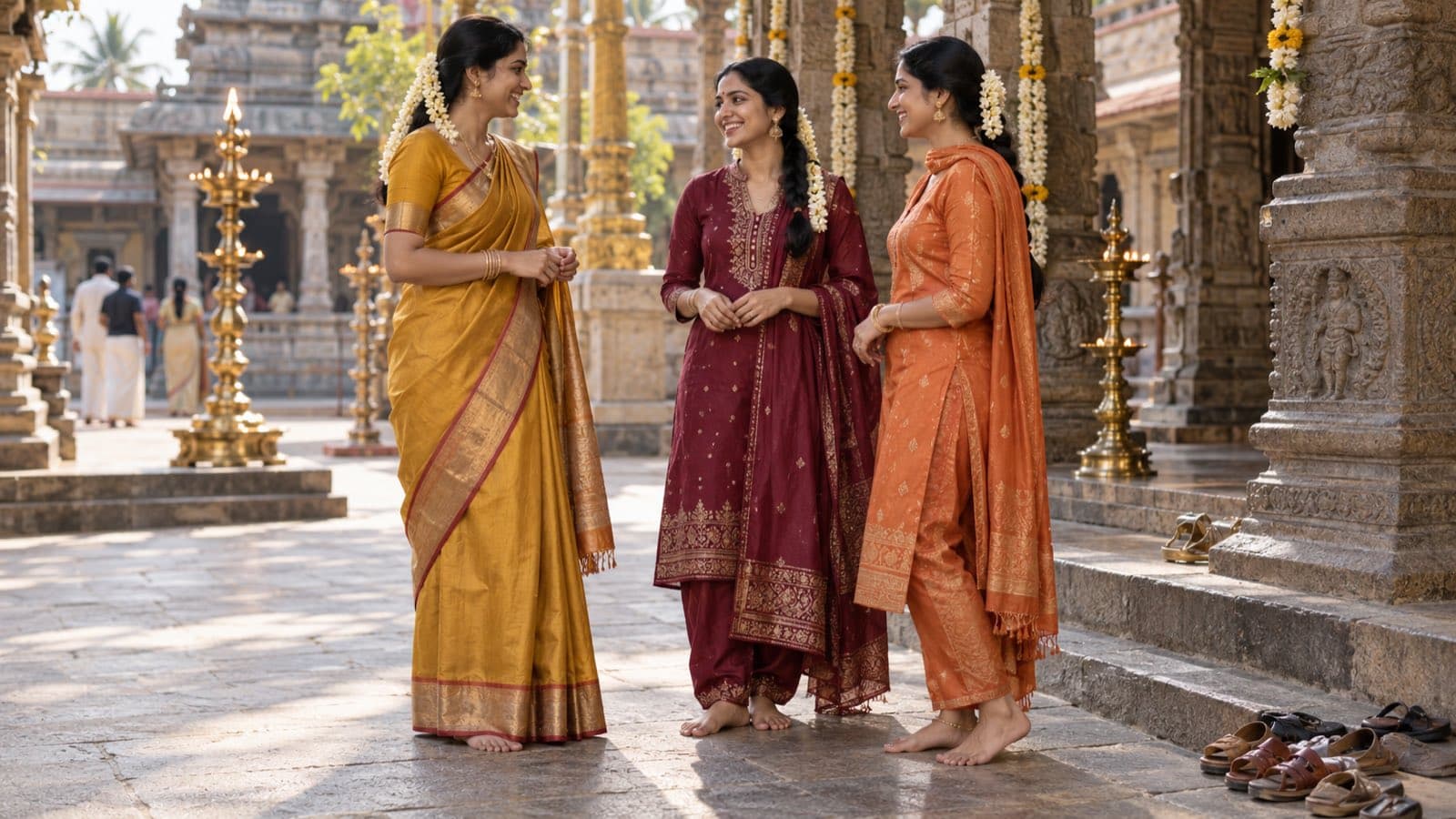
- A dupatta that stays put. You will be bending, carrying and hugging all day. A dupatta pinned at the shoulder or draped across the body stays where you put it; one worn loose over both arms will not.
- Comfortable footwear. Block heels, wedges, embellished juttis or kolhapuris. You will be standing far longer than any guest.
- Not outshining the bride. Heavier work, a deeper colour or more sparkle than the bride's outfit pulls attention in photographs. Keep yours a level down.
- Coordinating, not matching. Pick a colour from the bride's palette, or a shade next to hers, so the family photographs look planned without you looking like a second bride.
If you are attending as a guest rather than family, our wedding guest outfit guide is the better read. This guide is for the people running the show.
Sister of the bride outfit ideas by function: quick reference
| Function | Outfit type | Colour idea | Practical tip |
|---|---|---|---|
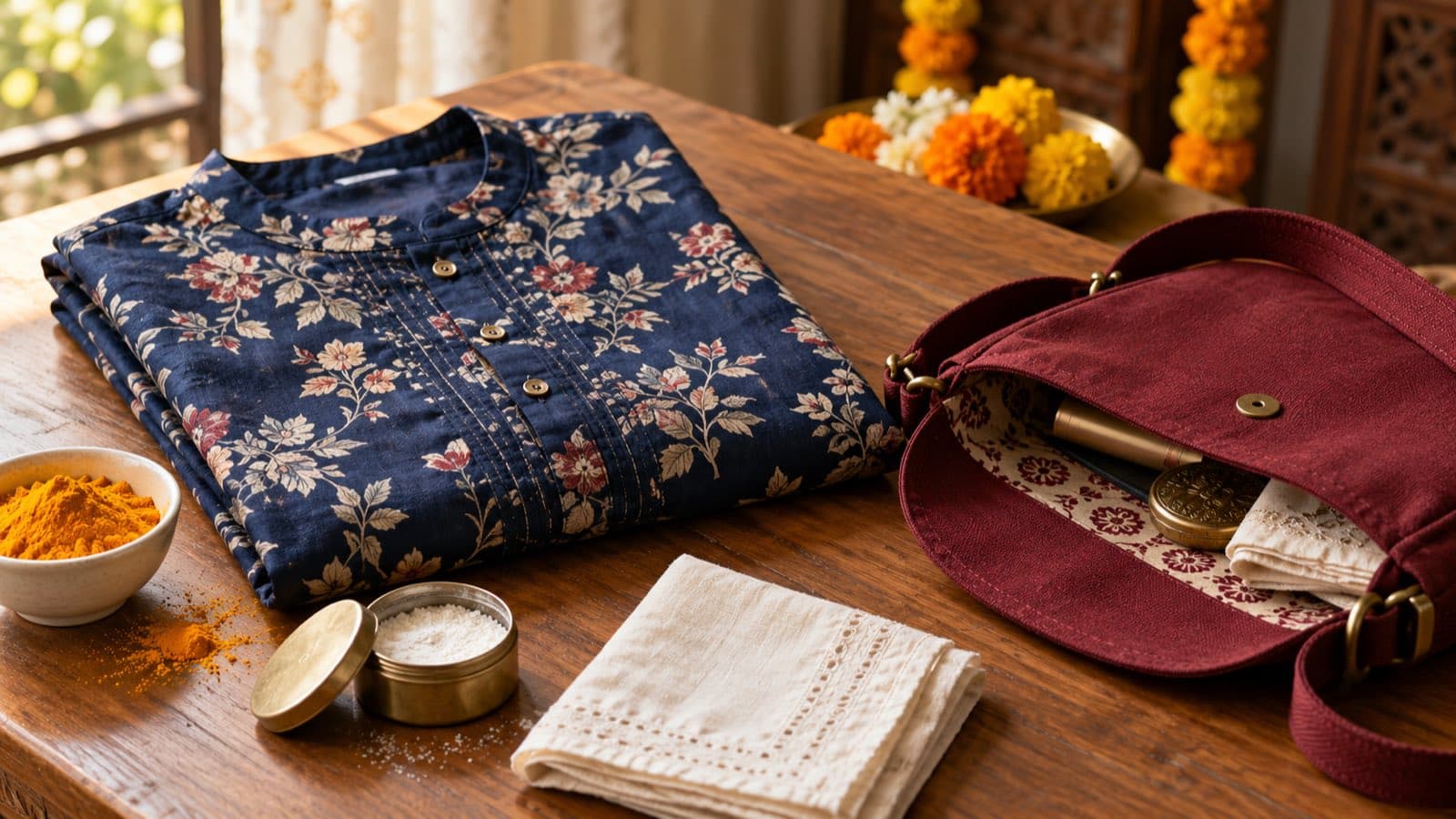
| Haldi | Cotton or silk blend kurta set with trousers | Yellow, mustard, or a soft green beside the bride's yellow | Wear something you don't mind getting stained; skip the heavy dupatta or pin it tight |
| Mehendi | Sharara set with a short kurta | Green, teal or a pastel from the décor | A short kurta keeps your hands and sleeves out of the henna |
| Sangeet | Sequinned sharara set or embroidered co-ord | Magenta, fuchsia, emerald or deep jewel tones | Pick a hem that clears the floor; you will dance |
| Wedding | Ready-to-wear lehenga with a lighter dupatta | A shade from the bride's family: olive, pink or a muted gold | Pin the dupatta at the shoulder and waist before the pheras |
| Reception | Embroidered co-ord or a sharara set | A colour you haven't worn yet that week | Choose something you can greet guests in for four hours |
Haldi: a kurta set you can get messy in
At the haldi, the bride is usually in yellow, and the sister is in the middle of the paste, the flowers and the water. This is not the function for a delicate fabric or a long trailing dupatta.
A yellow or mustard kurta set with straight trousers is the classic choice. To coordinate without matching the bride, go a shade lighter or darker than her yellow, or pick a soft green or peach that sits beside it in photographs. Trousers are easier than a sharara here because you may sit on the floor and lean over the bride.
Haldi kurta set in stock:
- The yellow embroidered silk blend thread-work kurta with trousers and dupatta is ₹2,704. Its thread work lifts it above everyday cotton without competing with the bride.
Host tip: skip the dupatta during the actual haldi, or pin it firmly at one shoulder. Keep wet wipes in your bag for the inevitable yellow handprints.
Mehendi: a sharara that sits on the floor
The mehendi is long and mostly seated. You will be passing food, managing the playlist and probably getting your own mehendi done between jobs.
A sharara set suits this well. It is comfortable on a floor cushion, it moves when the dholak starts, and a short kurta keeps the sleeves and hem away from wet henna. Green is the traditional colour of the day, but any fresh shade from the décor works.
Mehendi sharara set in stock:
- The green floral embroidered silk blend kurta with sharara and dupatta is ₹2,185, with an above-knee thread-work kurta that keeps your hands free.
Host tip: if you are getting mehendi done, choose a kurta with sleeves you can push up, and have someone else hold your phone. For more colour and outfit ideas for the day, see our mehendi outfit ideas.
Sangeet: dance-ready, but a step quieter than the bride
The sangeet is where the bride's sister usually performs, often more than once. You need an outfit that moves, survives a choreographed routine and still looks good on stage.
A sequinned sharara set gives you shine without the weight of a full lehenga. An embroidered co-ord with palazzos is the lighter alternative if you are dancing in two or three numbers. Keep the sparkle below the bride's: if she is in heavy sequins, choose thread work with a little shine.
Sangeet outfits in stock:
- The magenta embroidered sequinned silk blend kurta with sharara and dupatta is ₹2,304, a jewel tone that photographs well under stage lights.
- The green embroidered silk blend top with palazzos is a co-ord at ₹3,281. It has no dupatta to manage on stage.
Host tip: wear your dance shoes to the venue and change into the dressier pair only for photographs. Our sangeet outfit ideas go deeper into dancing in each outfit type.
Wedding: a lehenga that lets you work
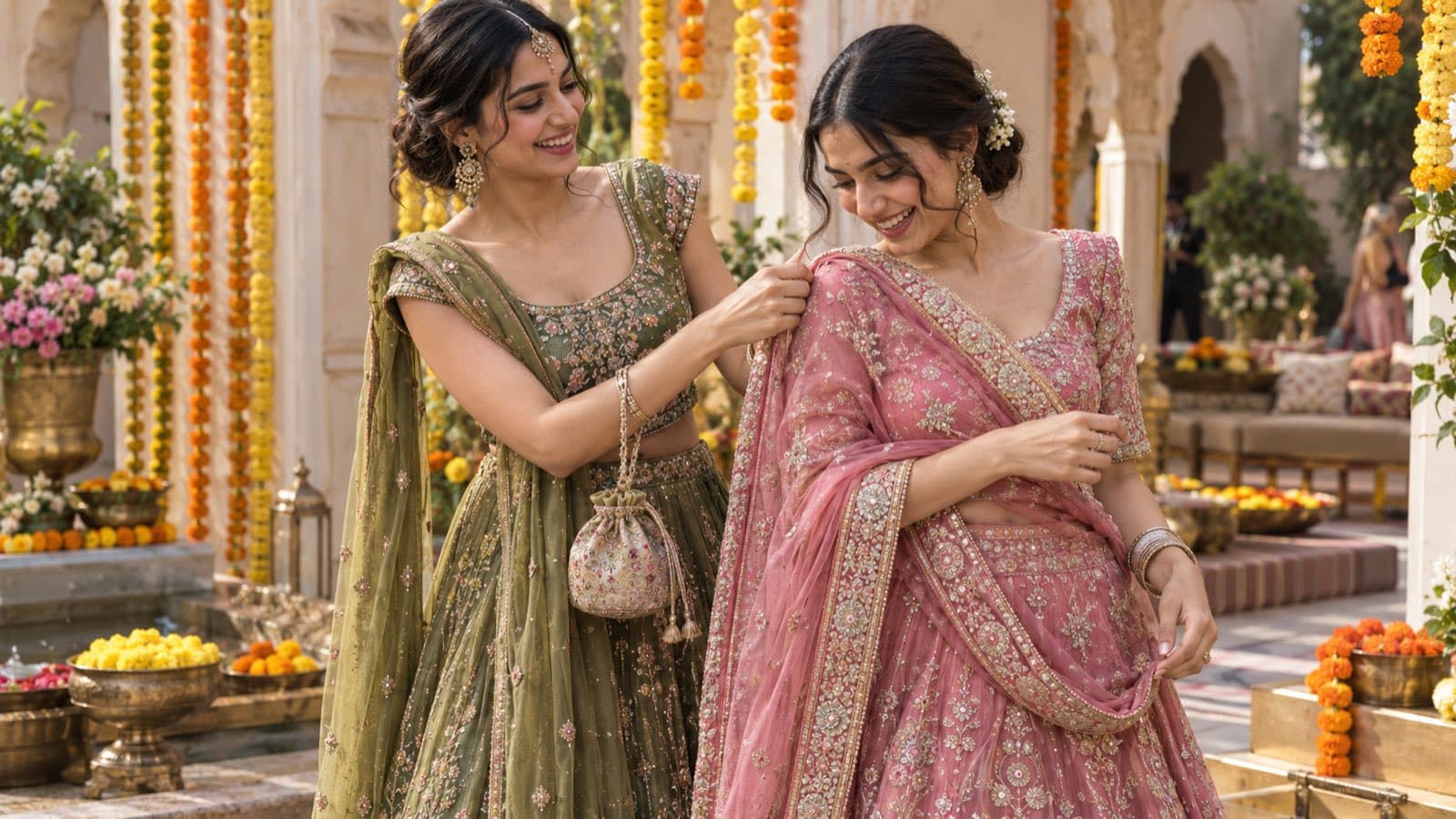
On the wedding day, the sister is in the mandap, beside the bride for the pheras and in every family portrait. A lehenga is the expected choice, but it needs to be one you can sit, stand and climb stairs in.
A ready-to-wear lehenga saves time in the dressing room, which you won't have. Pick a colour from the bride's family of shades rather than her exact one: if she is in red, an olive, a dusty pink or a muted gold sits beautifully beside her without looking like a copy.
Wedding lehengas in stock:
- The olive embellished thread-work ready-to-wear lehenga with blouse and dupatta is ₹6,587. Olive sits well beside a red or pink bridal lehenga.
- The pink embroidered thread-work ready-to-wear lehenga with blouse and dupatta is ₹3,886, a lighter option for a day wedding.
Browse more lehenga cholis.
Host tip: pin the dupatta at the shoulder and tuck or pin the other end at the waist before the rituals begin. You will be lifting and bending all evening. Our guide on how to drape a dupatta shows the secure drapes step by step.
Reception: polished, comfortable and new
The reception is the most formal and the most static function. You are greeting guests, posing for photographs and pointing people to the food. Comfort over four hours matters more than drama.
An embroidered co-ord looks polished and lets you move between tables easily. If you'd rather stay traditional, re-wear your sangeet sharara with different jewellery, or pick a sharara set in a colour you haven't worn yet that week.
Host tip: this is the function where you'll want a bag on your shoulder all evening. See the next section.
Coordinating with other sisters and cousins
Groups of sisters and cousins often want to look connected in photographs. Exact matching outfits can look like a uniform, and they make it hard for everyone to find a fit and style they like.
Twinning in one colour family works better:
- Choose one colour family per function, such as pinks and magentas for the sangeet or greens and teals for the mehendi, and let everyone pick her own shade and silhouette.
- Vary the outfit type. One cousin in a sharara, one in a co-ord and one in a lehenga reads as a group but lets each person dress for her own comfort.
- Keep the bride's colour out of the group palette, or use only a muted version of it.
- Match one small thing if you want a stronger link: the same jewellery style, the same flowers in the hair or the same dupatta drape.
Share the plan in a family group chat early so nobody buys the wrong shade at the last minute.
What the bride's sister should carry: the essentials bag
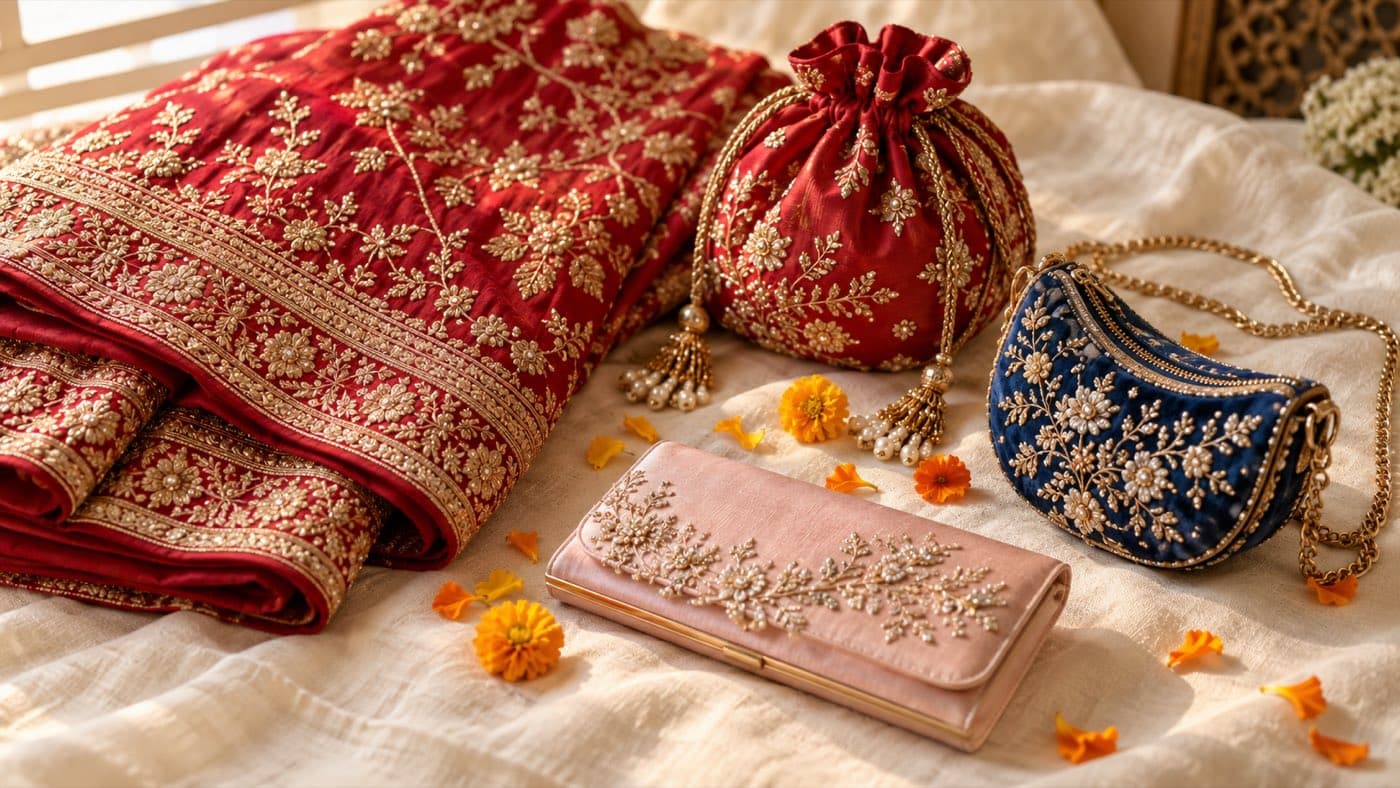
You are the person everyone comes to for a safety pin. A small bag that stays on your body leaves your hands free for the thaal, the bride's dupatta and the guests.
A sling or a potli on a wrist cord works far better than a clutch you will put down and lose. Pack:
- Safety pins in two sizes, plus a few bobby pins.
- Your phone, fully charged, with a small power bank if the day is long.
- Tissues and a small pack of wet wipes.
- A comb and any medication the bride or you might need.
- A little cash for the dhol players, the flower sellers and the inevitable tips.
Bags in stock:
- The multicolour embroidered fabric potli clutch is ₹3,333 and suits any colour palette across the functions.
- The red embellished fabric sling bag is ₹3,392 and keeps your hands free on the wedding day.
Free shipping applies to orders over ₹799, and you have 7-day returns. Check the size chart before ordering each outfit, especially if you are buying several sets for one week of functions.
Related guides
- Wedding Outfit Ideas for the Bride's or Groom's Sister and Family
- Wedding Season 2026 Outfit Ideas for Women: Guest Looks by Function
- Destination Wedding Packing List: Outfits and Bags for Every Function
Frequently asked questions
What should the bride's sister wear to the wedding?
A lehenga in a shade from the bride's colour family, not her exact colour, with slightly lighter embellishment than hers. A ready-to-wear lehenga is practical because the sister rarely has time to dress. Pin the dupatta securely so you can help with the rituals.
Should the bride's sister match the bride?
Coordinate, don't match. Pick a colour that sits beside the bride's in the same family, such as olive or dusty pink beside a red bridal lehenga, so photographs look planned without making you look like a second bride.
What is a good haldi outfit for the bride's sister?
A cotton or silk blend kurta set with straight trousers in yellow, mustard or a soft green. Choose something you won't mind getting stained, and skip the dupatta or pin it tightly during the ceremony itself.
What should sisters wear for the sangeet if they are performing?
A sharara set or an embroidered co-ord that clears the floor and lets you move. Keep the sparkle a step below the bride's, and wear comfortable shoes for the dance before changing into dressier ones for photographs.
How can sisters and cousins twin at a wedding without matching exactly?
Choose one colour family per function and let each person pick her own shade and outfit type. Matching one small detail, such as the dupatta drape or the jewellery, adds a link without making it look like a uniform.
What should the bride's sister wear to the reception?
An embroidered co-ord or a sharara set in a colour you have not worn earlier in the week. The reception means hours of greeting guests and posing for photographs, so choose something polished that you can stand and move between tables in comfortably.