How to Drape a Dupatta: 8 Ways, Step by Step
Eight dupatta styles with simple steps, from the everyday V-drape to a lehenga drape over the arms, plus which fabric suits each and how to stop a slippery dupatta sliding.
To drape a dupatta, decide where you want the weight to sit: across both shoulders in a V for everyday kurtas, pinned on one shoulder for festive wear, over the head for a puja or gurdwara, or over the arms with a lehenga. The eight drapes below cover nearly every occasion, and each takes under two minutes with a couple of safety pins. Light fabrics like georgette and chiffon suit flowing drapes; stiffer ones like organza and chanderi hold pleats and look best pinned.
Key takeaways
- The classic V-drape, with the middle of the dupatta at the front of the neck and both ends thrown back, is the easiest everyday drape.
- For a wedding, a one-shoulder pinned drape or a saree-style pleated drape keeps the dupatta secure and shows off the outfit.
- Pin a dupatta to the kurta's shoulder seam from the inside; the seam is the strongest point and hides the pin.
- Crisp organza, chanderi and silk blend hold pleats; soft georgette and chiffon flow and need pins to stay put.
- A standard dupatta is typically about 2.25 to 2.5 metres long, enough for every drape here, including saree-style.
- Cotton is the most practical daily dupatta fabric because it breathes, grips the shoulder and rarely slips.
Dupatta styles at a glance
| Drape | Best for | Pins needed | Easiest fabric |
|---|---|---|---|
| Classic V (both shoulders) | Office, everyday, a family lunch | None or one | Cotton, georgette |
| One shoulder, pinned | Festive evenings, weddings, photos | One or two | Chanderi, silk blend, organza |
| Cape style | Sangeet, cocktail, a modern look | Two | Georgette, organza |
| Belted | Parties, long evenings, hands-free days | One, plus a belt | Silk blend, cotton |
| Saree-style pleated | Weddings, festivals, formal functions | Two or three | Silk blend, chanderi |
| Neck wrap / scarf | Travel, college, winter mornings | None | Cotton, soft georgette |
| Head cover | Puja, gurdwara, temple, elders at home | One | Cotton, chanderi |
| Over the arms (lehenga) | Wedding functions, reception | One or two | Georgette, net, organza |
How to drape a dupatta: 8 ways, step by step
1. Classic both shoulders (the V-drape)
This is the drape most people mean when they say "wear the dupatta normally". It frames the neckline and works with any kurta length.
- Hold the dupatta lengthways and find the middle.
- Place the middle at the front of your neck, just below the collarbone, so it forms a soft V or U.
- Throw each end back over the matching shoulder so both tails fall down your back.
- Even out the lengths, or let one side hang slightly lower for a relaxed look.
- If it keeps sliding, put one small pin at each shoulder seam, hidden under the fold.
When to wear it: office, everyday errands, a family lunch, any time you want coverage without fuss.
Fabric: cotton and cotton blend sit well and do not slip. Georgette falls more softly but needs the shoulder pins.
2. One shoulder, pinned
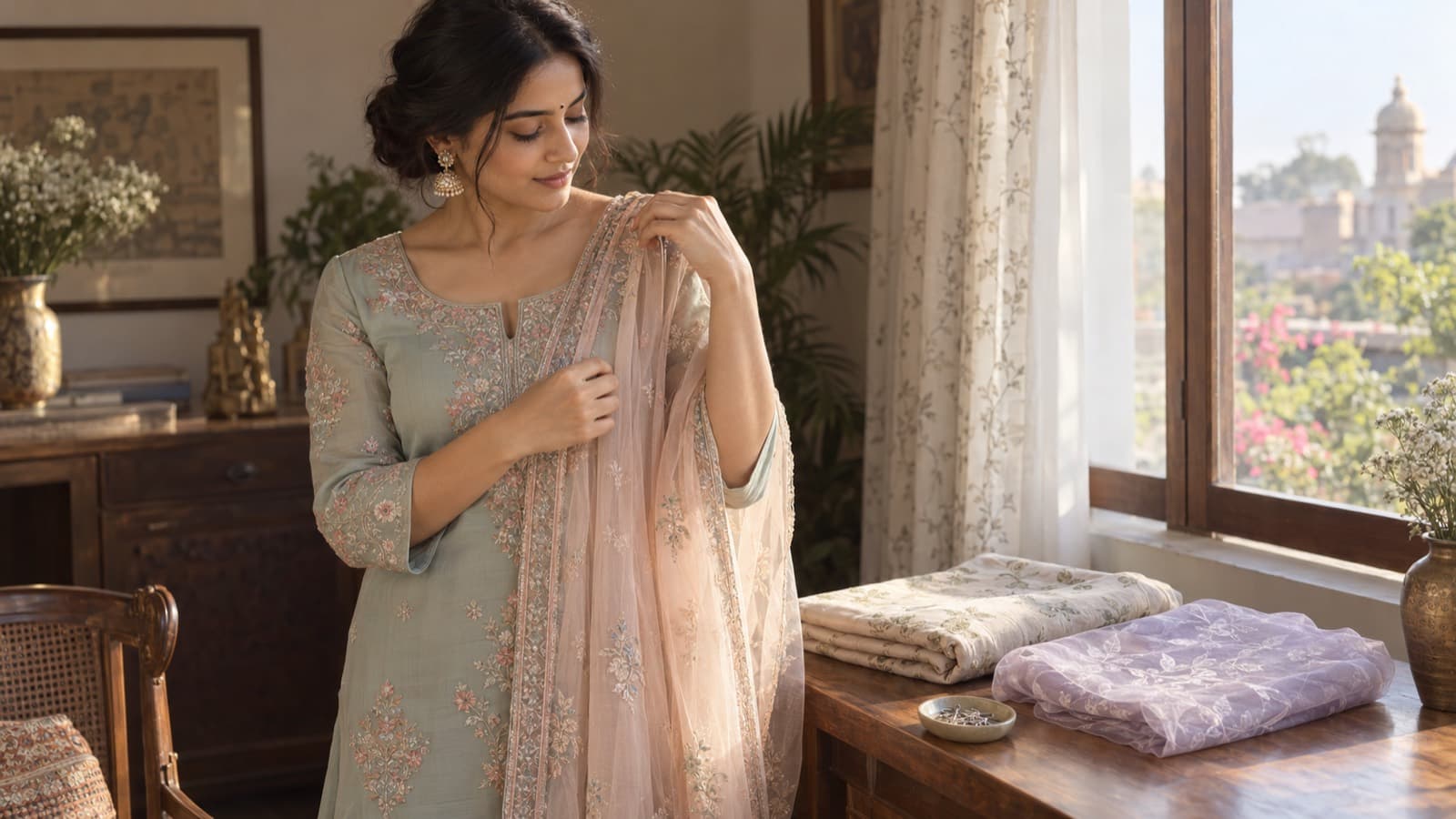
The single most useful festive drape. It shows off the kurta's yoke and embroidery while keeping a long, elegant line.
- Gather the dupatta into loose pleats along its length, about 2 to 3 cm wide.
- Place the pleated dupatta on your left shoulder with about a third of the length in front and two thirds behind.
- Pin it to the kurta at the shoulder seam with a safety pin, catching both layers from underneath.
- Let the front tail fall straight, or fan out the back so it spreads across your shoulder blade.
When to wear it: Diwali, weddings, a puja at home, any event where you will be photographed.
Fabric: chanderi, silk blend and organza hold the pleats crisply. Georgette works too, but pleat it more tightly.
3. Cape style
A cape drape turns a simple kurta set into something closer to an Indo-western outfit. It works best with straight or A-line kurtas and sharara sets.
- Hold the dupatta behind you at full width, like a shawl.
- Bring it over both shoulders so the width covers your upper back and the tails fall straight down the front.
- Pin each side at the shoulder seam so the fabric stays open across the back.
- Leave the front tails loose and parallel, without crossing them.
When to wear it: sangeet, a cocktail evening, a festive party where you want a modern shape.
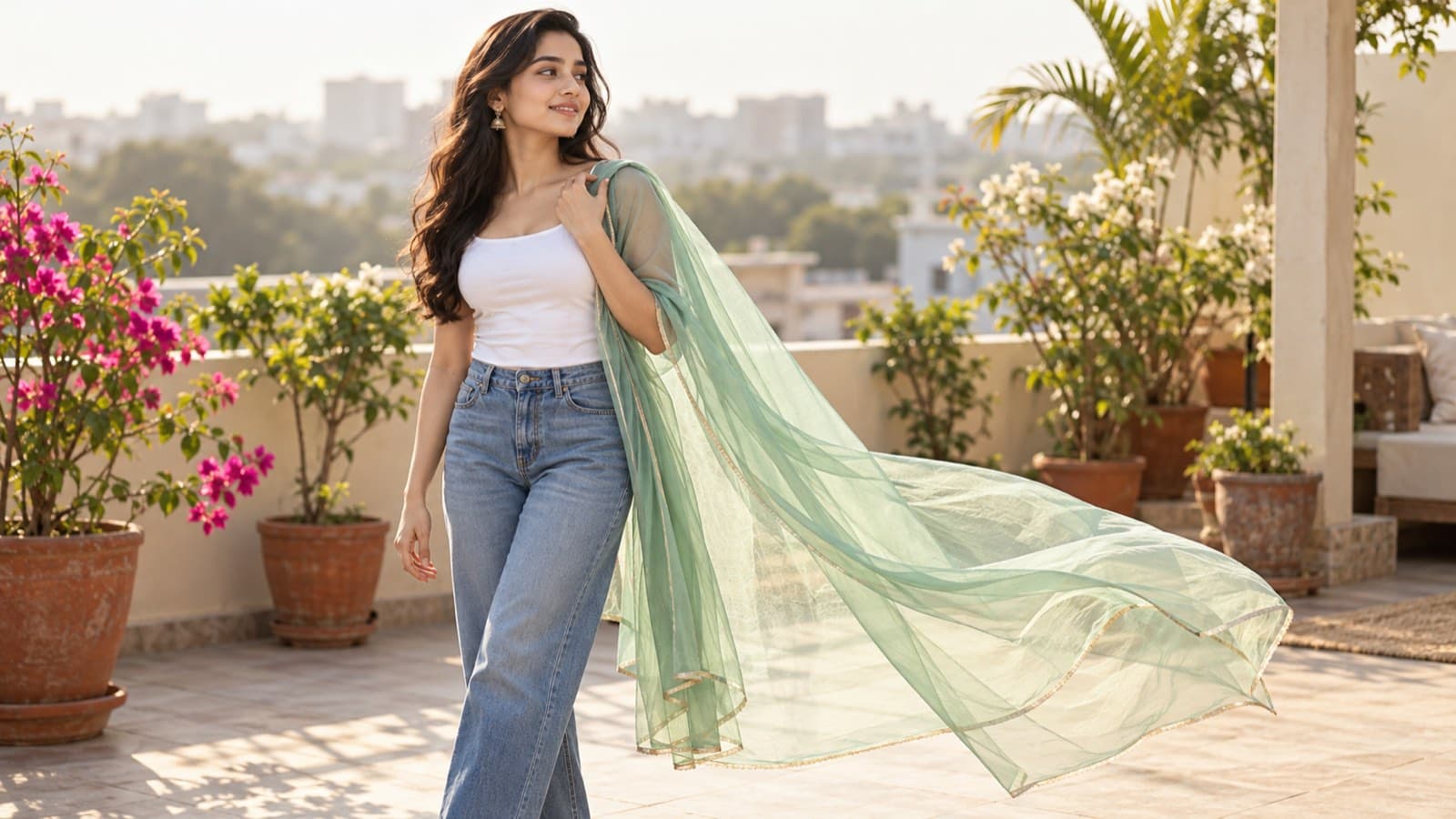
Fabric: sheer georgette and organza look best because the kurta shows through at the back. Heavy silk can feel bulky.
4. Belted
Belting the dupatta keeps it in place all evening and gives your waist a defined line. It is the drape to choose when you need both hands free.
- Drape the dupatta in a V (method 1) or over one shoulder (method 2).
- Smooth the front tail flat against the kurta.
- Put a slim belt over the dupatta at your natural waist; a fabric, metallic or embroidered belt all work.
- Adjust the folds above and below the belt so they sit evenly, and pin from inside if needed.
When to wear it: a party, a long wedding function, hosting at home, dancing.
Fabric: silk blend and cotton stay put under a belt. Very sheer fabric can bunch, so use fewer folds.
5. Saree-style pleated
This drape copies the pallu of a saree, so a kurta set or lehenga reads as more formal.
- Tuck one end of the dupatta into the waistband on your right side, at the front.
- Take the dupatta across your front, from right hip to left shoulder.
- Make 4 to 6 even pleats at the point where it crosses your left shoulder.
- Pin the pleats to the kurta or blouse at the shoulder seam.
- Let the rest fall behind you like a pallu, at whatever length suits you.
When to wear it: weddings, Karwa Chauth, Diwali puja, formal family functions.
Fabric: silk blend and chanderi pleat cleanly. Organza works if you press the pleats first.
6. Neck wrap / scarf
The most practical drape. It keeps the dupatta out of the way without taking it off.
- Fold the dupatta lengthways in half, or in thirds if it is wide.
- Place it around the back of your neck with both ends in front.
- Loop one end once around your neck, or cross both ends and flip them back over your shoulders.
- Leave the ends loose at the front or tucked behind.
When to wear it: travel, college, a cold morning, any time you are on the move.
Fabric: soft cotton and georgette. Stiff organza and heavy silk do not wrap neatly.
7. Head cover (for a puja or gurdwara)
Covering the head is commonly expected in a gurdwara for everyone, and many families also cover the head during a puja, at a temple, or in front of elders. Customs differ from family to family, so follow what your hosts do.
- Drape the dupatta in a V or over one shoulder first.
- Lift the back section and bring it up over your head, so the fabric sits just behind your hairline.
- Settle the sides so they frame your face and fall over both shoulders.
- Pin it lightly to your hair or a hairclip at the back if you will be bending, sitting on the floor or doing an aarti.
When to wear it: a gurdwara visit, including Gurpurab, a puja at home, a temple visit.
Fabric: cotton and chanderi grip the hair and stay put. Slippery georgette needs a pin or a clip.
8. Over the arms for a lehenga
The bridal-party drape. It shows the full lehenga skirt and the back of the blouse.
- Hold the dupatta behind you at full width.
- Let it rest low on your back, at about the level of your waist or slightly above.
- Bring each end forward over the crook of your elbows so the fabric falls on either side.
- Hold it loosely as you walk, or pin one end to the blouse at the shoulder so you only manage one side.
When to wear it: wedding functions, reception, a sangeet when you want the lehenga to be the focus.
Fabric: georgette, net and organza look lightest. A heavy dupatta is better pinned on one shoulder instead.
Dupatta draping styles for wedding functions
Each wedding function asks something different of a dupatta, so match the drape to what you will be doing.
| Function | Drape | Why |
|---|---|---|
| Haldi | Neck wrap, or leave it off | Keeps the fabric away from the turmeric |
| Mehendi | One shoulder, pinned | Leaves both hands free while henna is applied |
| Sangeet | Cape or belted | Stays put while you dance |
| Wedding ceremony | Saree-style pleated, or a head cover | Looks formal and covers the head for rituals if needed |
| Reception | Over the arms with a lehenga, or one shoulder | Shows off the full outfit in photographs |
Our sangeet outfit ideas cover dancing in each outfit type, and the wedding guest outfit guide goes through every function.
Dupatta style for kurta: match the drape to the cut
- Straight kurta: the classic V for work, or one shoulder pinned for an evening.
- A-line kurta: one shoulder, so the flare of the kurta stays visible on the other side.
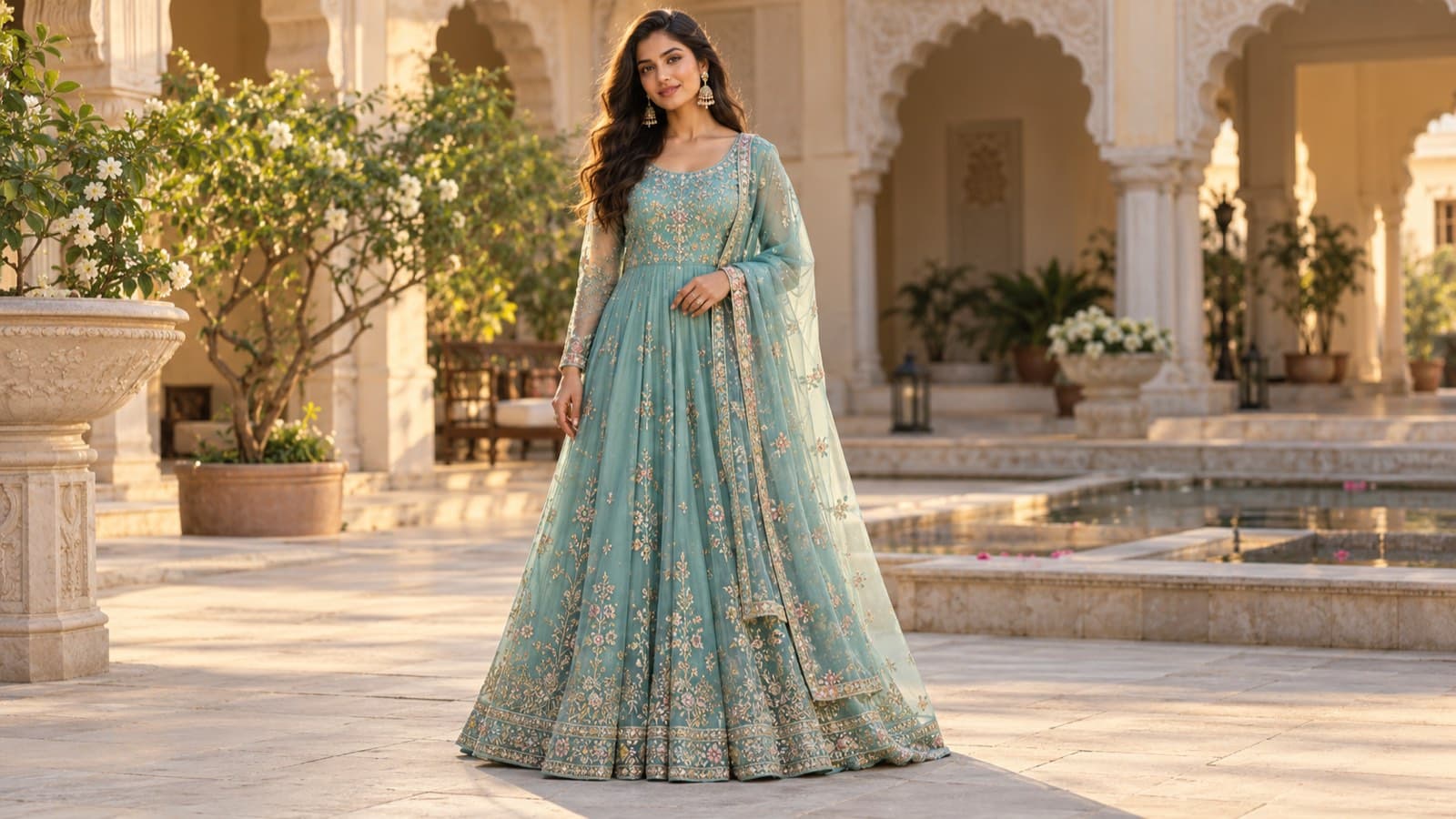
- Anarkali: a cape drape or a loose V, so the dupatta does not hide the gathered skirt.
- Short kurti with a sharara: saree-style across the body, or one shoulder; both show the sharara's flare.
- Angrakha: pin it on the shoulder opposite the overlap, so the wrap detail shows.
Which dupatta fabric suits which drape?
| Fabric | Feel | Holds pleats? | Slips? | Best drapes |
|---|---|---|---|---|
| Cotton | Soft, matte, breathable | Loosely | Rarely | Classic V, neck wrap, head cover, belted |
| Chanderi | Light, slightly crisp, soft sheen | Well | A little | One shoulder, saree-style, head cover |
| Georgette | Flowing, sheer, grainy | Only if pinned | Yes | Classic V, cape, over the arms |
| Organza | Stiff, sheer, glossy | Very well | Yes | One shoulder, cape, over the arms |
| Silk blend | Smooth, medium weight, shine | Well | Sometimes | Saree-style, one shoulder, belted |
Crisp fabrics hold shape, so pin and pleat them; soft fabrics flow, so let them hang. Our guide to kurta fabrics explains how cotton, cotton blend and silk blend differ in wear.
How to pin a dupatta so it does not slide
To pin a dupatta, pass a small safety pin through the dupatta and the kurta's shoulder seam from the inside, so the pin is hidden and held by the strongest point of the kurta. Georgette, organza and silk blend slide off the shoulder because they have little grip against a smooth kurta, so a few extra fixes help:
- Pin from the inside. Put the safety pin through the dupatta and the kurta's shoulder seam from underneath, so the head of the pin is hidden. The seam is the strongest point and will not pull.
- Use small pins on fine fabric. A large pin leaves visible holes in organza and georgette. Use the smallest safety pin that will hold.
- Try double-sided fabric tape. A short strip between the dupatta and the kurta at the shoulder holds a light dupatta without holes. Test it on an inside seam first, as some adhesives can mark silk.
- Pleat before you pin. A pleated dupatta has more grip than a flat one and sits more evenly.
- Pin at two points for a cape or saree drape: once at the shoulder and once lower down, at the bust line or the waist.
Kurta sets with a dupatta, by drape
If you are buying a set, choose the dupatta fabric for the drape you will use most.
Kurta sets with a dupatta in stock:
- The green printed pure cotton kurta with palazzos and dupatta at ₹1,450 is an everyday set for the classic V or a neck wrap.
- The purple chanderi silk knee-length kurta with trousers and dupatta at ₹1,613 is a solid set that suits a one-shoulder drape or a head cover at a puja.
- The lavender embroidered sequinned georgette kurta with trousers and dupatta at ₹1,533 is light enough for a cape drape.
- The sea green embroidered organza kurta with palazzos and organza dupatta at ₹1,999 has a crisp dupatta that holds one-shoulder pleats well.
- The red embroidered silk blend kurta with sharara and dupatta at ₹2,304 suits a saree-style or belted drape for a festive evening.
Lehengas with a dupatta in stock:
- The pink embroidered thread work lehenga and blouse with dupatta at ₹3,886 is ready to wear; try the over-the-arms drape.
- The olive embellished thread work lehenga and blouse with dupatta at ₹6,587 works with a one-shoulder or saree-style drape.
- The red foil print lehenga and blouse with dupatta at ₹6,637 is a classic wedding colour.
Browse all kurta sets and lehenga cholis. For more ways to restyle a single outfit, see five ways to wear a kurta set. Check the size chart before you order; shipping is free over ₹799 and returns are open for 7 days.
Related guides
- Kurta Set Colour Combinations That Always Work (Pairing Table)
- Kurta Necklines Explained: Round, V, Boat, Mandarin, Sweetheart
- Jewel Tones for Winter Weddings: Emerald, Wine, Plum, Royal Blue
Frequently asked questions
What is the easiest way to drape a dupatta?
The classic V-drape is the easiest. Place the middle of the dupatta at the front of your neck and throw both ends back over your shoulders. It needs no pins with a cotton dupatta, and one small pin per shoulder with a slippery one.
How do I wear a dupatta on one shoulder without it falling?
Pleat the dupatta along its length, place it on your shoulder and pin it to the kurta's shoulder seam from underneath. The seam holds the pin firmly, and the pleats give the fabric extra grip.
How should I drape a dupatta for a gurdwara?
Cover your head fully, with the fabric sitting just behind your hairline and the sides falling over both shoulders. A cotton or chanderi dupatta stays in place best, and a small clip at the back helps when you sit or bow.
How do you drape a dupatta with a lehenga?
For a light dupatta, rest it low across your back and bring the ends over your elbows. For a heavier one, pin it on one shoulder or drape it saree-style with pleats so the weight is held at the shoulder.
How do you pin a dupatta so it doesn't slip?
Pin it to the kurta's shoulder seam with a small safety pin from the inside, or use a strip of double-sided fabric tape. Pleating the dupatta before pinning also helps it stay put.
Which dupatta fabric is best for daily wear?
Cotton is the most practical for daily wear. It breathes, does not slip, washes easily and works with the classic V, a neck wrap or a head cover.