What to Wear to a Roka or Sagai at Home: Bride, Family and Guests
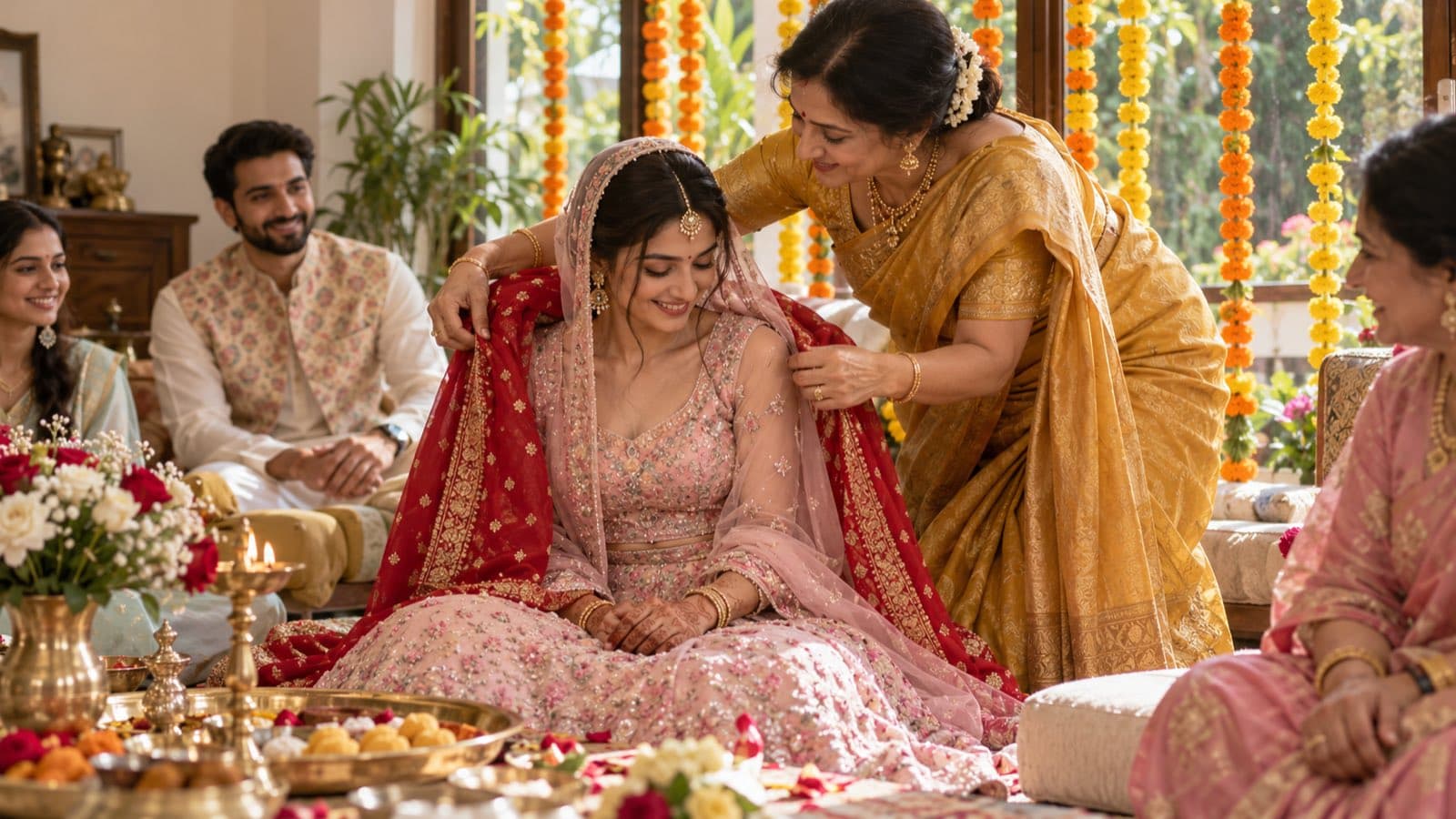
Roka and sagai outfit ideas for a small ceremony at home: what the bride-to-be, mothers, sisters and guests can wear to look festive, sit comfortably and photograph well.
For a roka or sagai at home, wear a festive but comfortable Indian outfit that lets you sit on the floor, move around and look good in close-up family photographs: an embroidered kurta set with a dupatta, a light lehenga or a soft silk saree. The bride-to-be can wear the brightest or most detailed outfit in the room, often pink, red, peach or a pastel. Family and guests should stay a step simpler, in coordinated festive colours, with light embroidery rather than heavy sequins.
Key takeaways
- A roka at home is small and traditional, so comfort and ease of sitting matter more than glamour.
- The bride-to-be wears the standout outfit; a light lehenga or an embroidered kurta set with a dupatta suits most rokas.
- Family members look best in coordinated festive colours, not identical outfits.
- Guests should dress a step simpler than close family, in thread work or gota rather than heavy sequins.
- Choose trousers, palazzos or a sharara you can sit cross-legged in, and expect to remove your shoes at the door.
- Keep a dupatta handy; you may need to cover your head during the puja or ardaas.
What is a roka or sagai?
A roka is a small ceremony where two families formally accept the match. The word comes from "rokna", to stop, because the couple are now no longer looking for anyone else. It is common in North Indian families and is usually held at the home of the bride or the groom, with a short puja or prayer, an exchange of gifts and shagun, sweets and a meal.
Sagai is a broader word for the engagement. In some families the sagai is a separate, larger ring ceremony held later at a venue; in others "roka" and "sagai" are used for the same intimate function at home. Customs vary a lot by community, so ask the family what the day will include. This guide is about the home version: close family, a living room or a terrace, and a few hours of rituals and food.
Roka outfit guide: who wears what
| Bride-to-be | Groom's or bride's mother | Sisters and cousins | Guests and friends | |
|---|---|---|---|---|
| Outfit | Light lehenga, sharara set, or embroidered kurta set with dupatta | Silk saree or an embroidered silk kurta set | Kurta set or sharara in a coordinated shade | Kurta set with dupatta or a simple saree |
| Colours | Pink, red, peach, coral, or a pastel she loves | Mustard, rust, wine, deep green | One family palette, varied shades | Any festive colour except the bride's |
| Embellishment | Thread work, gota, light mirror work | Zari border, thread work | Gota, thread work | Prints or light embroidery |
| Footwear | Juttis or flat sandals | Flat or low heels | Juttis | Easy slip-ons |
What should the bride-to-be wear for her roka?
The roka is often the first time the two families see the bride-to-be dressed for an occasion, and it is usually the first set of photographs of the couple together. She should look special, but it is not the wedding. Save the heaviest work and the full bridal jewellery for later and choose something that feels like her.
Three things matter most:
- Colour. Pink, red, peach and coral are traditional and look warm in indoor photographs. A pastel is a modern choice for a daytime roka. If the family has a custom about colour for this ceremony, follow it.
- Comfort. She will sit for the puja, stand to receive gifts and blessings, touch elders' feet and move between rooms. A light lehenga, a sharara or a kurta set with palazzos or a patiala allows all of that.
- A good dupatta. It frames the face in close-ups and covers the head if the ritual calls for it.
Roka outfits for the bride-to-be in stock:
- The pink embroidered thread work lehenga and blouse with dupatta at ₹3,886 is a ready-to-wear lehenga that feels bridal without the weight of a wedding outfit.
- The red thread work kurta with sharara and dupatta at ₹2,304 gives her the traditional red in a cut that is easy to sit in.
- The pink gotta patti silk crepe kurta with patiala and dupatta at ₹2,500 is a classic Punjabi-style roka look, comfortable for a long day at home.
For more ways to wear a lehenga at a small function, browse lehenga cholis.
What should family members wear to a roka?
Close family are hosts, so they should look festive and put together, but the bride-to-be should still stand out. The easiest way to look good in group photographs is to agree on a palette rather than a uniform. For example, the bride's side might choose warm shades such as mustard, rust and coral while the bride wears pink. Varying the shade and the fabric keeps it from looking like a team outfit.
- Mothers often wear a silk saree or an embroidered silk kurta set. The mustard floral zari saree at ₹2,999 has a gold sheen that suits a mother of the bride or groom.
- Sisters and cousins can wear a kurta set or sharara in the family palette. The yellow embroidered thread work kurta with trousers and dupatta at ₹2,704 is bright and cheerful for a daytime roka.
- Aunts might prefer a straighter kurta in a softer shade, like the rose embroidered thread work kurta with trousers and dupatta at ₹2,704.
What should a guest wear to a roka at home?
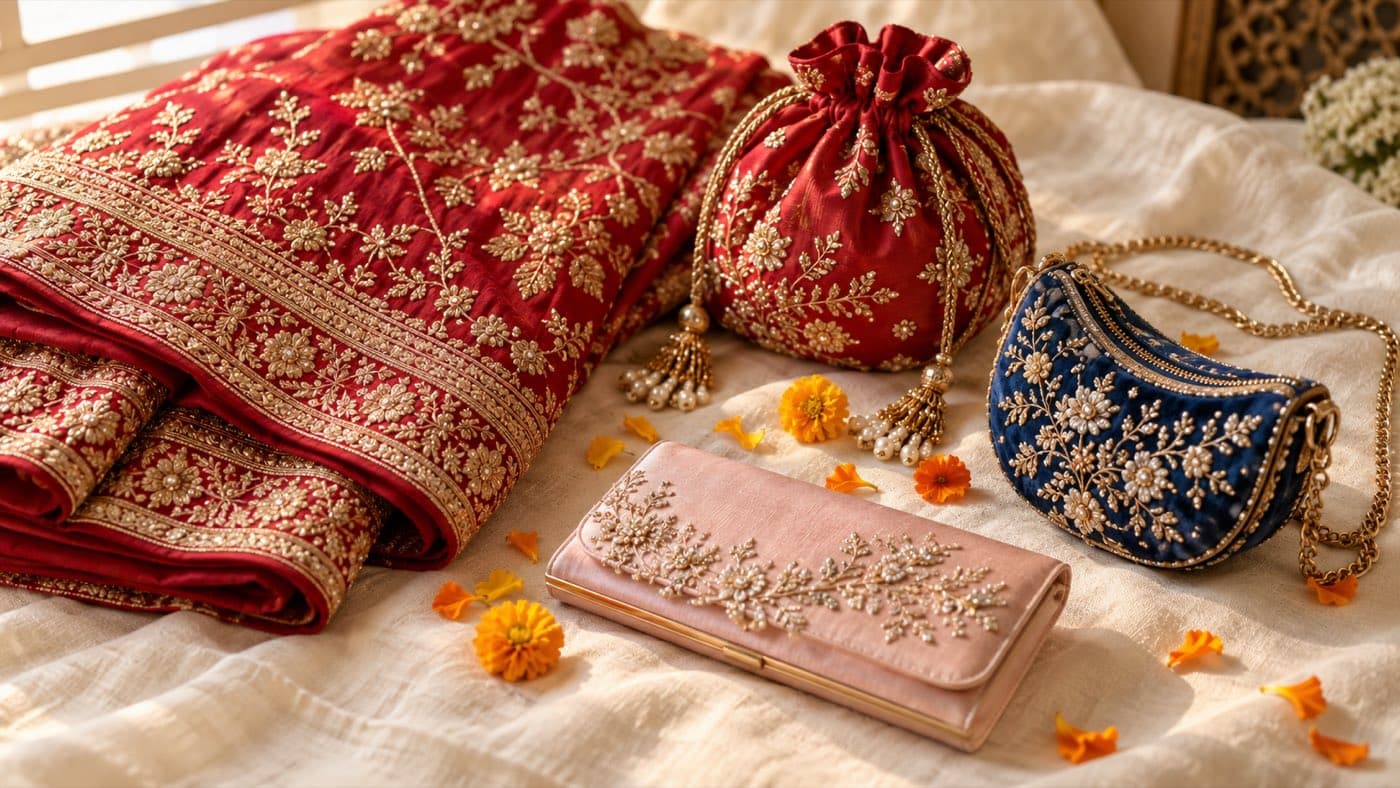
If you have been invited to a roka, you are close to one of the families, since these are small events. Dress as you would for a festival lunch at a relative's house: a kurta set with a dupatta, a printed or lightly embroidered saree, or an anarkali in a soft colour. Avoid red and the bride's colour if you know it, and keep sequins and heavy jewellery for the wedding.
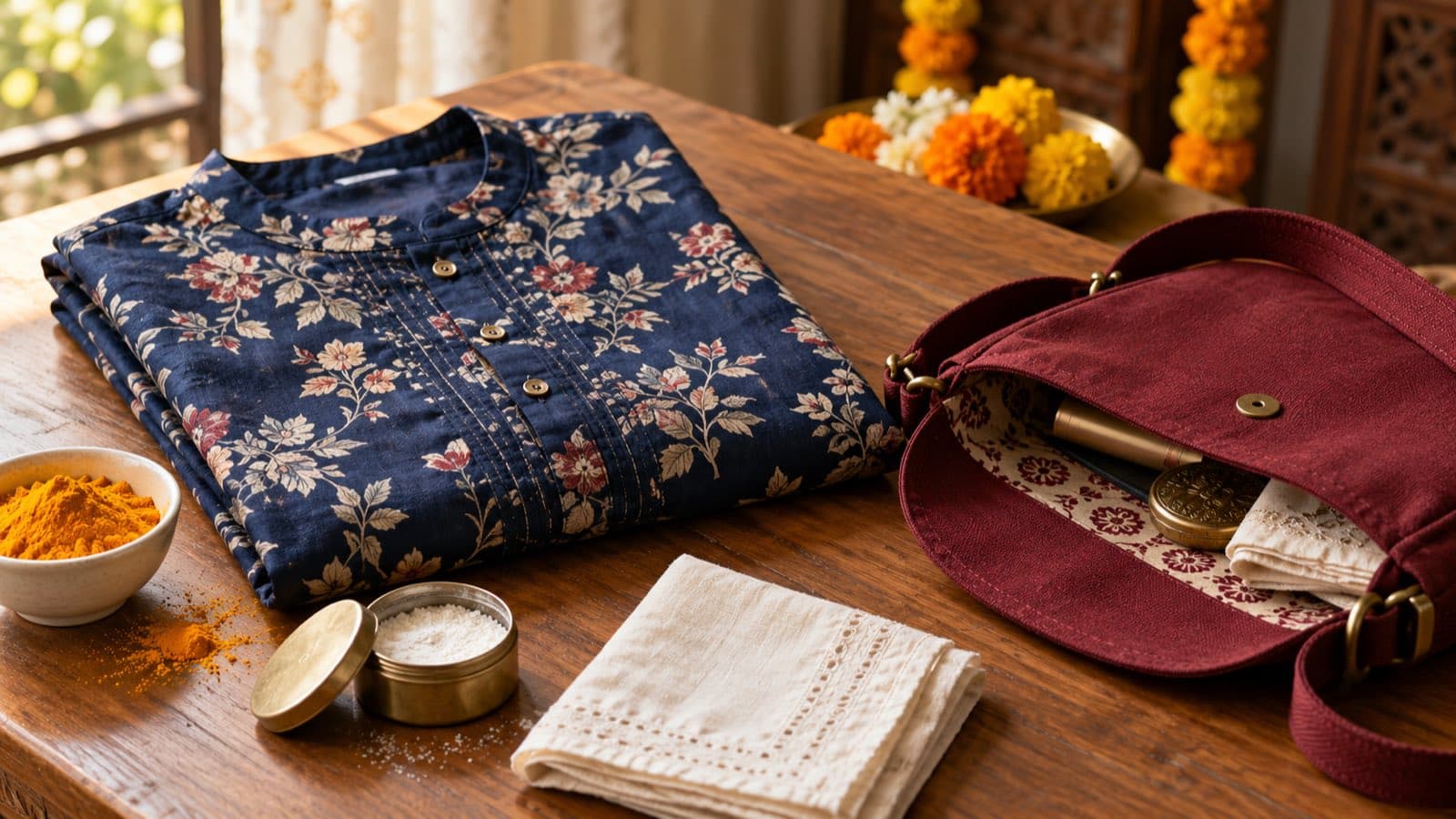
A good-value option is the rust floral embroidered chanderi silk kurta set at ₹1,370. Chanderi has a gentle sheen that looks festive indoors without being flashy. You will find more options under kurta sets.
Practical tips for a roka at home
Home ceremonies have their own logistics, and the right outfit makes them easier:
- Sitting on the floor. Many rokas include a puja or havan with everyone seated on the floor or on low cushions. Trousers, palazzos, a patiala or a sharara are easier than a tight churidar or a pencil-fit kurta.
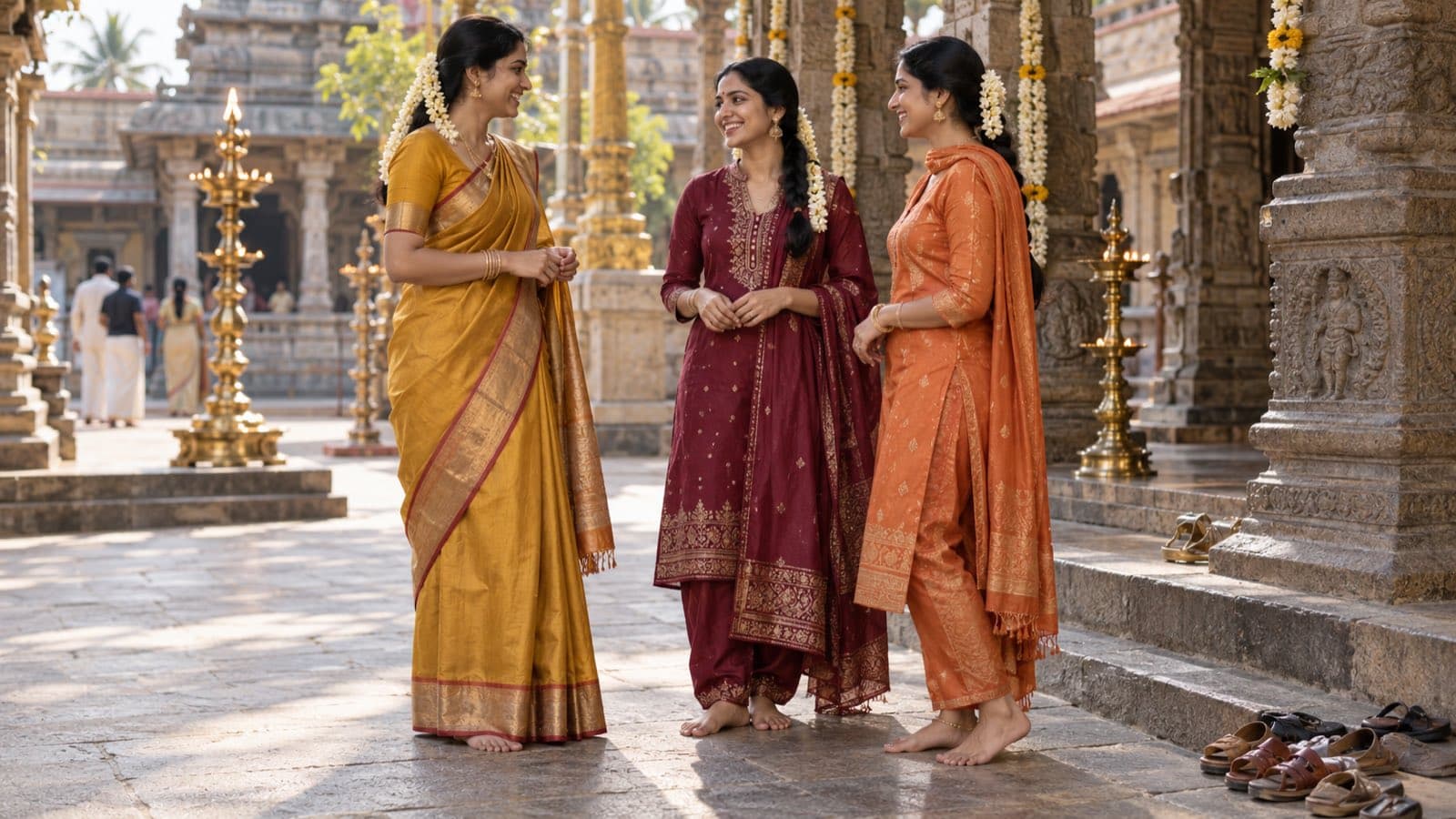
- Shoes off. In many homes you will leave your shoes at the door. Choose footwear that slips on and off, and make sure your hem does not drag once you are barefoot.
- Covering your head. In some families, especially Sikh and Punjabi homes where an ardaas is said, women cover their heads during prayers. A dupatta that stays put helps; our guide to draping a dupatta shows a few secure ways.
- Small rooms, close cameras. Home photographs are taken up close, often on phones in mixed light. Fine embroidery, clean necklines and a well-pressed dupatta show better than large sequins, which can flare in flash.
- Food and diyas. There will be sweets, a meal and often a lit diya. Keep long, loose sleeves and trailing dupattas away from flames.
Rewearing your roka outfit
A roka outfit does not need to be a one-time purchase. A kurta set from the roka can return at a friend's mehendi, a Diwali puja or a family dinner with different jewellery and a new dupatta drape. Our post on five ways to wear a kurta set has ideas.
Order early enough to try everything on at home. Check your measurements against the size chart. Shipping is free over ₹799, and you have 7-day returns if the fit is not right.
Related guides
- Wedding Outfit Ideas for the Bride's or Groom's Sister and Family
- What to Wear for a Court Marriage: Outfit Ideas for Bride and Guests
- What to Wear to a Puja at Home or a Temple Visit
Frequently asked questions
What should the bride wear for a roka ceremony?
A light lehenga, a sharara set or an embroidered kurta set with a dupatta suits most rokas. Pink, red, peach and pastels are popular choices. Keep the embroidery lighter than the wedding outfit so she can sit, move and greet elders comfortably.
What is the difference between a roka and a sagai?
A roka is a small family ceremony where both sides formally accept the match, usually held at home. Sagai means engagement, and in some families it is a separate, larger ring ceremony at a venue. Many families use the two words for the same function, so ask what the day will include.
What should guests wear to a roka at home?
A kurta set with a dupatta, a light saree or a soft anarkali is right for a home roka. Dress as you would for a festive family lunch, a step simpler than the hosts. Avoid red and the bride's colour, and skip heavy sequins.
Should the family wear matching outfits at a roka?
Coordinated rather than matching usually looks best. Agree on a colour palette and let each person choose their own shade and style. This looks cohesive in photographs while keeping the bride-to-be the clear focus.
Can I wear a saree to a roka ceremony?
Yes. A silk or zari saree is a classic choice, especially for mothers and aunts. Choose a drape you can sit on the floor in comfortably, and keep the pallu secure if you will be near diyas or serving food.