What to Wear to a Puja at Home or a Temple Visit
What to wear to a puja at home or a temple visit: covered shoulders and knees, natural fabrics, loose bottoms for sitting on the floor, the colours to favour and avoid, and the right dupatta, bag and shoes.
For a puja at home or a temple visit, wear a clean, comfortable kurta set or saree that covers your shoulders and knees, in a natural fabric such as cotton or silk, with a dupatta you can drape over your head. Choose a loose bottom like palazzos or straight trousers so you can sit cross-legged on the floor for an hour, and favour colours such as yellow, red, green, orange, pink or off white. Leave very short, sleeveless, sheer or tight clothes for another day.
Key takeaways
- Cover your shoulders and knees for a puja or temple visit; a kurta set with sleeves and a dupatta is acceptable almost everywhere.
- Pick a loose bottom such as palazzos or straight trousers so you can sit cross-legged on the floor comfortably.
- Natural fabrics such as cotton, chanderi and silk are cooler near diyas and the havan, and are traditionally preferred for worship.
- Yellow, red, green, orange and pink are the colours most widely favoured for pujas; many families avoid black on auspicious days.
- Wear freshly washed clothes, keep a dupatta for covering your head, and choose shoes you can slip off at the door.
- Some temples have strict dress codes, so check the notice at the entrance or the temple's website before you go.
Puja dress code: a quick-reference table
| Question | Home puja | Temple visit |
|---|---|---|
| Best outfit | Kurta set with palazzos or trousers and a dupatta | Kurta set with sleeves and dupatta, or a saree |
| Shoulders and arms | Covered or short sleeves with a dupatta | Covered; some temples ask for sleeves |
| Length | Knee-length kurta or longer, full-length bottom | Full-length bottom or saree |
| Head covering | Dupatta handy for the aarti | Dupatta needed at many temples |
| Fabric | Cotton, chanderi, silk blend | Cotton or silk; breathable for queues |
| Colours to favour | Yellow, red, green, orange, pink | Same, plus off white or cream |
| Usually avoided | Black, very tight fits, sheer fabric | Shorts, sleeveless tops, ripped jeans, sheer fabric |
| Bag | None needed | Small fabric sling or potli; some temples ask you to leave leather outside |
| Shoes | Barefoot at the mandir | Slip-ons you can leave at the shoe stand |
What to wear to a puja at home
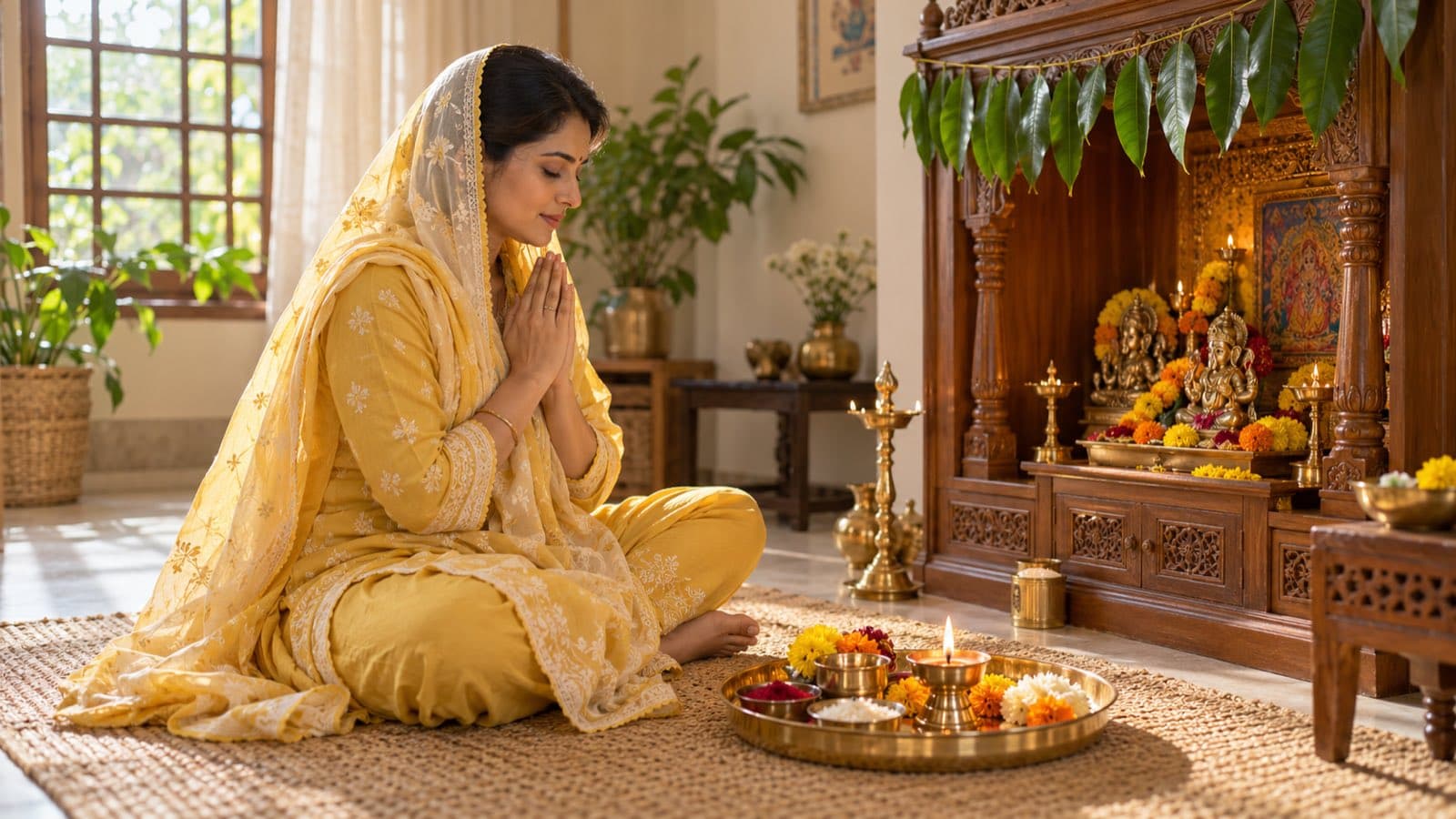
A home puja might be a griha pravesh, a Satyanarayan katha, a Lakshmi puja, a havan or a simple weekly ritual. You are usually sitting on the floor or a low mat, bending to offer flowers, holding the aarti thali and moving around diyas and incense.
That makes three things matter most: you need to sit cross-legged without your clothes riding up, you need sleeves and a dupatta that stay clear of the flame, and you need a fabric you can breathe in near a havan. A kurta set with palazzos or straight trousers handles all three. Leggings and churidars work too, but they can feel tight after an hour on the floor.
If you are the host, choose something you can also cook and serve in. If you are a guest, a slightly dressier set in silk blend or chanderi is a respectful choice.
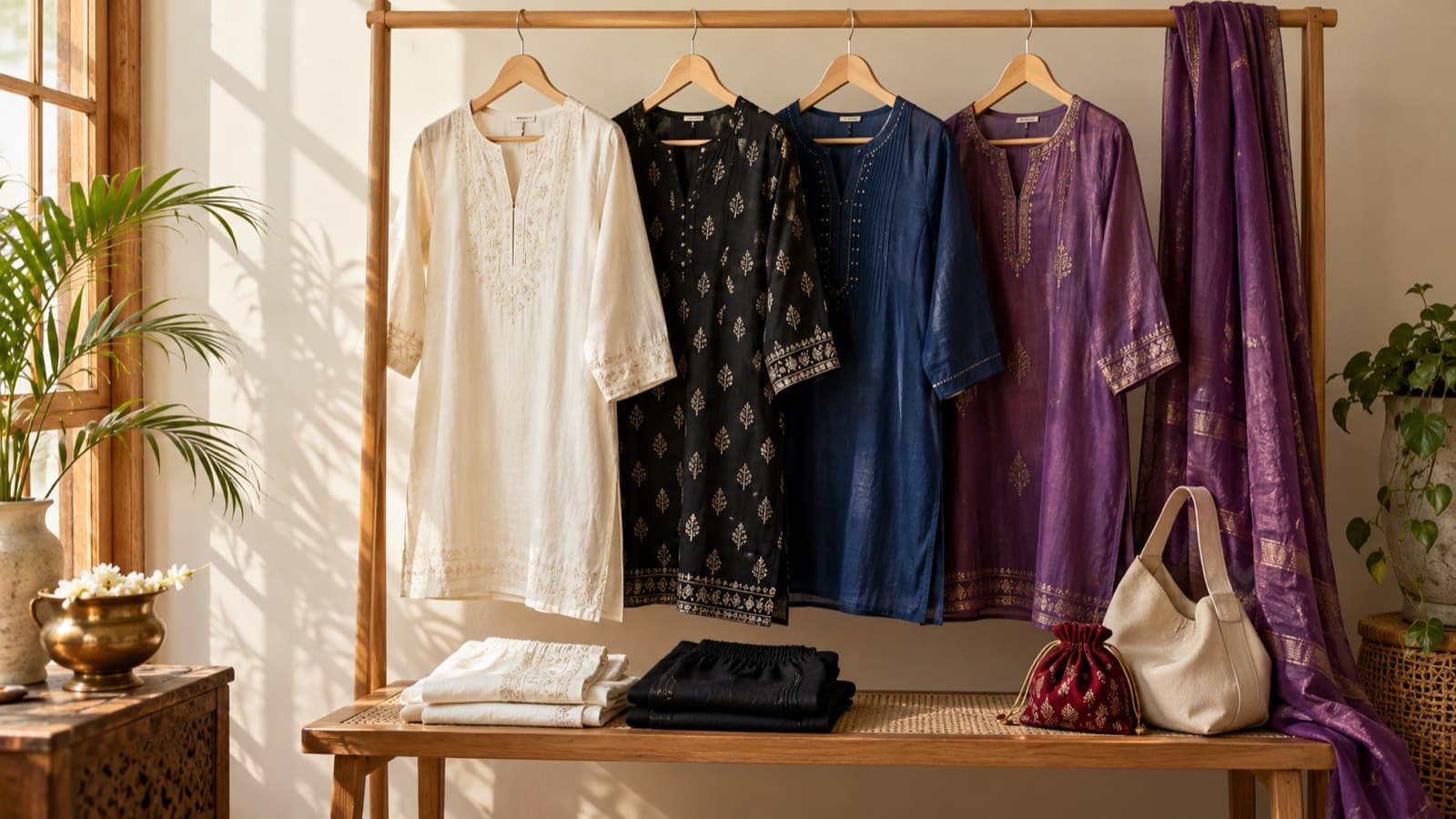
Kurta sets in stock for a home puja:
- The yellow empire gotta patti silk crepe kurta with trousers and dupatta at ₹1,189 is in the most auspicious puja colour, with a dupatta included.
- The green printed pure cotton kurta with trousers and dupatta at ₹1,200 is a breathable, washable choice for a long havan.
- The pink embroidered silk blend kurta with palazzos and dupatta at ₹1,800 is a little dressier for a guest at a griha pravesh or katha.
Browse all kurta sets for more colours.
What to wear to a temple
A temple visit adds queues, crowds, stairs and, often, a written dress code. The basics are simple: cover your shoulders and legs, carry a dupatta or stole for your head, and wear something you can stand in for a while and then sit or kneel in.
Many temples in India expect full-length clothing, and some, especially in the south, ask women to wear a saree or a salwar kameez with a dupatta and do not allow western clothes inside. Some also ask visitors to leave leather belts and bags outside. Rules differ from temple to temple, so look for the notice at the entrance or check the temple's website before you travel.
A cotton kurta set is the most practical choice for a temple in warm weather. In the evening or in winter, a chanderi or dupion silk set is warmer and looks a little more formal.
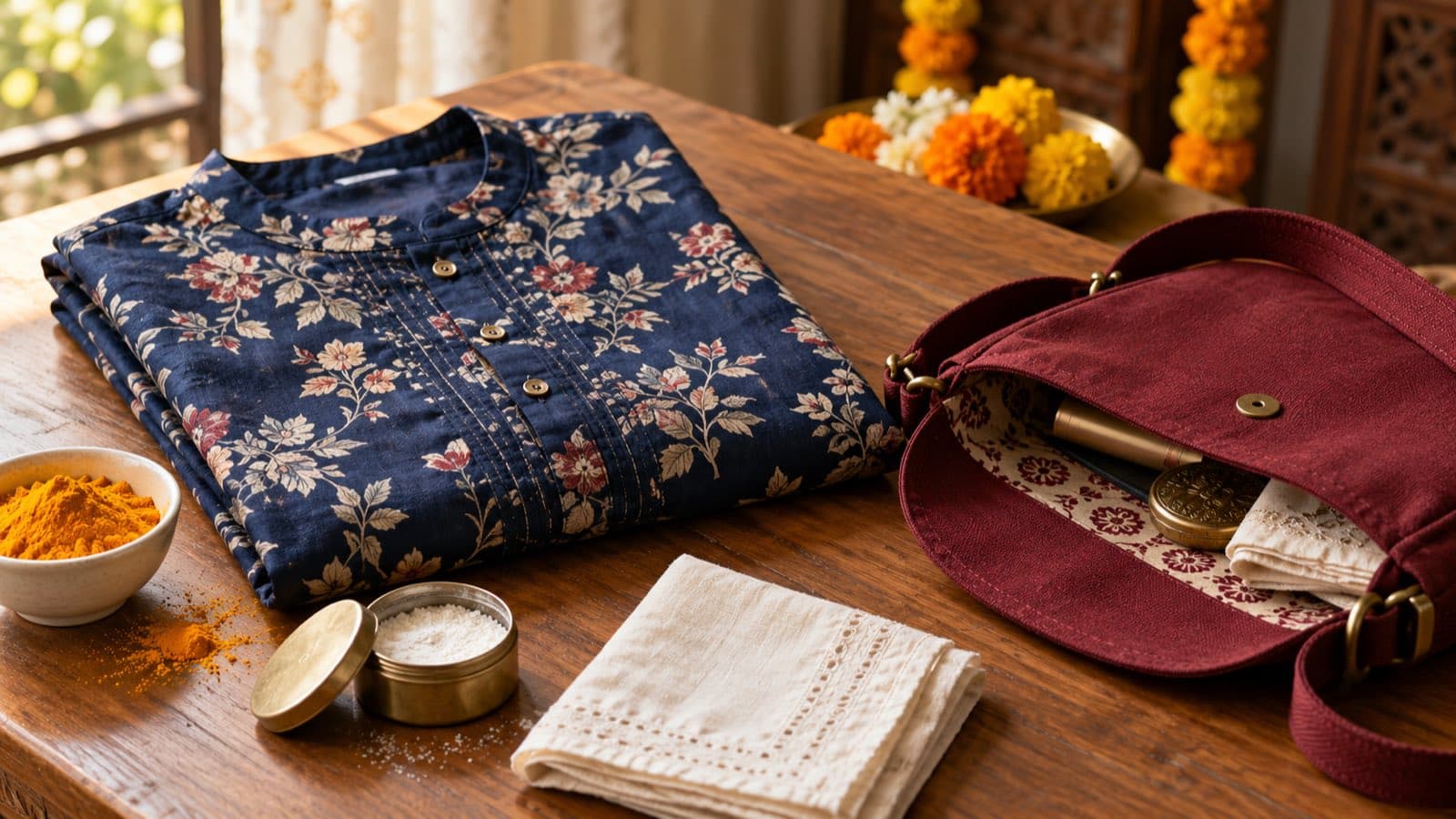
- The off white floral printed pure cotton kurta with trousers at ₹1,189 is light and cool for a morning darshan; add a coloured dupatta to cover your head.
- The cream gotta patti dupion silk kurta with trousers at ₹1,370 is a richer option for an evening aarti or a special temple visit.
Can I wear a saree to a puja?
Yes. A saree is the most traditional puja outfit and is welcome at every temple. Cotton and silk sarees are the classic choices. The only drawback is comfort on the floor: if you will be sitting cross-legged for a long katha, a kurta set is easier, and you should pin the pallu so it stays away from the diyas.
- The mustard floral zari saree at ₹2,999 is a warm puja colour with zari that catches diya light. Pair it with a blouse that has at least short sleeves.
What colours to wear for a puja
Colour customs vary between families and regions, but some patterns hold broadly:
- Yellow and saffron are the most widely favoured puja colours and are linked to auspicious beginnings.
- Red and maroon are worn by married women at many pujas and festivals.
- Green stands for prosperity and new beginnings and suits almost any ritual.
- Pink and orange are cheerful, festive and safe choices for a guest.
- Off white and cream are worn widely, especially in South India and at temples. In some North Indian families plain white is linked with mourning, so add a coloured dupatta or border if you are unsure.
- Black is avoided by many families on auspicious occasions, though not everywhere. If in doubt, choose another colour.
Some pujas have their own colour customs. Our guides to what to wear on Karwa Chauth, Chhath Puja outfits and Tulsi Vivah outfit ideas cover the colours and rituals of each of those festivals in detail.
Best fabrics for sitting on the floor through a puja
Natural fabrics are traditionally preferred for worship, and they are also more comfortable. Cotton breathes in a warm room full of incense, and silk and silk blends have been worn for rituals for generations.
- Pure cotton is the coolest choice for a summer puja or a long havan, and it washes easily if kumkum or turmeric lands on it.
- Chanderi and silk blends look festive and are light enough for sitting for an hour.
- Dupion silk and silk crepe feel richer for evening aartis and winter pujas.
- Avoid stiff or very tight fabrics that dig in when you sit cross-legged, and very sheer fabrics at a temple.
Dupatta, bag and shoes for a puja
Dupatta: keep one even if your outfit does not strictly need it. You may want to cover your head during the aarti, and at many temples it is expected. Pin it at the shoulder near diyas and the havan so the ends cannot swing into the flame.
Bag: at home you do not need one. For a temple, carry a small fabric bag or potli for your phone, a little cash for offerings and a handkerchief. A fabric bag also avoids any problem at temples that do not allow leather inside.
- The red embroidered potli clutch at ₹3,333 is fabric, festive and just big enough for the essentials.
Shoes: you will take them off at the door or the temple shoe stand, so choose flats or sandals that slip on and off easily.
Shipping is free over ₹799 and you have 7-day returns. Check the size chart so your kurta sits comfortably when you sit down.
Related guides
- What to Wear to a Roka or Sagai at Home: Bride, Family and Guests
- Diwali Outfit Ideas for Women (2026): Puja, Party & Family Lunch
- Makar Sankranti and Pongal Outfit Ideas 2027: Region by Region
Frequently asked questions
What should a woman wear to a puja at home?
A kurta set with palazzos or straight trousers and a dupatta is the most comfortable choice, because you can sit cross-legged on the floor and move around the diyas easily. A cotton or silk saree is the traditional alternative. Choose a festive colour such as yellow, red, green or pink.
What should I not wear to a temple in India?
Avoid shorts, short skirts, sleeveless or off-shoulder tops, sheer fabrics and ripped or very tight clothing. Some temples also ask visitors not to bring leather belts or bags inside, and some require a saree or salwar kameez for women.
Can I wear jeans to a puja?
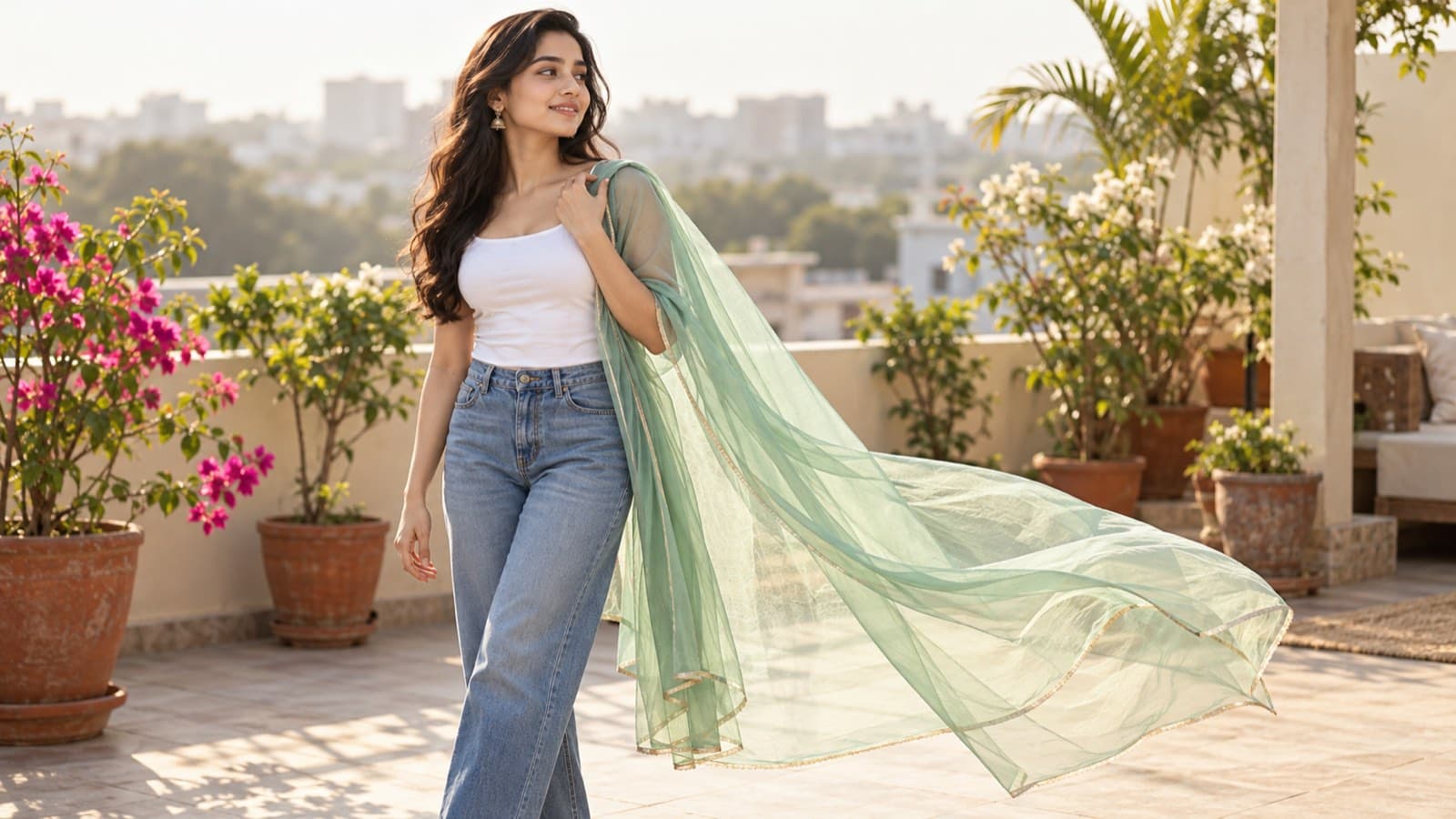
At a casual home puja some families do not mind, but jeans are uncomfortable for sitting cross-legged and are not allowed at some temples. A kurta set or saree is the safer choice.
Which colour is best for a puja?
Yellow is the most widely favoured puja colour, followed by red, green, orange and pink. Many families avoid black on auspicious occasions, and some avoid plain white, so add colour if you are unsure.
Do I need to cover my head at a temple?
It depends on the temple and your family's custom. Many temples expect women to cover their heads at certain moments, so carry a dupatta or stole either way.