Ethnic Outfits for Short Height: Kurta Set vs Anarkali vs Sharara
Kurta set, anarkali or sharara for a short or petite frame? Proportions, necklines, dupatta draping and footwear, with a comparison table and in-stock picks.
All three can look wonderful on a short or petite frame; the difference is in the details. A straight kurta set in one colour is the easiest everyday choice, an anarkali works best with a moderate flare and a slim bottom, and a sharara suits petite women when it is paired with a short kurti and a small heel. Keep one unbroken vertical line, choose a V or deep round neck, and let the hem fall just off the floor.
Key takeaways
- A one-colour straight kurta set is the simplest outfit for a petite frame because it reads as one long line.
- An anarkali suits short height when the flare is moderate and the bottom is a slim churidar or trouser.
- A sharara works on petite women with a short kurti, a high-waisted sharara and a small heel.
- V-necks and deep round necks lengthen the neck and torso; wide boat necks and heavy collars shorten them.
- A dupatta draped in a long vertical line, or pinned on one shoulder, adds height; a dupatta wrapped across the body cuts it.
- Pointed juttis, nude flats or a small block heel all help; hidden heels under a long hem add height without showing.
A note before you start
There is no rule you have to follow. Petite women can wear any silhouette they love. The tips below are about proportion: how to make an outfit sit right on a shorter frame so the fabric does not overwhelm you. Use what helps and ignore what does not.
Kurta set vs anarkali vs sharara for short height: the table
| Straight kurta set | Anarkali | Sharara set | |
|---|---|---|---|
| Ease on a petite frame | Easiest | Needs the right flare | Needs the right kurti length |
| Best kurta length | Knee to just below the knee | Calf length, not floor-sweeping | Short kurti, hip to mid-thigh |
| Best bottom | Matching trousers or cigarette pants | Churidar or slim trousers | High-waisted sharara, moderate flare |
| Best neckline | V-neck, notch neck, deep round | V-neck, sweetheart | V-neck, deep round |
| Dupatta | Light, one shoulder | Light, long vertical drape | Light, pinned on one shoulder |
| Footwear | Pointed flats, block heels | Small heels | Heels or platforms under the hem |
| Avoid | Very loose, boxy cuts | Very full, heavy flares | A long kurta over a full sharara |
| Best for | Office, everyday, puja | Festive, formal, reception | Mehendi, sangeet, festive evenings |
For the exact kurta length that suits your height, see our kurta length guide by height. This post covers which silhouette to choose and how to style it.
Kurta sets for short height
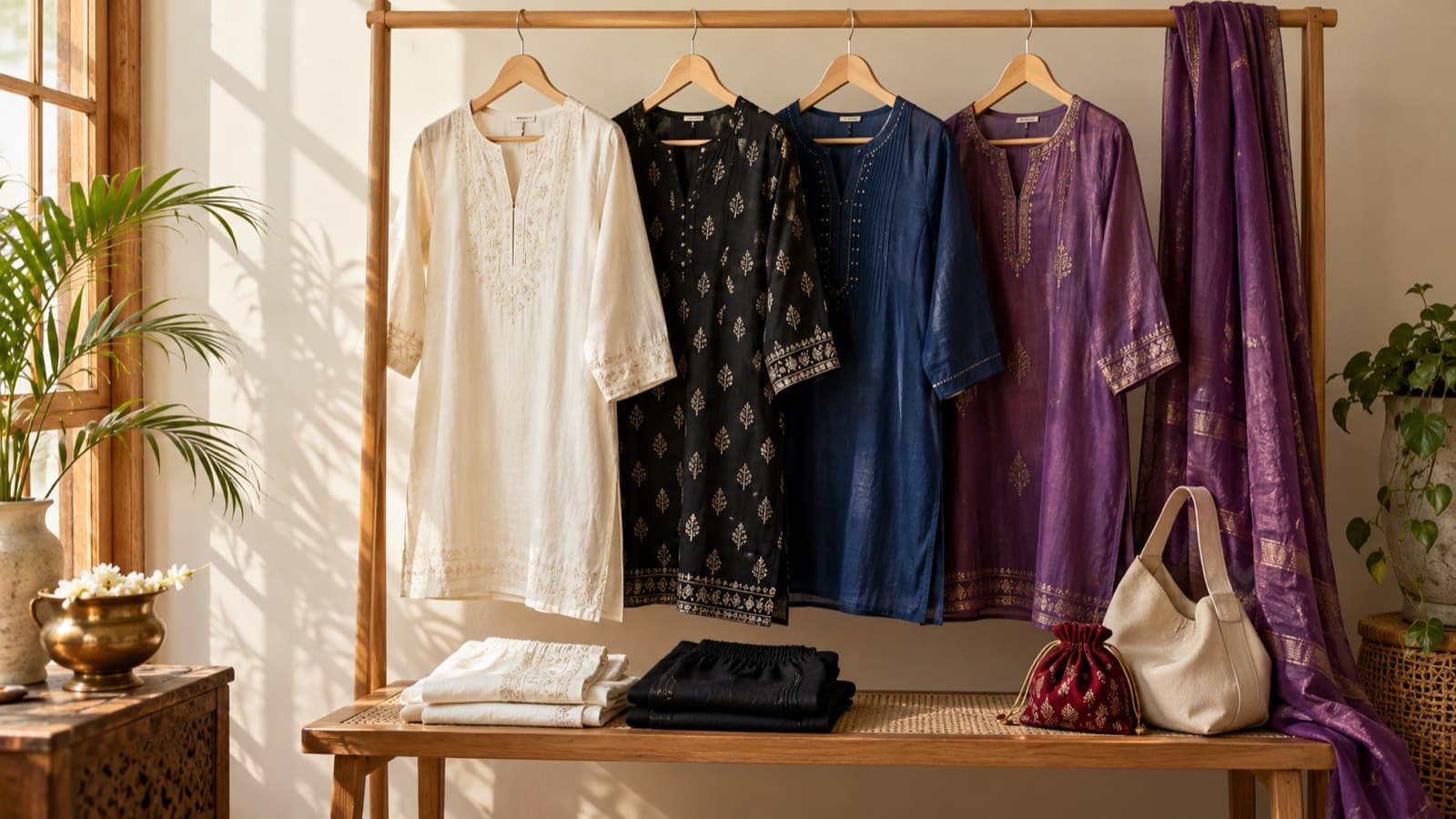
A straight kurta set is the most reliable outfit for a petite frame. A straight cut drops cleanly from the shoulder without adding width, and when the kurta and trousers are the same colour, or close shades, the eye reads one long line.
What helps:
- Matching or tonal colour from neckline to hem.
- Side slits that show a little of the trouser and lengthen the leg.
- Vertical detailing like a placket, a narrow embroidered panel or stripes.
- Slim trousers or cigarette pants that end at the ankle.
- An empire or high-waisted seam, which raises the visual waistline.
Kurta sets in stock for petite frames:
- The rust georgette V-neck empire straight kurta with trouser at ₹1,690 combines a V-neck, an empire line and one colour.
- The black floral printed V-neck straight kurta with trousers and dupatta at ₹1,189 is a dark, single-colour set for everyday wear.
Anarkalis for short height
An anarkali's fitted bodice and flare can look lovely on a petite frame, as long as the flare does not take over. A very full, heavy anarkali with many panels can swamp a smaller frame.
What helps:
- Moderate flare that starts at the natural or empire waist.
- Calf length rather than floor-sweeping, unless you are wearing heels.
- Lightweight fabric like georgette, cotton blend or organza that moves rather than adding bulk.
- Churidar or slim trousers underneath, never a wide bottom.
- Small, scattered motifs or a single colour rather than large horizontal bands of embroidery.
Anarkalis in stock:
- The white floral printed shoulder-strap anarkali with trousers at ₹1,530 is a light cotton blend anarkali with an open neckline.
- The turquoise blue pleated organza anarkali with trousers and dupatta at ₹2,854 is a festive anarkali with slim trousers.
Shararas for short height
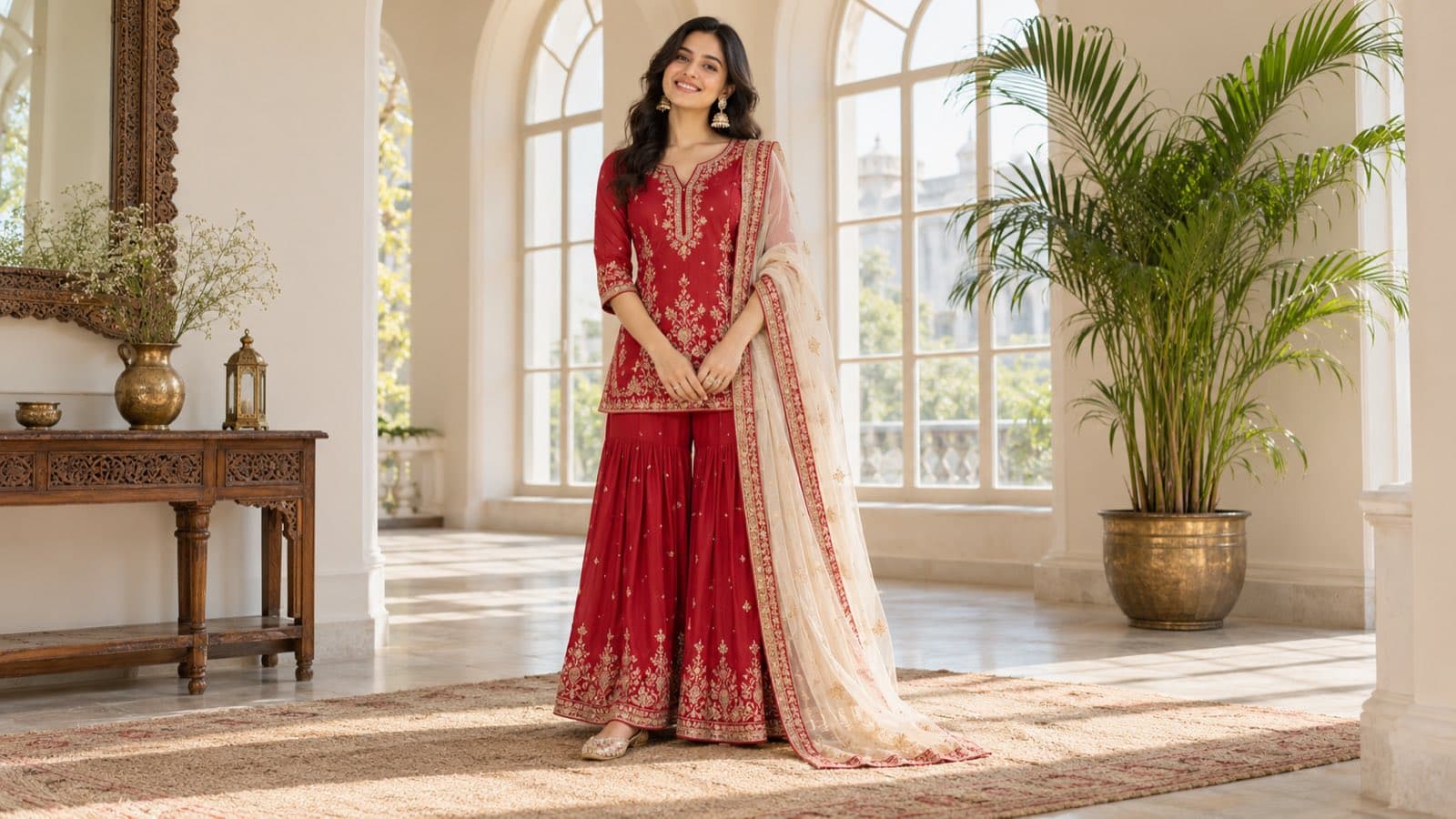
A sharara can absolutely work if you are petite. The secret is the kurti length. A short kurti shows where the leg begins, so the flare reads as long legs rather than a heavy lower half.
What helps:
- Short kurti, ending around the hip or mid-thigh.
- High-waisted sharara that starts at your natural waist.
- Moderate flare in a soft fabric that falls rather than puffs.
- The same colour for kurti and sharara.
- A small heel or platform under the hem, so the sharara grazes the floor without dragging.
For the difference between a sharara, gharara and palazzo, see our sharara vs gharara vs palazzo guide.
Sharara sets in stock:
- The red embroidered thread work kurti with sharara and dupatta at ₹2,354 pairs a kurti with a matching sharara.
- The green floral embroidered kurta with sharara and dupatta at ₹2,185 is a single-colour festive set.
Necklines that suit short height
| Neckline | Effect on a petite frame |
|---|---|
| V-neck | Lengthens the neck and torso; the most reliable choice |
| Deep round | Opens the neckline and keeps proportions balanced |
| Sweetheart | Draws the eye upward; good for festive kurtas |
| Notch neck | A smaller version of the V, good for the office |
| High mandarin collar | Works on a long neck; can shorten a shorter neck |
| Wide boat neck | Widens the shoulder line; wear with care |
Our guide to kurta necklines explains each one.
How to drape a dupatta when you are short
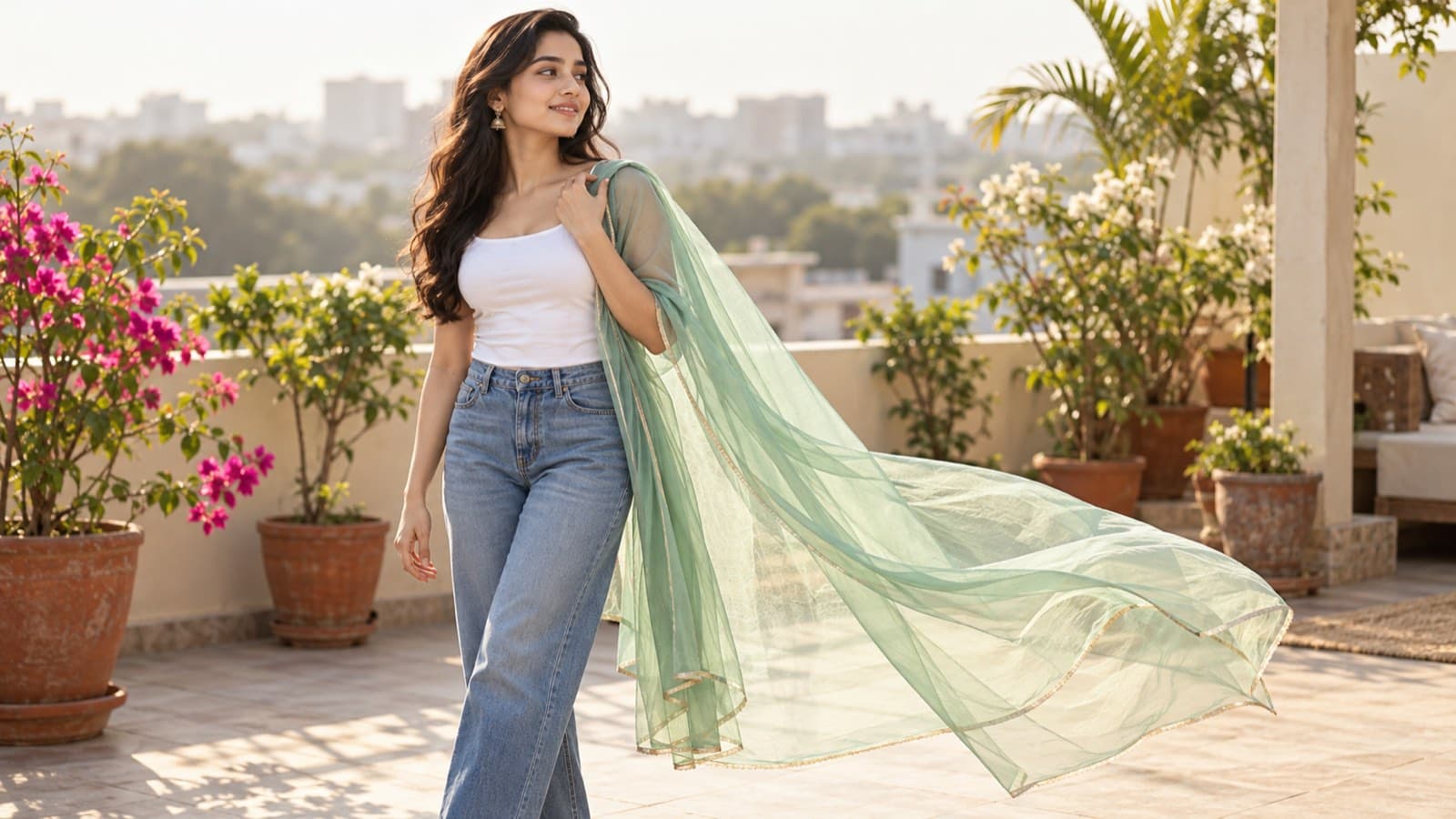
- One shoulder, long and vertical: pin it on one shoulder and let it fall straight down the back or front.
- Light fabric: organza, georgette and chiffon dupattas add less bulk than heavy silk.
- Skip the full wrap: a dupatta wrapped across both shoulders and the body cuts the frame horizontally.
- Keep it shorter: if the dupatta trails on the floor, fold it in at the shoulder.
Footwear for short height in ethnic wear
- Pointed juttis or flats lengthen the foot and leg.
- Nude or skin-tone shoes extend the leg line.
- Block heels and wedges are steady for long functions.
- Hidden heels: under a floor-grazing sharara or anarkali, even a small platform makes the hem fall right.
Fit matters more than any rule
A well-fitted kurta in any silhouette looks better than the "right" silhouette in the wrong size. Shoulder seams should sit on your shoulder, and the bottom should not bunch at the ankle. Check the size chart before you order, and see our guide to kurta sets for every body shape if you are balancing height with shape. Shipping is free over ₹799, and you have 7-day returns.
Related guides
- Kurta Set Colour Combinations That Always Work (Pairing Table)
- A-Line vs Anarkali vs Straight Kurta: The Difference (with Table)
- Kurta Bottoms Explained: Afghani, Palazzo, Churidar, Salwar & More
Frequently asked questions
Which ethnic wear is best for short girls?
A straight kurta set in one colour is the easiest everyday choice for short girls. For festive wear, an anarkali with a moderate flare and a churidar, or a short kurti with a high-waisted sharara, both work well.
Can short girls wear an anarkali?
Yes. Choose a moderate flare, calf length or a hem that grazes the floor over heels, a light fabric and a slim churidar or trouser underneath. Avoid very full, heavy anarkalis that swamp the frame.
Is a sharara good for short height?
A sharara suits short height when worn with a short kurti, a high waist and a small heel. Keeping the kurti and sharara in one colour creates a longer line.
Which neckline makes you look taller in a kurta?
A V-neck is the most reliable, followed by a deep round neck and a sweetheart neckline. They draw the eye upward and lengthen the neck and torso.
How should a short girl wear a dupatta?
Pin a light dupatta on one shoulder and let it fall in a long vertical line. Avoid wrapping it across the body, which cuts the frame horizontally, and fold in extra length so it does not trail.