How to Choose a Kurta Set for Your Body Shape
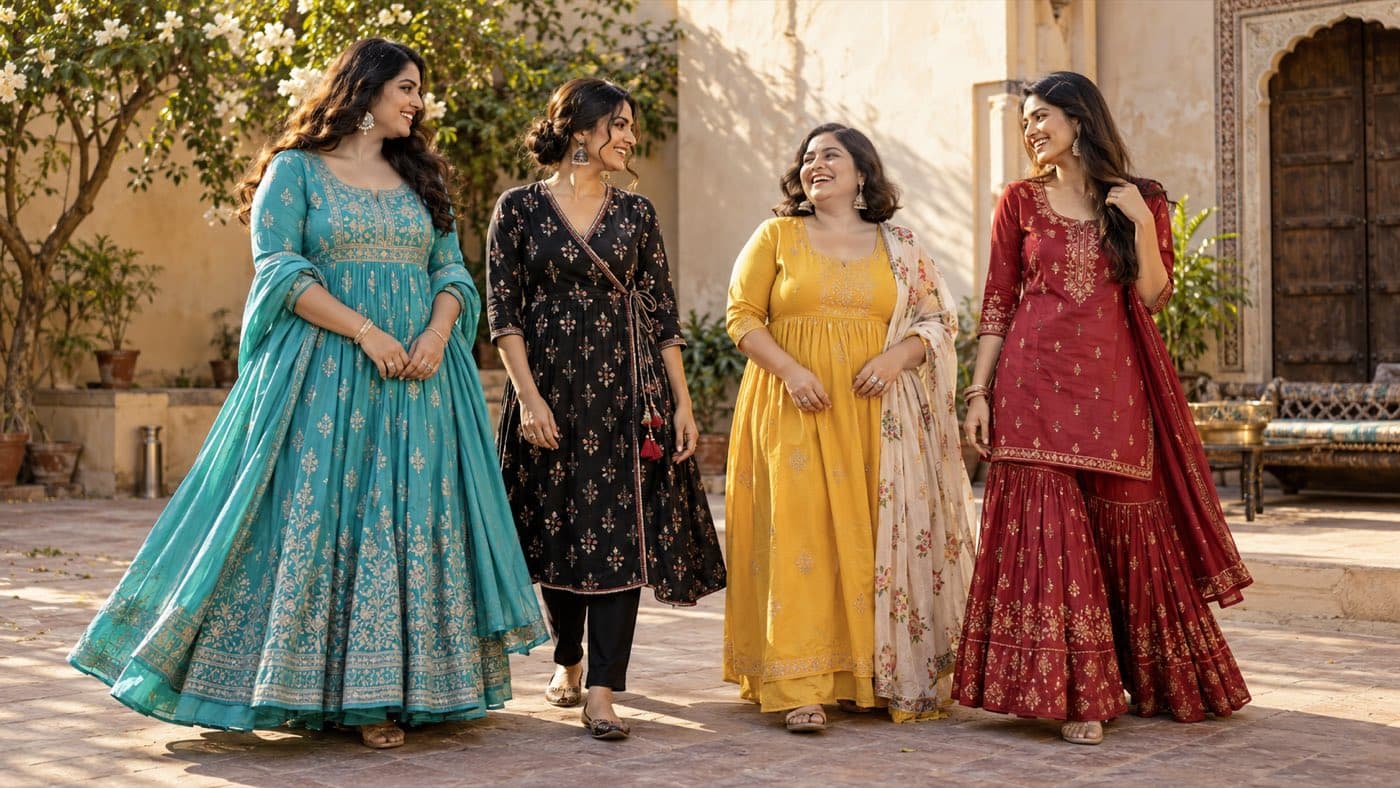
Kurta sets for pear, apple, hourglass, rectangle and petite frames: the silhouettes, necklines, bottoms and dupatta drapes that work for each, with a quick-reference table.
To choose a kurta set for your body shape, decide which proportions you want to balance and pick the silhouette that does it: A-line and Anarkali kurtas skim the hips for a pear shape, straight and A-line cuts with a V-neck lengthen the torso for an apple shape, a defined waist such as an empire line or angrakha follows the curves of an hourglass, and a flare or a sharara adds shape to a rectangle. If you are petite, shorter kurtas and one-colour sets matter more than shape. Every body can wear every style; these are ways to get the look you want, not rules.
Key takeaways
- Pear shape (hips wider than shoulders): A-line, Anarkali and flared kurtas, a detailed neckline and darker or plain bottoms.
- Apple shape (fuller middle, slimmer legs): straight or A-line kurtas with a V or notch neck, a flowing fabric and slim bottoms.
- Hourglass shape (bust and hips balanced, defined waist): empire, angrakha and fitted-then-flared kurtas that follow the waist.
- Rectangle shape (shoulders, waist and hips similar): Anarkali, flared or short kurtas with a sharara, plus a belted dupatta to add shape.
- Petite frames of any shape: hip-to-knee lengths, a matching kurta and bottom and a slim or ankle-length bottom.
- Most people are a mix of shapes, so fit at the shoulders and bust matters more than any label.
A note before you start
Body shape categories are a shortcut, nothing more. Your shape changes over the years, most people sit between two types, and the "right" outfit is the one you feel good in. Use this guide to understand why some kurtas feel easier to wear than others, then ignore any advice that does not suit your taste.
To find your shape, compare three measurements: shoulders (or bust), natural waist and the fullest part of the hips. The size chart shows how to take each one.
Kurta set by body shape: the quick-reference table
| Body shape | What defines it | Kurta silhouettes | Bottoms | Dupatta drape |
|---|---|---|---|---|
| Pear | Hips wider than shoulders | A-line, Anarkali, flared, empire | Straight trousers, churidar, palazzos in a plain or darker colour | Over the shoulders or pinned on one shoulder to draw the eye up |
| Apple | Fuller middle, slimmer legs | Straight, A-line, angrakha | Slim trousers, cigarette pants, churidar | Long and vertical, hanging open in front |
| Hourglass | Balanced bust and hips, defined waist | Empire, angrakha, fitted-then-flared Anarkali | Palazzos, trousers, sharara | Belted at the waist, or on one shoulder |
| Rectangle | Shoulders, waist and hips similar | Anarkali, A-line, short kurti, peplum | Sharara, flared palazzos, patiala | Belted or wrapped to create a waist |
| Inverted triangle | Shoulders wider than hips | A-line, Anarkali with a flared hem | Sharara, palazzos, patiala | Draped low, across the body |
| Petite (any shape) | Under about 5'3" | Straight, gentle A-line, short kurti | Slim or matching bottoms, sharara with a kurti | Light fabric, pinned on one shoulder |
This post is about matching shapes to bodies. For what each silhouette actually is and how to tell them apart, see our guide to A-line vs Anarkali vs straight kurtas.
Kurta set for a pear-shaped body
A pear shape has hips and thighs wider than the shoulders and bust, usually with a defined waist. The aim is to balance the top and bottom halves.
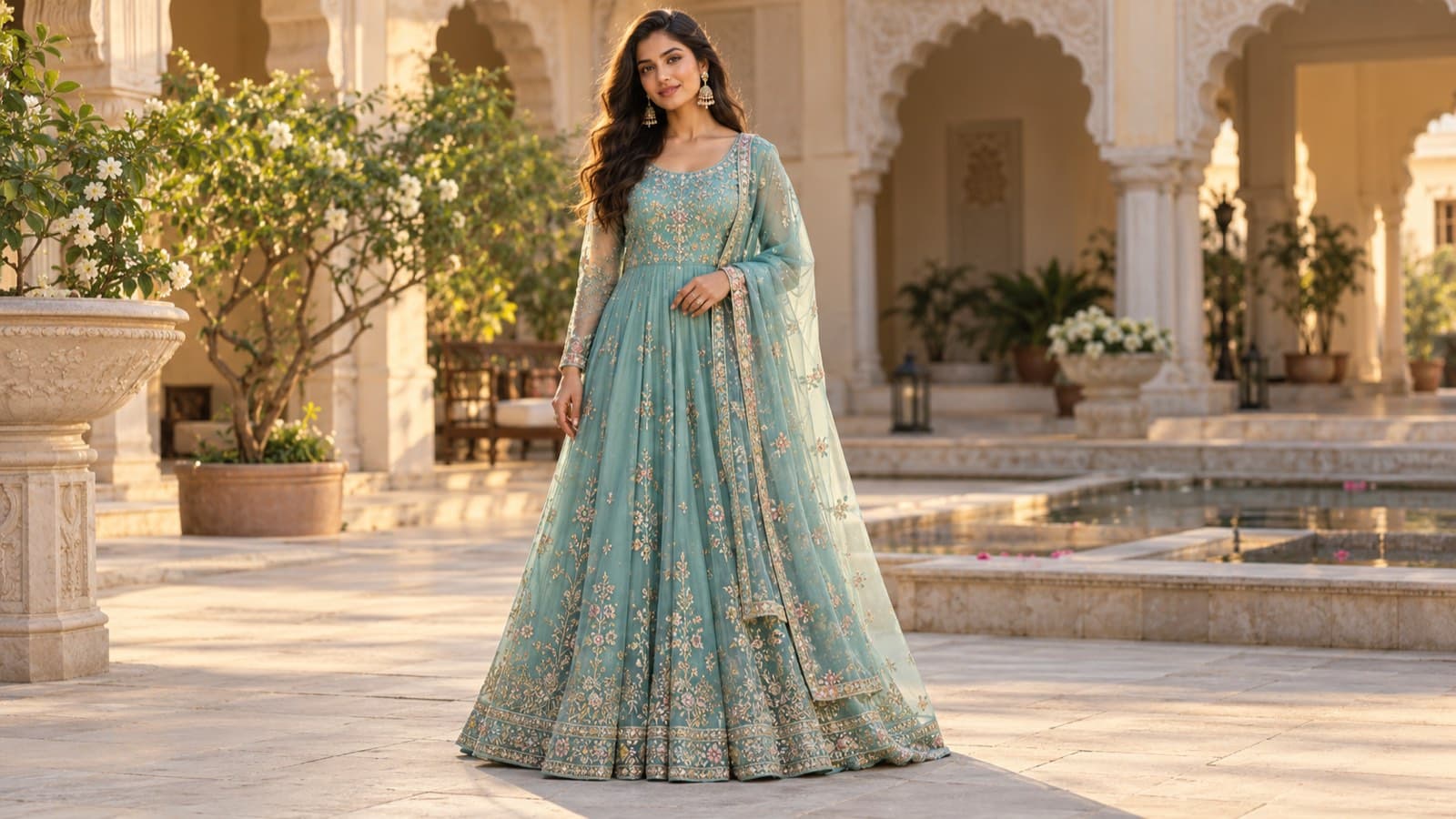
- Silhouettes: A-line and Anarkali kurtas fall from the bust and skim past the hips instead of clinging to them. An empire line, which sits just under the bust, highlights the narrowest part of the upper body.
- Length: a kurta that ends a little below the fullest part of your hips, often knee length, looks smoother than one that stops right at the hip.
- Neckline and detail: embroidery at the yoke, a boat neck or a square neck draws attention up to the shoulders.
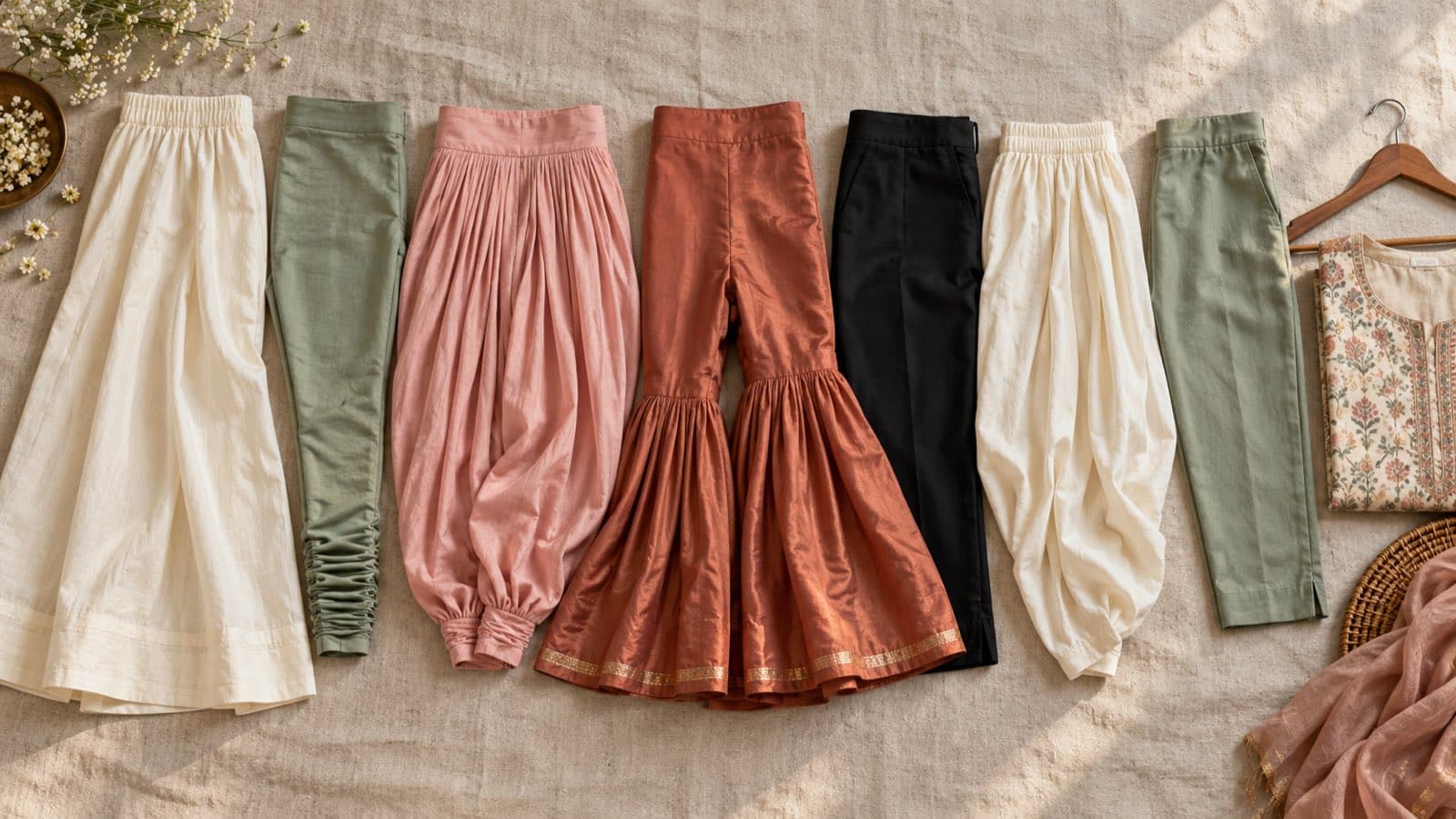
- Bottoms: straight trousers or palazzos in a solid or darker colour than the kurta.
- Avoid if you prefer a smoother line: stiff, tight straight kurtas that pull across the hips.
Kurta sets in stock for a pear shape:
- The off white floral printed round neck A-line kurta with trousers is ₹1,530, an easy everyday A-line.
- The turquoise blue embroidered pleated organza Anarkali kurta with trousers and dupatta is ₹2,854, a festive Anarkali that flares from the bust.
Kurta set for an apple-shaped body
An apple shape carries more weight around the middle, often with a fuller bust and slimmer legs. The aim is to create a long vertical line through the torso and show off the legs.
- Silhouettes: straight and A-line kurtas that skim the body without gathering at the waist. An angrakha wrap creates a diagonal line that lengthens the torso.
- Neckline: a V-neck, notch neck or U-neck opens up the chest. Our guide to kurta necklines explains each one.
- Fabric: soft, flowing fabrics such as georgette, crepe and silk crepe drape better than stiff cotton or heavy brocade.
- Bottoms: slim trousers, cigarette pants or a churidar show off slimmer legs.
- Skip if you prefer: belts and gathered empire waists, which draw the eye to the middle.
Kurta sets in stock for an apple shape:
- The black printed angrakha silk crepe kurta with trousers and dupatta is ₹1,189, a wrap neckline in a fluid fabric.
- The black floral printed V-neck straight kurta with trousers and dupatta is ₹1,189, a straight cut with an open neck.
Kurta set for an hourglass body
An hourglass shape has a bust and hips of similar width and a clearly defined waist. The aim is to follow the curves rather than hide them under volume.
- Silhouettes: empire-line kurtas, angrakhas that tie at the side, and Anarkalis that fit through the bodice before flaring.
- Fit: shoulders and bust that fit well matter most. Very boxy, straight kurtas can make an hourglass frame look wider than it is.
- Neckline: sweetheart, V and scoop necks all work.
- Bottoms: almost anything, from slim trousers to palazzos and shararas.
A kurta set in stock for an hourglass shape:
- The yellow floral printed empire gotta patti silk crepe kurta with trousers and dupatta is ₹1,189, with an empire line that marks the waist.
Kurta set for a rectangle body
A rectangle shape has shoulders, waist and hips of similar width, often with a straight, athletic or slim build. The aim, if you want it, is to add curves and movement.
- Silhouettes: Anarkali and flared kurtas add volume at the hem; a short kurti with a sharara gives a playful shape. A peplum top or a pleated kurta adds shape at the waist.
- Details: a belt over the kurta or the dupatta creates a waist instantly.
- Bottoms: shararas, flared palazzos and patialas add volume below.
- Straight kurtas also look sharp on a rectangle frame, for a clean, modern line.
Kurta sets in stock for a rectangle shape:
- The pink gotta patti silk crepe kurta with patiala and dupatta is ₹2,500, with a patiala that adds volume below.
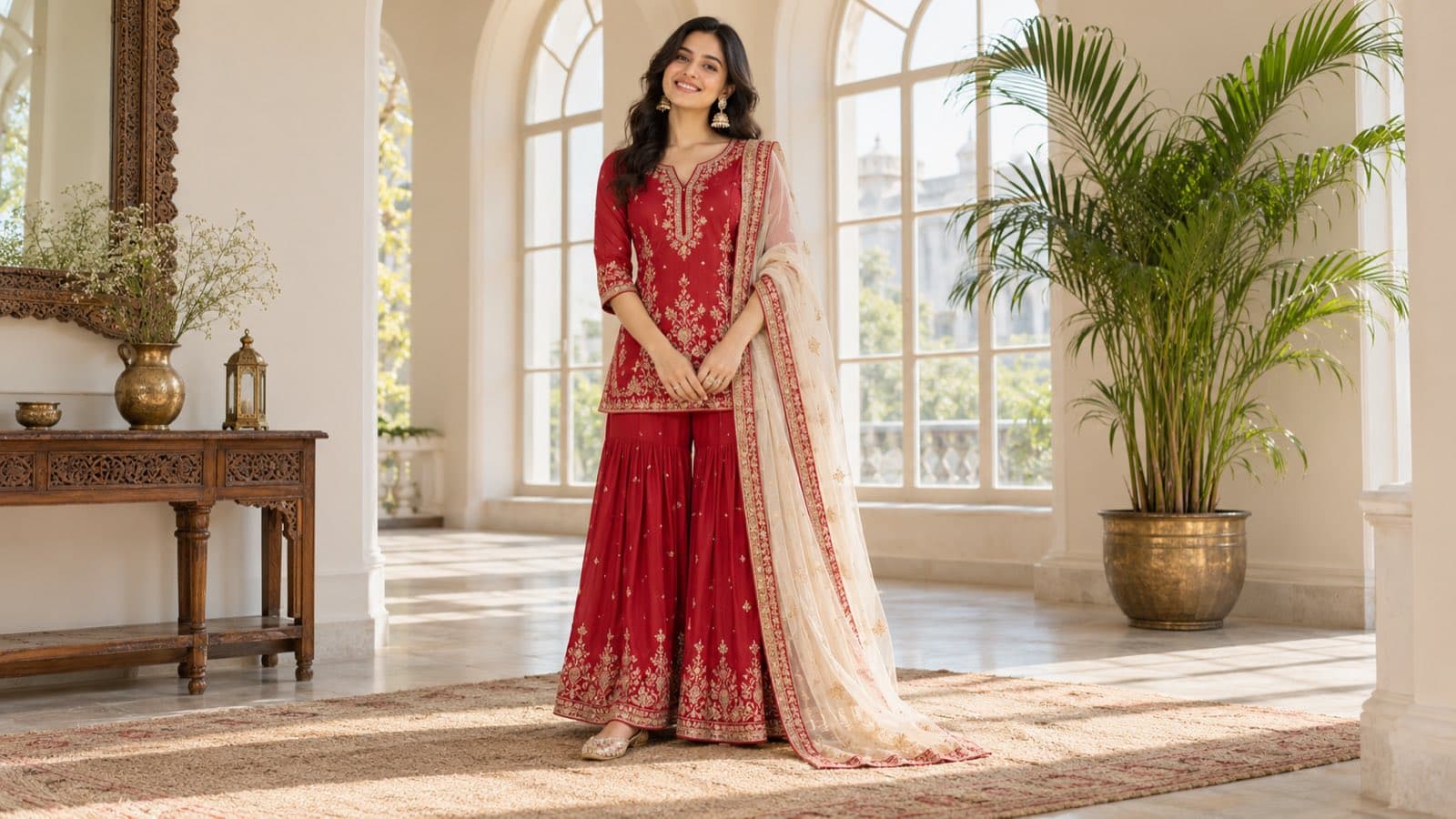
The red kurti with sharara in the petite section below works well on a rectangle frame too.
Inverted triangle body
An inverted triangle has shoulders wider than the hips. Balance it with volume below the waist: A-line kurtas, Anarkalis with a wide hem, shararas and palazzos. Narrower necklines such as a V or notch neck work better than a wide boat neck, which adds width at the shoulders.
Kurta set for a petite body
Petite is about height, not shape, so it combines with any of the types above. The biggest wins are proportion and colour.
- Length: hip, thigh and knee lengths keep the leg line long. Our kurta length guide by height gives measurements for each.
- One colour: a matching kurta and bottom create an unbroken vertical line.
- Scale: small and medium prints suit a petite frame better than very large motifs.
- Short kurti with a sharara: a classic petite-friendly festive look, because the volume sits below.
Kurta sets in stock for petite frames:
- The red embroidered silk blend kurti with sharara and dupatta is ₹2,354.
- The pink printed pure cotton empire kurti with palazzos is ₹1,530, an everyday option.
How to drape a dupatta for your body shape
The dupatta changes your outline more than any other piece of a kurta set.
- Pear: drape it over both shoulders or pin it on one shoulder so the fabric frames the upper body.
- Apple: let it hang open and vertical in front, from both shoulders, to create two long lines.
- Hourglass: pin it on one shoulder and belt it at the waist.
- Rectangle: belt it, or wrap it across the body to create the look of a waist.
- Petite: choose a light dupatta and keep it on one shoulder so it does not swamp the frame.
Our step-by-step guide on how to drape a dupatta shows eight drapes.
Fit matters more than shape
Whatever your shape, a kurta that fits at the shoulders and bust will look better than a "right" silhouette in the wrong size. The shoulder seam should sit on your shoulder bone, the bust should not pull, and the side slits should lie flat when you stand. Check the size chart before ordering. Shipping is free over ₹799 and you have 7-day returns if the fit is not right.
Related guides
- Co-ord Set vs Kurta Set: Which Is Better and When to Wear Each
- Saree vs Lehenga vs Kurta Set for a Wedding Guest: Which to Choose
- Kurta Set Colour Combinations That Always Work (Pairing Table)
Frequently asked questions
Which kurta is best for a pear body shape?
A-line, Anarkali and empire-line kurtas suit a pear shape because they fall from the bust and skim past the hips. Pair them with straight trousers or palazzos in a plain or darker colour, and choose embroidery near the neckline to draw the eye up.
Which kurta style suits an apple-shaped body?
Straight and A-line kurtas with a V-neck or notch neck suit an apple shape, especially in soft fabrics such as georgette or crepe. An angrakha wrap also works well. Slim trousers or a churidar show off the legs.
What kurta should a rectangle body shape wear?
Anarkali and flared kurtas, short kurtis with shararas, and pleated or peplum styles add curves to a rectangle frame. A belted dupatta creates a waist. Straight kurtas also suit a rectangle shape for a clean, modern look.
Which kurta suits an hourglass figure?
Kurtas that follow the waist suit an hourglass figure best: empire-line kurtas, angrakhas and Anarkalis that fit through the bodice before flaring. Very boxy straight cuts can hide the waist.
Which kurta set is best for short and plus-size women?
Choose a straight or gently A-line kurta that ends between the hip and the knee, with a V or notch neck, in one colour with a slim bottom. Soft, flowing fabrics drape better than stiff ones, and a correct fit at the shoulders and bust matters most.