Haldi Outfit for the Bride's Sister: Yellow Alternatives That Aren't Boring
Want to stand out at your sister's haldi without wearing flat yellow? Here are the colours, fabrics and silhouettes that work, with in-stock kurta sets, a saree and a dress.
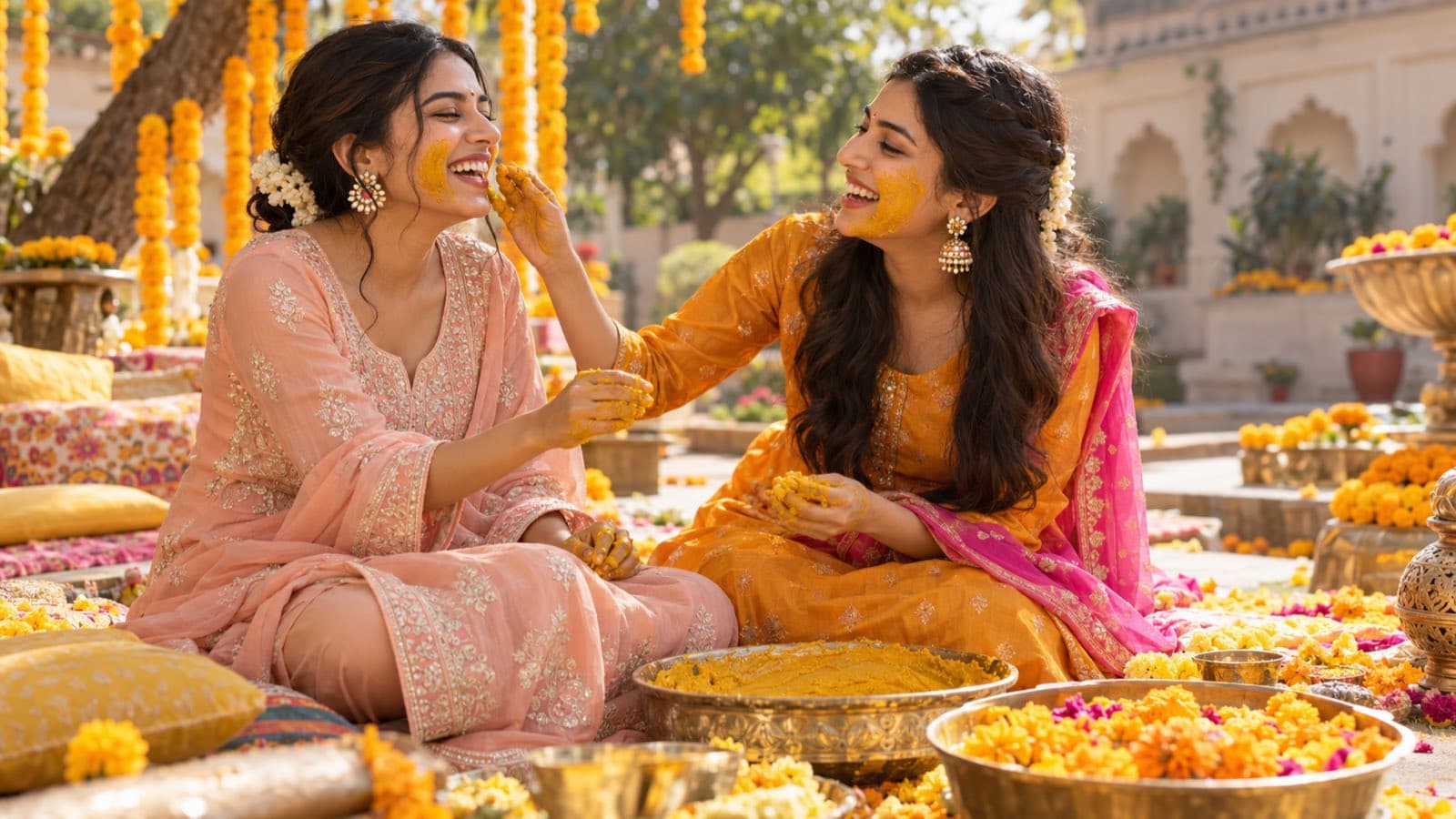
The best haldi outfit for the bride's sister is a warm, bright colour that sits next to yellow without copying it: marigold orange, mustard, peach, mint or sea green, or ivory with a yellow dupatta. Pick a light, washable fabric such as organza, cotton blend or silk crepe, keep the embroidery flat so turmeric wipes off, and choose a silhouette you can sit on the floor and dance in. As the sister, aim one step below the bride: festive and photographed, but never matching her.
Key takeaways
- Orange, mustard, peach, mint and ivory all read as haldi colours without being plain yellow.
- Turmeric stains, so choose organza, cotton blend or silk crepe over velvet or heavy silk.
- Flat embroidery, gota patti and prints survive a haldi better than sequins and loose beads.
- Do not match the bride's exact shade; go one tone warmer, softer or paler than her outfit.
- A sharara or palazzo set is easier than a lehenga for sitting on the floor and dancing.
- Wear flat or washable footwear and keep jewellery light, because hands get messy fast.
Haldi colours for the bride's sister: the quick-reference table
| Colour | Why it works at a haldi | Pair it with | Best fabric |
|---|---|---|---|
| Marigold orange | Matches the flowers and reads festive in photos | Pink or gold dupatta, kundan earrings | Dupion silk blend, silk crepe |
| Mustard | Yellow's deeper cousin; looks rich, hides turmeric | Pink, magenta or green accents | Zari saree, chanderi |
| Peach | Soft and flattering; separates you from a yellow bride | Ivory, gold, pearl jewellery | Silk blend, georgette |
| Mint or sea green | Cool contrast that makes yellow decor pop | Gold or silver, a yellow dupatta | Organza, cotton blend |
| Ivory or white | A clean backdrop for turmeric and marigold | A bright yellow or pink dupatta | Cotton blend, chanderi |
| Pink with yellow | Two classic haldi colours in one look | Gota patti, mirror work | Cotton blend, silk crepe |
| Yellow, done differently | If the family wants yellow, wear a print or texture | Contrast dupatta or bag | Organza, silk crepe |
Avoid black and very dark navy. They are not banned, but they can look out of place in a daytime haldi, and they show dried turmeric as orange smudges. Our guide to colours not to wear to an Indian wedding covers the wider rules.
Why the bride's sister should skip flat yellow
The bride is usually in yellow, the decor is yellow and many guests will wear yellow too. In photographs, a sister in the same flat shade disappears into the background, or worse, looks like she is matching the bride. You are in more photos than almost anyone except the bride, so it helps to stand slightly apart.
That does not mean wearing something loud. It means choosing a shade that belongs to the same warm family as turmeric and marigold, or a cool contrast such as mint that frames the yellow around you. If the family has asked everyone to wear yellow, follow that and change the texture instead: a printed organza, a gota patti border or a contrast dupatta.
Orange and mustard: the warm alternatives
Orange is the closest relative of haldi yellow and probably the safest alternative. It looks festive, photographs warmly in daylight and still stands apart from a yellow bride. Mustard is the deeper option, and it has a practical advantage: turmeric stains are hard to see on it.
Orange and mustard looks in stock:
- The orange embroidered dupion silk blend kurta with palazzos and dupatta at ₹2,854 has the sheen and colour for a sister's look without heavy surface work.
- The mustard floral zari saree at ₹2,999 suits a sister who wants a saree for the ceremony. Drape it with the pallu pinned so it stays out of the haldi bowl.
Add a pink or magenta dupatta, or simply pink bangles, to break up a full orange or mustard look.
Peach, mint and sea green: soft and fresh
If the haldi is in the morning or outdoors, pastel shades look fresh and keep you cooler. Peach sits close to the warm palette and flatters most skin tones. Mint and sea green are a cool contrast, and they make every yellow flower and drape around you look brighter.
Pastel looks in stock:
- The peach embroidered silk blend tunic with palazzos at ₹2,281 is a co-ord, so there is no dupatta to manage while the paste is being applied.
- The sea green embroidered organza kurta with palazzos and organza dupatta at ₹1,999 is light and airy for a daytime ceremony. Organza is easy to sponge clean if turmeric lands on it.
- The green embroidered silk blend kurta with sharara and dupatta at ₹2,185 gives you a sharara that moves when the dancing starts.
With pastels, pick gold or pearl-toned jewellery and a yellow or pink dupatta if you want to nod to the haldi colours.
Ivory and white with a yellow dupatta
Ivory is the most photogenic choice at a haldi, because turmeric and marigold stand out against it. The catch is obvious: every mark will show. Wear ivory only if you are happy for it to become a souvenir of the day, or if you will mainly be helping rather than playing with the paste.
The smart way to wear it is ivory or white for the kurta and bottoms, with a bright yellow, pink or orange dupatta. That gives you the haldi colour in photos and keeps the stained part to one piece you can wash separately.
Pink with yellow: the classic pairing
Pink and yellow are the traditional haldi pairing for a reason: the two colours lift each other. A pink outfit with a yellow dupatta reads festive, stands apart from the bride and still belongs in the family photo.
Pink looks in stock:
- The pink A-line dress with a yellow ombre dupatta at ₹7,999 already combines both colours, which makes it a ready-made sister's outfit.
If you prefer a kurta set, choose pink with gota patti or mirror work and add your own yellow dupatta. Browse all kurta sets to see the full range of pinks.
If the family wants everyone in yellow
Some families set a dress code, and the sisters wear yellow along with the bride. In that case, change the texture and the shade rather than the colour.
- Choose a print or texture, not a flat solid. A printed organza looks different from the bride's embroidered outfit even in the same yellow.
- Go paler or deeper than the bride. If she is in bright turmeric yellow, try lemon or mustard.
- Contrast the dupatta. A pink, orange or green dupatta changes the whole look.
Yellow looks in stock:
- The yellow printed organza kurta with trousers and dupatta at ₹1,999 is a printed yellow that will not look like a copy of an embroidered bridal outfit.
Fabric and stain rules for a haldi
The haldi is the messiest function of a wedding, and the sister is usually in the middle of it. A few rules save your outfit.
- Light, washable fabrics first. Organza, cotton blend, silk crepe and georgette handle a quick sponge. Avoid velvet, raw silk with a nap, or anything marked dry-clean only if you plan to play with the paste.
- Flat work over raised work. Prints, thread work and gota patti wipe clean. Loose sequins and beads trap paste and catch on others' clothes.
- Treat stains fast. Scrape off the paste, rinse from the back with cold water and wash as soon as you can. Turmeric sets with heat and time.
- Steam, do not iron, the next morning. Steam from the inside so embroidery stays flat.
Silhouette, footwear and accessories
A haldi usually means sitting on the floor or a low chair, getting up to apply paste and dancing afterwards. Choose a silhouette you can move in.
- Sharara or palazzo sets are the easiest. They sit neatly on the floor and move when you dance.
- Co-ords skip the dupatta, which keeps one more piece out of the paste.
- Lehengas look lovely but are heavy for a daytime haldi. Keep the flare light if you choose one.
- Sarees need firm pinning. Pin the pallu to the shoulder and tuck it at the waist.
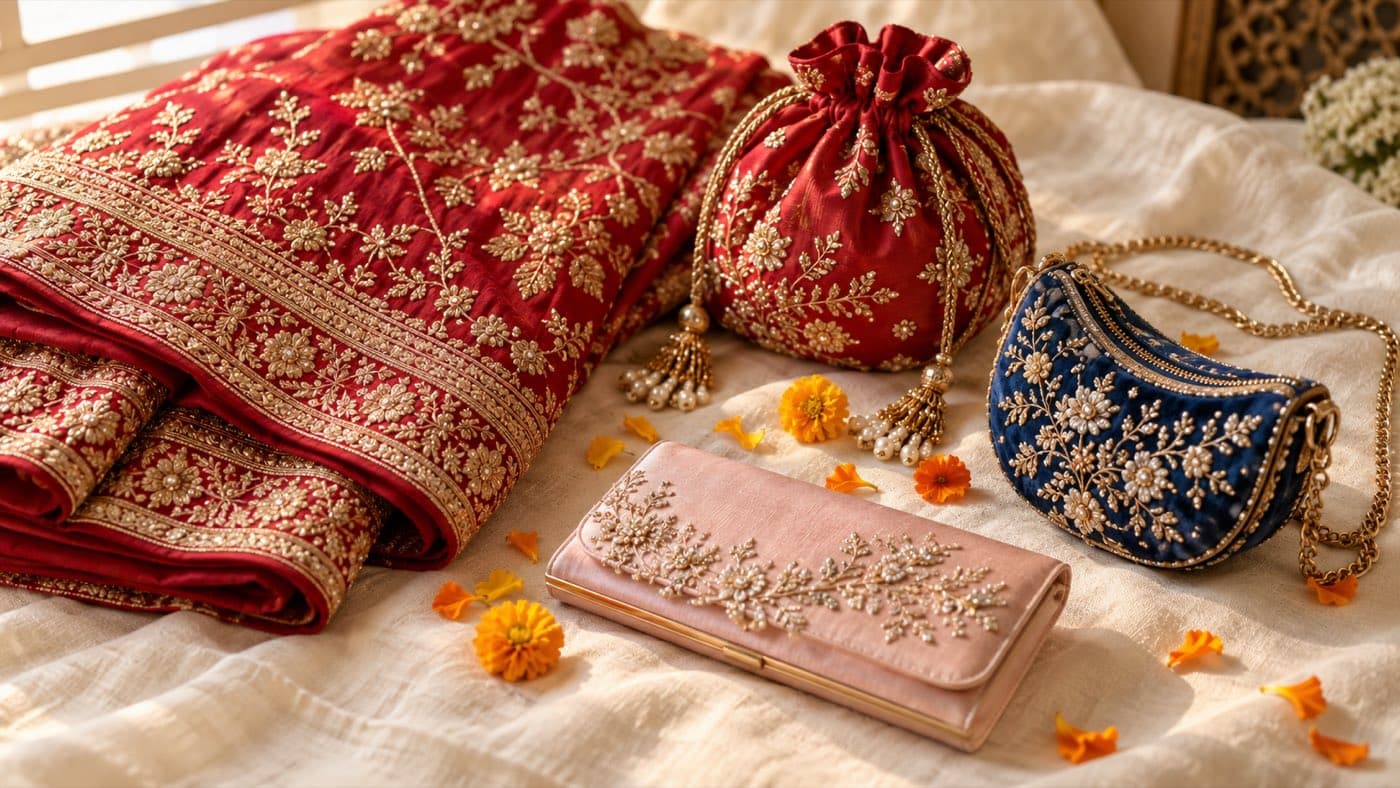
On your feet, wear flat kolhapuris, juttis or washable sandals; heels sink into lawns and paste-covered floors. Keep jewellery light: floral jewellery, simple jhumkas or a kada look right and do not mind getting messy. Carry a small potli or sling for your phone, a tissue pack and safety pins. A small embroidered potli suits the look.
For the rest of the wedding, our guide to sister of the bride outfit ideas goes function by function, and our haldi guest guide covers what other guests should wear.
Getting the fit right before the wedding
You will be moving all day, so fit matters as much as colour. Check the size chart against a kurta you already like, and order early enough to try the outfit on with your footwear. Shipping is free over ₹799 and you have 7-day returns if the fit is not right.
Related guides
- Wedding Outfit Ideas for the Bride's or Groom's Sister and Family
- Mehendi Outfit Ideas for the Bride's Friends: Colour, Comfort, Sleeves
- What to Wear for a Court Marriage: Outfit Ideas for Bride and Guests
Frequently asked questions
What colour should the bride's sister wear for haldi?
Orange, mustard, peach, mint, sea green, pink or ivory with a yellow dupatta all work well. These shades sit with the yellow decor but stop you from matching the bride. Avoid black and very dark navy for a daytime haldi.
Can the bride's sister wear yellow at the haldi?
Yes, especially if the family has set a yellow dress code. Choose a different shade from the bride, such as lemon or mustard, or a printed fabric instead of a flat solid, and add a contrast dupatta in pink or green.
What fabric is best for a haldi outfit?
Light, washable fabrics such as organza, cotton blend, silk crepe and georgette are best. They are comfortable in daytime heat and easy to sponge clean. Avoid velvet and dry-clean-only fabrics if you will be close to the paste.
Should the bride's sister wear a lehenga to the haldi?
A light lehenga can work, but a sharara set, palazzo set or co-ord is easier. You will sit on the floor, get up often and dance, and a heavy flare gets in the way and picks up paste.
How do you remove turmeric stains from a haldi outfit?
Scrape off the paste, rinse from the back of the fabric with cold water and wash as soon as possible. Do not use hot water or iron over the stain, because heat sets turmeric. Check the care label before using any stain remover on embroidery.
What footwear is best for a haldi ceremony?
Flat kolhapuris, juttis or washable sandals are best. Haldi floors and lawns get slippery with paste and water, so skip heels and anything in suede.