Tulsi Vivah Outfit Ideas 2026: What to Wear for the Evening Puja
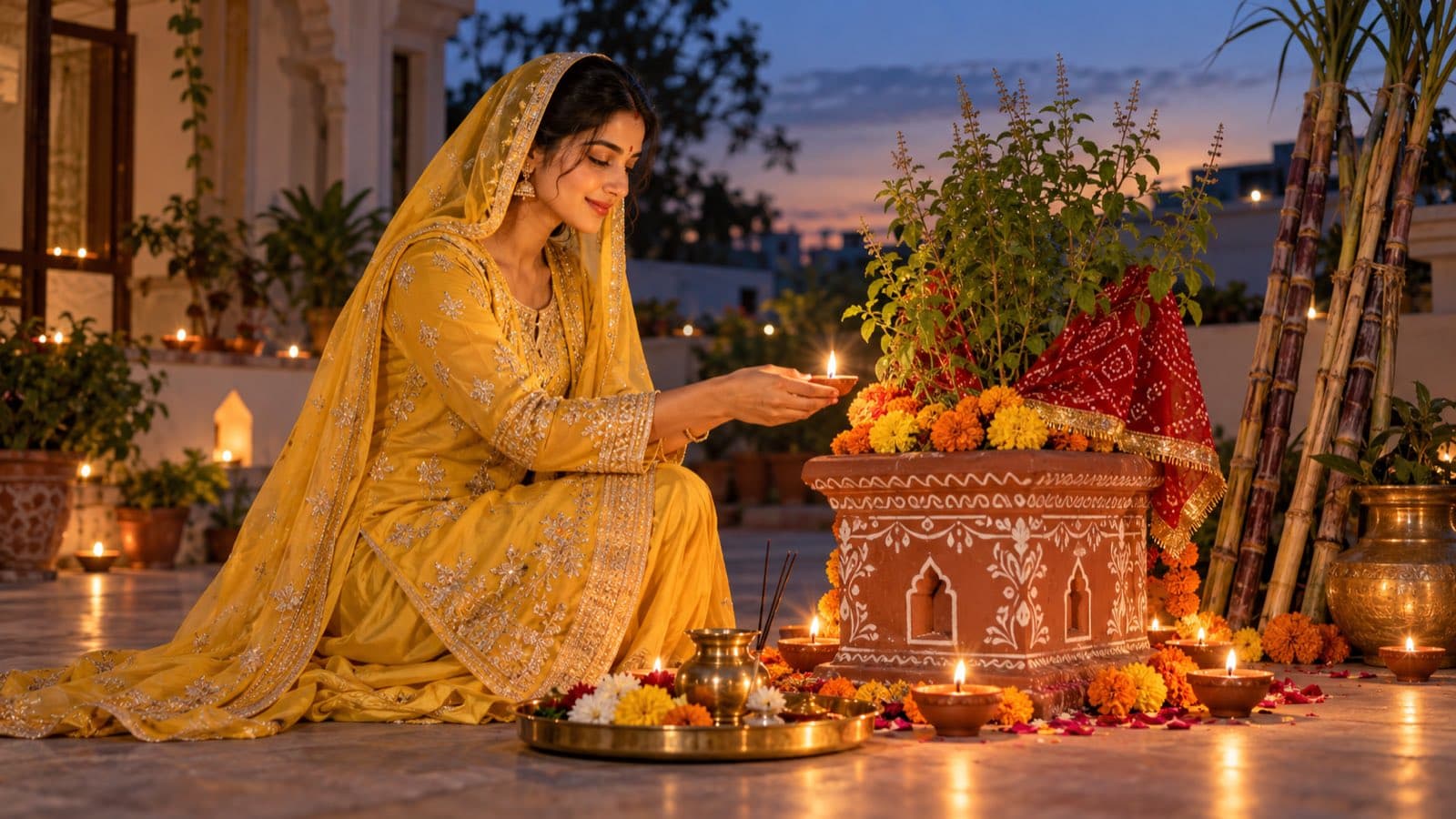
Tulsi Vivah 2026 falls on Saturday, 21 November. Here is what to wear for the evening puja at home, a temple visit or as a guest, from kurta sets in yellow, red, green and pink to dupatta drapes and small bags.
For Tulsi Vivah, wear a comfortable festive kurta set, an anarkali or a light saree in yellow, red, green or pink, with a dupatta you can drape over your head for the puja. Tulsi Vivah 2026 falls on Saturday, 21 November 2026, and the puja is usually held at home in the evening, so pick something you can sit on the floor in, move around a diya in and wear for a few hours with family. Breathable silk blend or cotton is a safer choice than heavy, stiff fabric.
Key takeaways
- Tulsi Vivah 2026 is on Saturday, 21 November 2026, the day after Devuthani (Prabodhini) Ekadashi on Friday, 20 November 2026.
- The puja is usually held in the evening, and the muhurat varies by city, so check your local panchang.
- Yellow, red, green and pink are the colours traditionally favoured for Tulsi Vivah outfits.
- A kurta set with palazzos or a sharara is the easiest outfit for sitting on the floor and doing aarti.
- Keep a dupatta that can be pinned over the head or shoulder, and keep its ends away from open diyas.
- Tulsi Vivah traditionally marks the start of the wedding season, so a slightly dressier set can carry straight into the first wedding.
Tulsi Vivah 2026 date: when is it?
Tulsi Vivah 2026 falls on Saturday, 21 November 2026. It comes the day after Devuthani Ekadashi, also called Prabodhini Ekadashi, which falls on Friday, 20 November 2026. The ceremony symbolically marries the tulsi plant to Lord Vishnu in his Shaligram or Krishna form, and many families decorate the tulsi in the courtyard or balcony like a bride.
The puja is usually held in the evening, around pradosh, but the exact timing differs from city to city. Check your local panchang or ask your family priest for the muhurat in your area before you plan the evening.
Tulsi Vivah also traditionally marks the start of the wedding season. That matters for your wardrobe: the outfit you buy for the puja can often be worn again at a mehendi or a family wedding a few weeks later.
What to wear on Tulsi Vivah: a quick-reference table
| Your role or setting | What to wear | Fabric | Colours that work | Bag |
|---|---|---|---|---|
| Home puja host | Kurta set with palazzos or trousers and a dupatta | Silk blend or pure cotton | Yellow, red, green | None, or keep keys in a pocket |
| Temple visit | Kurta set or saree with full sleeves or a shawl | Cotton or silk blend | Green, pink, yellow | Small sling or potli |
| Guest at someone's Tulsi Vivah | Festive kurta set, sharara set or anarkali | Silk blend, organza | Pink, red, yellow | Potli clutch |
| Office day, then puja | Neat cotton kurta set, add a festive dupatta at home | Pure cotton | Green, pink | Your work bag, plus a small sling |
| Tulsi Vivah doubles as the first wedding | Sharara set or a zari saree | Silk blend, zari weave | Red, mustard, magenta | Embroidered potli |
Colours for Tulsi Vivah
There is no fixed dress code, but a few colours are traditionally favoured because they read as auspicious and festive:
- Yellow and mustard: associated with Lord Vishnu, and bright under the warm light of diyas.
- Red: the bridal colour. The tulsi plant is often dressed in a red chunri, and many women echo it.
- Green: the colour of the tulsi itself, and a calm choice for a home puja.
- Pink: softer than red, and easy to pair with gold jewellery.
Take this as general guidance, not a rule. Families and regions differ, and some households avoid black for pujas, so if you are a guest, it is polite to pick one of the four colours above.
Evening light is warm and low. Mid to bright shades, such as a clear yellow or a true red, photograph better around diyas than very pale pastels, which can look washed out.
Best outfits for a home Tulsi Vivah puja
At home you will be sitting on the floor near the tulsi, standing up for the aarti, walking around the plant for the pheras and serving prasad. Comfort comes first.
Kurta sets with palazzos or trousers. These are the most practical choice. Palazzos let you sit cross-legged without pulling at the knees, and a set with a dupatta gives you a complete look without much styling.
Sharara sets. A sharara sits comfortably on the floor and looks festive without effort. Our guide to sharara vs gharara vs palazzo explains why it suits long seated functions.
Anarkalis. An anarkali looks beautiful in photographs, but check the flare before you sit down. A very long, heavy flare can trip you on the pheras around the tulsi.
Sarees. A light saree works well if you are used to sitting and moving in one. Tuck the pallu firmly or pin it, since you will be close to diyas.
Kurta sets in traditional colours, in stock:
- The yellow embroidered silk blend kurta with trousers and dupatta at ₹2,704 is a classic Tulsi Vivah yellow with thread work.
- The pink embroidered silk blend kurta with palazzos and dupatta at ₹1,800 gives you room to sit cross-legged through a long puja.
- The green printed pure cotton kurta with palazzos and dupatta at ₹1,450 is the breathable, washable choice for a host who will be busy all evening.
Browse more kurta sets in yellow, red, green and pink.
How to drape your dupatta for the puja
Many women cover their head for the pheras and the aarti. The dupatta has to stay put while you hold a thali, ring a bell or offer water to the tulsi.
- Over the head, pinned at one shoulder: place the dupatta over your head, take one end across to the opposite shoulder and pin it there. Both hands stay free.
- Single shoulder, pinned: if you are not covering your head, drape it over one shoulder and pin it at the front so it does not slip into the diya.
- Tucked at the waist: for the host who is cooking and serving, bring one end round and tuck it into the waistband.
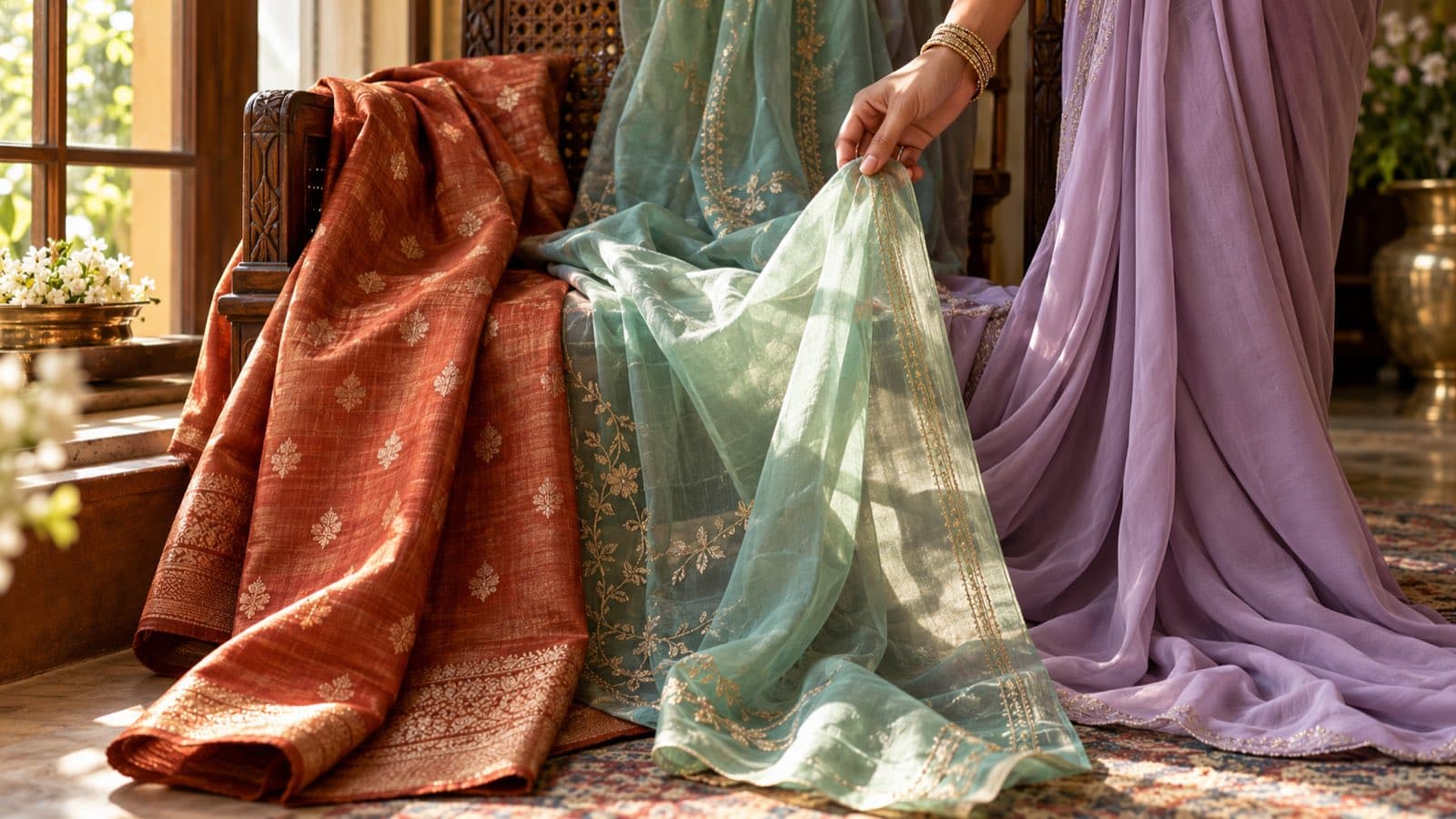
Keep the loose ends short and away from open flames, especially with organza or georgette, which are light and move easily. For step-by-step styles, see how to drape a dupatta, 8 ways.
Visiting a temple for Tulsi Vivah
Many temples hold a public Tulsi Vivah, and evenings in late November can be crowded and a little cool in north India.
- Cover up comfortably: a kurta set with full or three-quarter sleeves, or a light shawl over a saree.
- Choose shoes you can slip off: you will leave them at the entrance.
- Carry a small bag: a sling or a potli holds your phone, a little cash for offerings and a handkerchief, and keeps your hands free for the thali.
Small bags in stock:
- The pink floral embellished canvas sling bag at ₹1,548 sits close to the body in a crowd and matches a pink or green kurta set.
- The red embroidered potli clutch at ₹3,333 adds a festive finish to a red or yellow outfit and has a drawstring that loops over your wrist.
Guest at someone's Tulsi Vivah
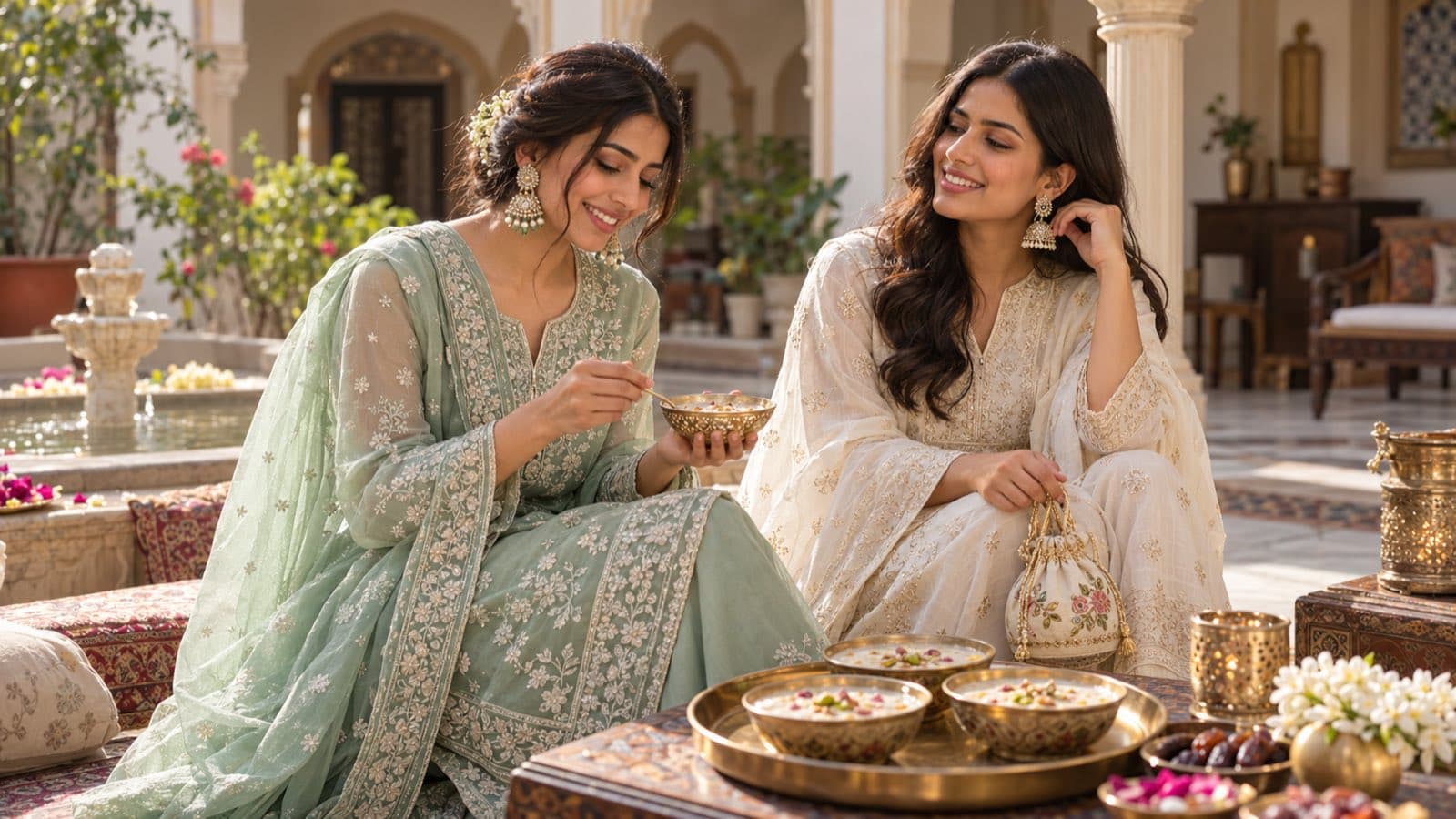
If a friend or relative has invited you to their home ceremony, dress a little more than you would for your own puja, but do not try to outshine the hosts. A silk blend kurta set or sharara set in pink, red or yellow, with simple gold-tone jewellery, is right for most families.
Bring a small potli rather than a large handbag. Floor seating leaves little room for anything bigger, and you may be asked to help with the aarti.
Office day, then Tulsi Vivah puja
Tulsi Vivah 2026 falls on a Saturday, but if you work weekends or the celebrations stretch across days, a quick change helps. Wear a neat pure cotton kurta set to work, then add a festive dupatta, a pair of jhumkas and a bindi at home. The outfit stays comfortable for a long day and still looks right in front of the tulsi in the evening. Our office wear kurta sets guide has more ideas for sets that move from desk to dinner.
When Tulsi Vivah doubles as the first wedding of the season
Tulsi Vivah traditionally opens the wedding season, and in many families the first wedding or engagement follows soon after. If you are attending a wedding function on or around the day, step up to something richer.
- A sharara set in red or magenta works for a mehendi or sangeet and still respects the puja.
- A zari saree in mustard carries the Tulsi Vivah yellow into a wedding evening.
Wedding-ready pieces in stock:
- The red embroidered silk blend kurta with sharara and dupatta at ₹2,304 has an above-knee kurta and a flared sharara that moves well when you dance.
- The mustard floral zari saree at ₹2,999 is a single piece that works for both the puja and a wedding function.
For each function in the season, see our Indian wedding guest outfit guide.
Fit, fabric and practical tips
- Test the sit: before the day, sit cross-legged in the outfit for a few minutes. If the kurta pulls at the hips, size up.
- Avoid stiff, scratchy fabric: you may be seated for an hour or more.
- Layer for the evening: late-November evenings can be cool in the north, so keep a shawl ready.
- Check the hem near diyas: floor-length hems and long dupatta ends should stay clear of flames.
Use our size chart to pick the right size. Shipping is free over ₹799, and you have 7-day returns if the fit is not right.
Related guides
- What to Wear to a Puja at Home or a Temple Visit
- What to Wear to an Engagement Ceremony as a Guest: Day vs Evening
- What to Wear for Chhath Puja 2026: Outfits for All Four Days
Frequently asked questions
What should I wear on Tulsi Vivah?
Wear a comfortable festive kurta set, a sharara set, an anarkali or a light saree, with a dupatta you can drape over your head for the puja. Choose fabric you can sit on the floor in for an hour, such as silk blend or cotton.
What colour to wear on Tulsi Vivah?
Yellow, red, green and pink are the colours traditionally favoured. Yellow is linked to Lord Vishnu, red is the bridal colour, and green echoes the tulsi plant itself. Treat this as general guidance, since customs vary between families.
When is Tulsi Vivah in 2026?
Tulsi Vivah 2026 falls on Saturday, 21 November 2026, the day after Devuthani (Prabodhini) Ekadashi on Friday, 20 November 2026. The puja is usually held in the evening, and the muhurat varies by city, so check your local panchang.
Can I wear a kurta set for Tulsi Vivah?
Yes. A kurta set with palazzos, trousers or a sharara is one of the most practical choices, because it lets you sit on the floor, stand for the aarti and walk around the tulsi comfortably. Add a dupatta to complete the look.
What should a guest wear to a Tulsi Vivah at someone's home?
A silk blend kurta set or sharara set in pink, red or yellow, with simple jewellery and a small potli, suits most home ceremonies. Dress a little more than you would for your own puja, but keep it lighter than wedding wear.