Tone-on-Tone Kurta Sets: The Minimal 'Quiet Luxury' Ethnic Look
What tone-on-tone and monochrome mean in ethnic wear, the best colours, how to mix fabric textures, which accessories keep it quiet, and when the look works best.
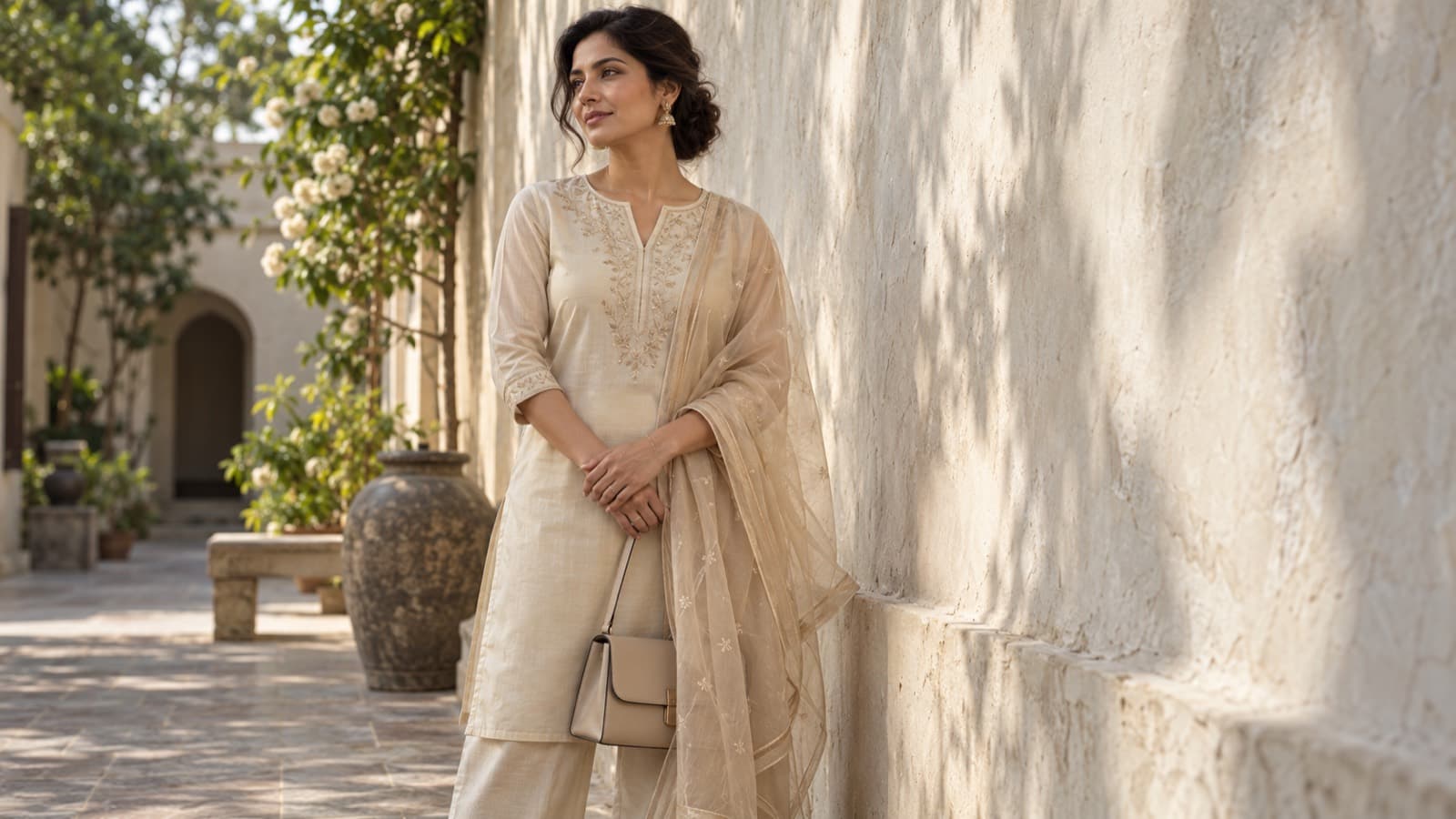
A tone-on-tone kurta set keeps the kurta, bottom and dupatta in one colour family, using shades, sheen and texture instead of contrast to create interest. It is the ethnic version of "quiet luxury": no loud prints or clashing colours, just a clean column of colour, good fabric and tonal embroidery. It works best in ivory, cream, beige, olive, lavender, dusty pink and deep jewel tones, at offices, formal family events, daytime functions and intimate celebrations.
Key takeaways
- Tone-on-tone means one colour family across the whole outfit, in a mix of shades and textures; monochrome means the exact same shade head to toe.
- Texture is what stops a single-colour outfit looking flat: pair matte with sheen, such as cotton with chanderi or silk blend with organza.
- Tonal embroidery, where the thread matches or sits close to the base colour, is the signature detail of the quiet luxury ethnic look.
- Keep accessories in the same family or in one metal, and choose one statement at most.
- Ivory, cream, beige, olive, lavender and dusty pink are the easiest starting points; deep wine and emerald work for evenings.
- A tone-on-tone set elongates the frame because the eye travels in one unbroken line from shoulder to hem.
What does tone-on-tone mean in ethnic wear?
Tone-on-tone dressing stays inside one colour family. A tone-on-tone kurta set might pair an ivory kurta with cream trousers and a champagne dupatta, or a lavender kurta with a slightly deeper lilac dupatta. The colours are related but not identical.
Monochrome is the strict version: kurta, bottom and dupatta in exactly the same shade. Tonal is the looser version, where neighbouring shades of one colour are layered together.
| Look | What it means | Example | Best for |
|---|---|---|---|
| Monochrome | One exact shade on every piece | All-white kurta, trousers and dupatta | A clean, modern column; office and day events |
| Tone-on-tone | Several shades of one colour family | Cream kurta, ivory trousers, champagne dupatta | Quiet luxury; formal family events |
| Tonal with one accent | Tonal outfit plus one small contrast | Olive set with a gold juti and gold earrings | Festive days when you want a little lift |
| Contrast | Two or more unrelated colours | Navy kurta with an orange dupatta | Celebrations where colour is expected |
Once you own a tonal set, you can also break it up with other pieces; our guide to how to style a kurta set five ways shows how to rewear one set with different bottoms and dupattas.
Why the quiet luxury ethnic look works
Quiet luxury is about clothes that look expensive because of their cut, fabric and finish, not because of loud logos, heavy embellishment or bright colour. In ethnic wear, that translates into a few clear choices:
- One colour family. It photographs calmly and never looks overdone.
- Good fabric. Chanderi, dupion silk, tissue and organza carry their own sheen, so they need little added decoration.
- Tonal detail. Thread work, gotta patti or self-design weaves in a close shade add depth that you notice up close.
- A clean silhouette. Straight, A-line or a gently flared anarkali, with a neat neckline and sleeve.
The result is an outfit that feels considered at a family lunch, a formal dinner or a day wedding, and is easy to repeat because nothing about it is too memorable.
Best colours for a tone-on-tone kurta set
Not every colour carries a one-colour look equally well. Very bright shades can feel heavy in a full column, while softer and deeper shades tend to look richer.
- Ivory, cream and off white: the classic quiet luxury palette. Pair cream with gold or champagne details for festive wear, or keep it all white for day.
- Beige and sand: easy for the office and travel, and flattering on most complexions.
- Olive and sage: earthy and modern; pair with antique gold.
- Lavender and lilac: soft and fresh for day functions; works with silver or pearls.
- Dusty pink and rose: gentle and feminine, especially with tonal thread work.
- Wine, emerald and deep purple: the evening version; rich jewel tones look luxurious in a single column.
Tone-on-tone sets in stock:
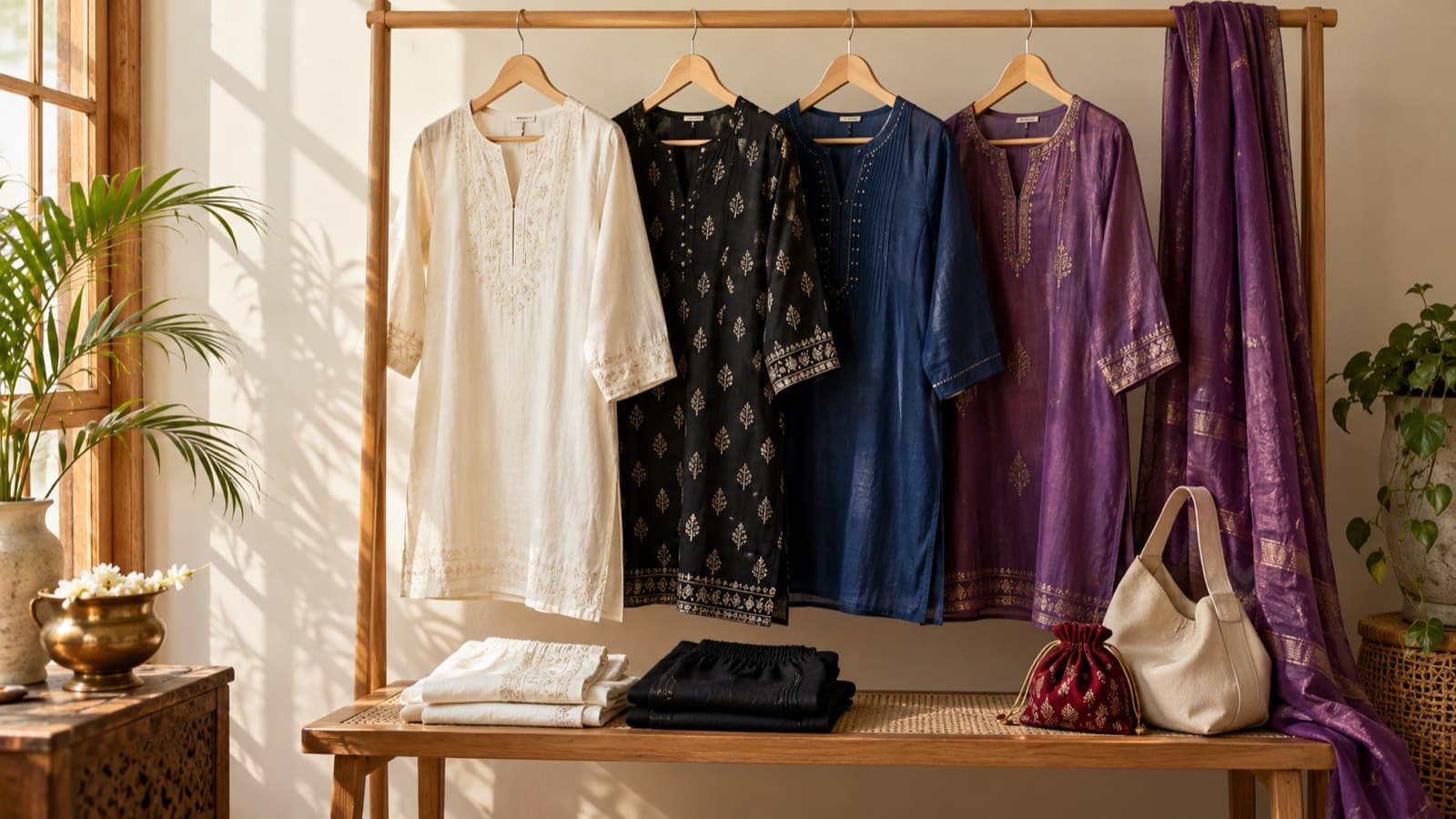
- The purple solid chanderi silk knee-length kurta, trousers and dupatta at ₹1,613 is a solid set, so the look is monochrome straight out of the box.
- The cream gotta patti dupion silk kurta with trousers at ₹1,370 has a cream base with gotta patti detailing; dupion silk gives the slubbed sheen that makes a single colour look rich.
- The off white embroidered tissue kurta with trousers and dupatta at ₹2,704 uses tissue, a fabric with a natural shimmer, so it suits evening family events.
- The white embroidered chanderi silk kurta with trousers at ₹1,950 is a white set with floral thread work, the daytime version of the look.
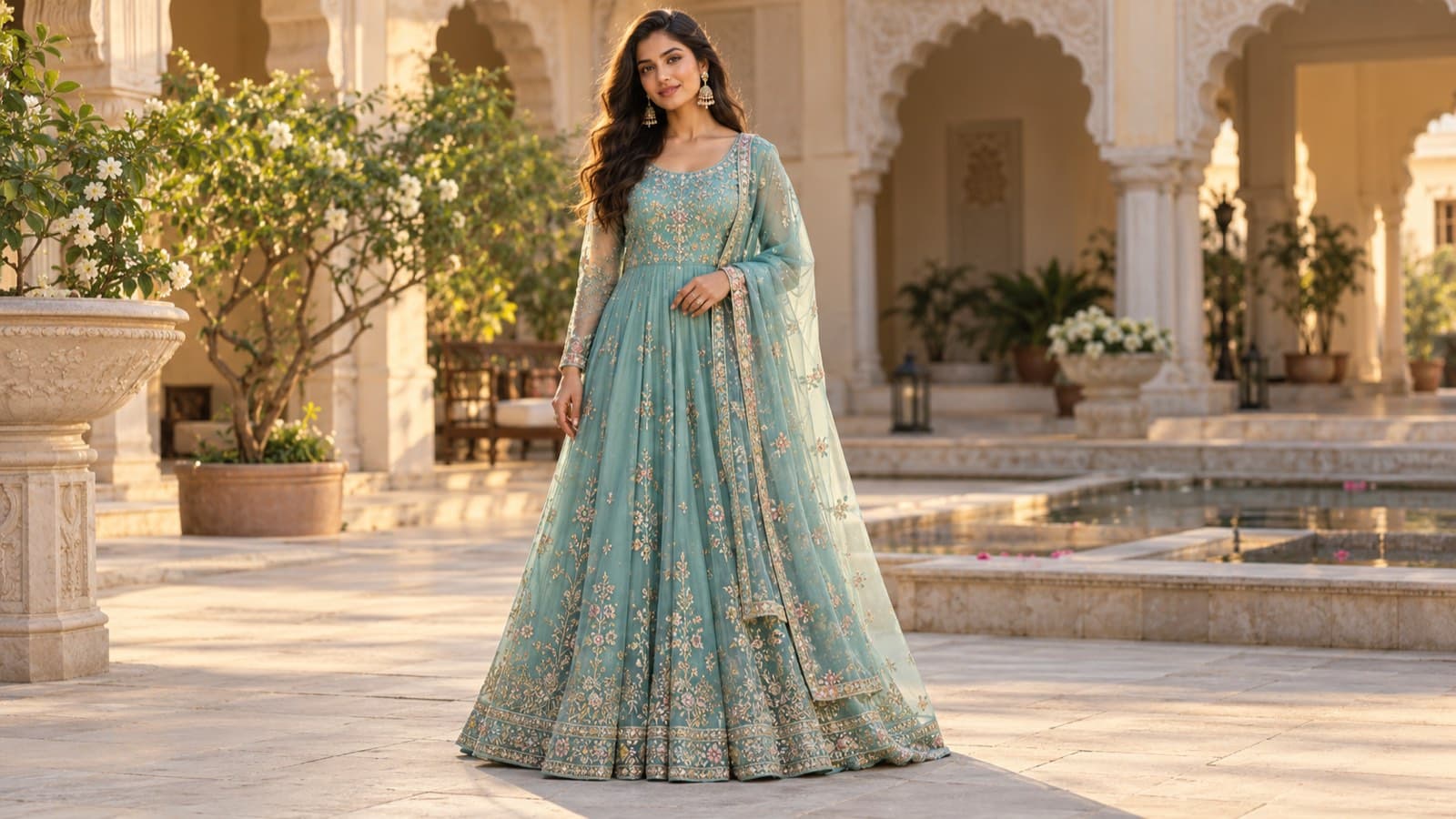
- The olive embroidered organza anarkali with palazzos and dupatta at ₹5,304 is the dressiest option here, with a flared anarkali in organza for a wedding function.
Check each product's photographs to see how close the embroidery sits to the base colour before you buy.
Fabric texture play: how to stop a one-colour outfit looking flat
The single most important rule of tone-on-tone dressing is to vary the texture. When the colour stays the same, the eye looks for something else, and texture gives it that.
| Combination | Why it works | Where to wear it |
|---|---|---|
| Matte cotton kurta + chanderi or organza dupatta | Soft sheen lifts a plain base | Office, day events |
| Dupion silk kurta + matte trousers | Slub and sheen on top, calm below | Family dinners, festive days |
| Silk blend kurta + sheer organza dupatta | Opaque and sheer layers add depth | Day weddings, pujas |
| Tissue or satin + plain silk blend | Shimmer against flat silk | Evening events |
| Self-design or jacquard weave | Pattern in the weave, not in a print | Any occasion |
A few practical tips:
- Mix two finishes, not four. Matte and sheen is enough; adding velvet, sequins and tissue to the same outfit loses the minimal feel.
- Let embroidery be the texture. Tonal thread work, gotta patti or pintucks give depth without adding colour.
- Watch how shades shift. Silk and organza look lighter in daylight than cotton in the same dye. That slight difference is what makes a tonal look work, so do not worry if pieces are not identical.
For more on how each fabric behaves, see our kurta material guide.
Tone-on-tone co-ords: the western-leaning version
The same idea works with co-ord sets, where the top and bottom are cut from one fabric. A matching co-ord is monochrome by design, so the styling comes down to texture in the accessories.
- The cream self-design organza tunic with palazzos at ₹1,266 gets its interest from the self-design weave rather than colour.
- The lavender self-design poly georgette shirt with palazzos at ₹1,346 is a soft pastel monochrome that works for the office or a brunch.
Accessories for a tone-on-tone kurta set
Accessories either keep the look quiet or break it. The safest approach is to pick a lane.
- Jewellery: choose one metal. Antique gold with cream and olive, silver or pearls with lavender and grey, polished gold with wine and emerald. One statement piece, such as long earrings or a single cuff, is plenty.
- Footwear: tan, nude, gold or a shade from the outfit. Avoid bright juttis that become a second colour.
- Bag: a structured bag in a neutral finishes the look. The beige structured shoulder bag at ₹1,778 sits naturally with cream, beige and olive sets.
- Dupatta drape: a single shoulder drape or a neatly pinned drape keeps the line clean.
If you want one accent, put it in the jewellery or footwear rather than the dupatta. A small touch of gold or a deeper shade at the feet adds life without breaking the column.
When tone-on-tone works best (and when it doesn't)
It works best for:
- The office and formal meetings, where a calm, polished outfit reads as confident. Our office wear kurta sets guide has a full workweek of looks.
- Formal family events, condolence visits and religious gatherings where loud colour is out of place.
- Day weddings, engagements and pujas in ivory, cream or pastel.
- Evening dinners and receptions in wine, emerald or deep purple with tonal embroidery.
- Petite frames, since one colour from shoulder to hem lengthens the line.
It is harder to pull off for:
- Haldi and mehendi, where bright, playful colour is part of the fun.
- Very bright single colours in a full column, which can feel heavy in daylight.
- Flat, matte fabrics in one shade with no embroidery or texture, which can look like a uniform.
How to care for a tone-on-tone set
Light, tonal sets show stains and colour transfer more easily, and the subtle shade differences between pieces can drift with careless washing. Wash the kurta, bottom and dupatta together so they age at the same rate, use cold water and mild detergent, and dry in shade. For embroidered and silk pieces, follow our guide to washing embroidered kurtas.
Before ordering, check the size chart. Shipping is free over ₹799, and returns are accepted within 7 days.
Related guides
- How to Choose a Kurta Set for Your Body Shape
- Kurta Set Colour Combinations That Always Work (Pairing Table)
- Kurta Necklines Explained: Round, V, Boat, Mandarin, Sweetheart
Frequently asked questions
What is a tone-on-tone outfit?
A tone-on-tone outfit uses one colour family across every piece, mixing related shades and textures rather than contrasting colours. In ethnic wear, that means a kurta, bottom and dupatta in shades of the same colour, often with matching embroidery.
What is the difference between monochrome and tone-on-tone?
Monochrome uses exactly the same shade on every piece, while tone-on-tone mixes several shades from one colour family. Both create a long, unbroken line; tone-on-tone usually looks softer because the slight shade changes add depth.
How do I make a monochrome kurta set look less plain?
Vary the texture. Pair a matte kurta with a sheer or shiny dupatta, choose tonal embroidery or a self-design weave, and add one metal in your jewellery. A structured bag and neat footwear finish the look without adding colour.
Can I wear an all-white kurta set to a wedding?
In many families, white is linked to mourning and is avoided at weddings, so check with the hosts first. Ivory, cream or champagne with gold embroidery gives a similar quiet luxury look that is usually more welcome at a celebration.
What jewellery goes with a tone-on-tone kurta set?
Choose one metal and keep it consistent: antique gold with cream, beige and olive, silver or pearls with lavender and grey, and polished gold with wine and emerald. One statement piece, such as long earrings, is enough.