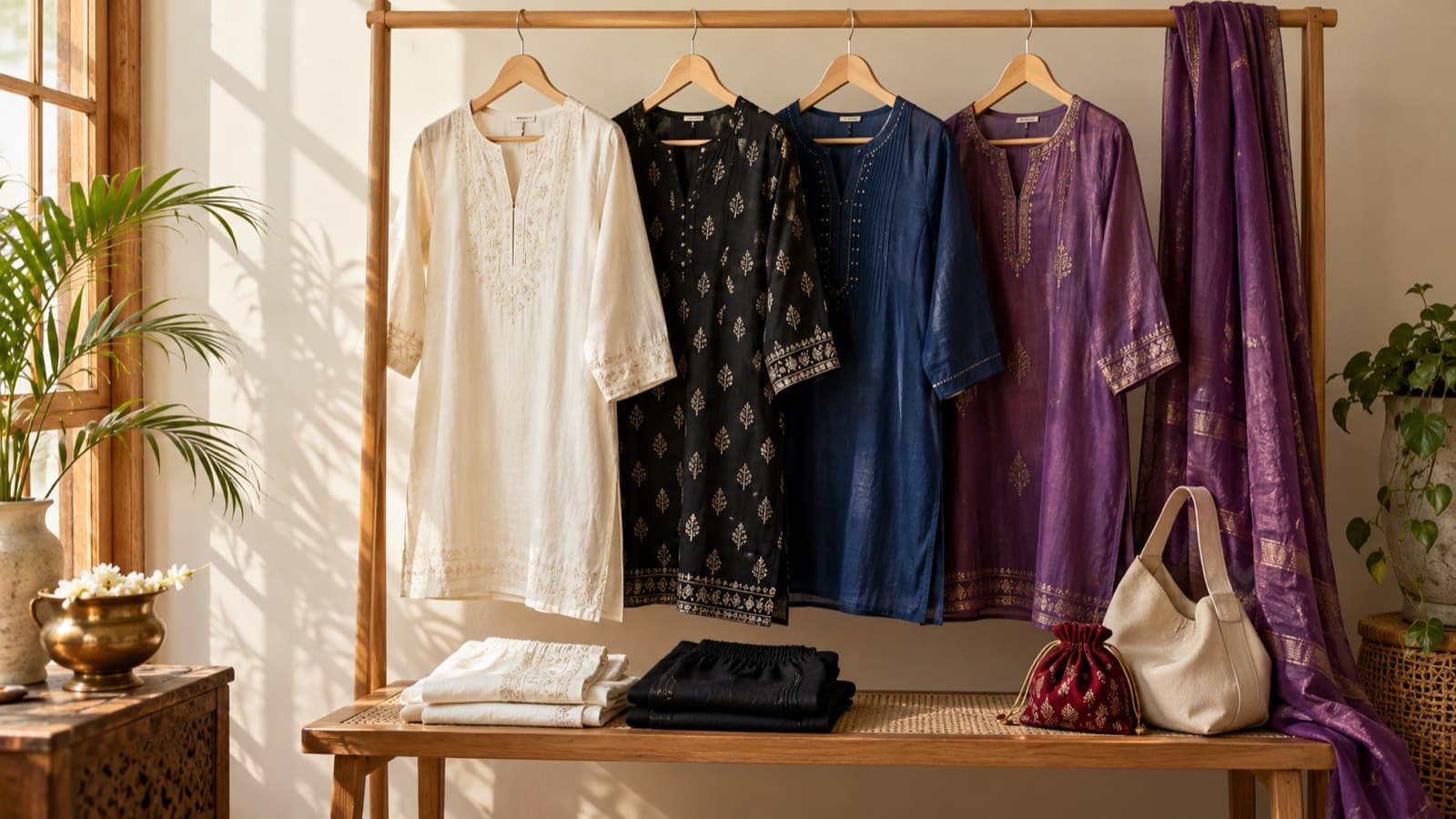
Kurta Material Guide: Cotton, Cotton Blend, Silk Blend and More
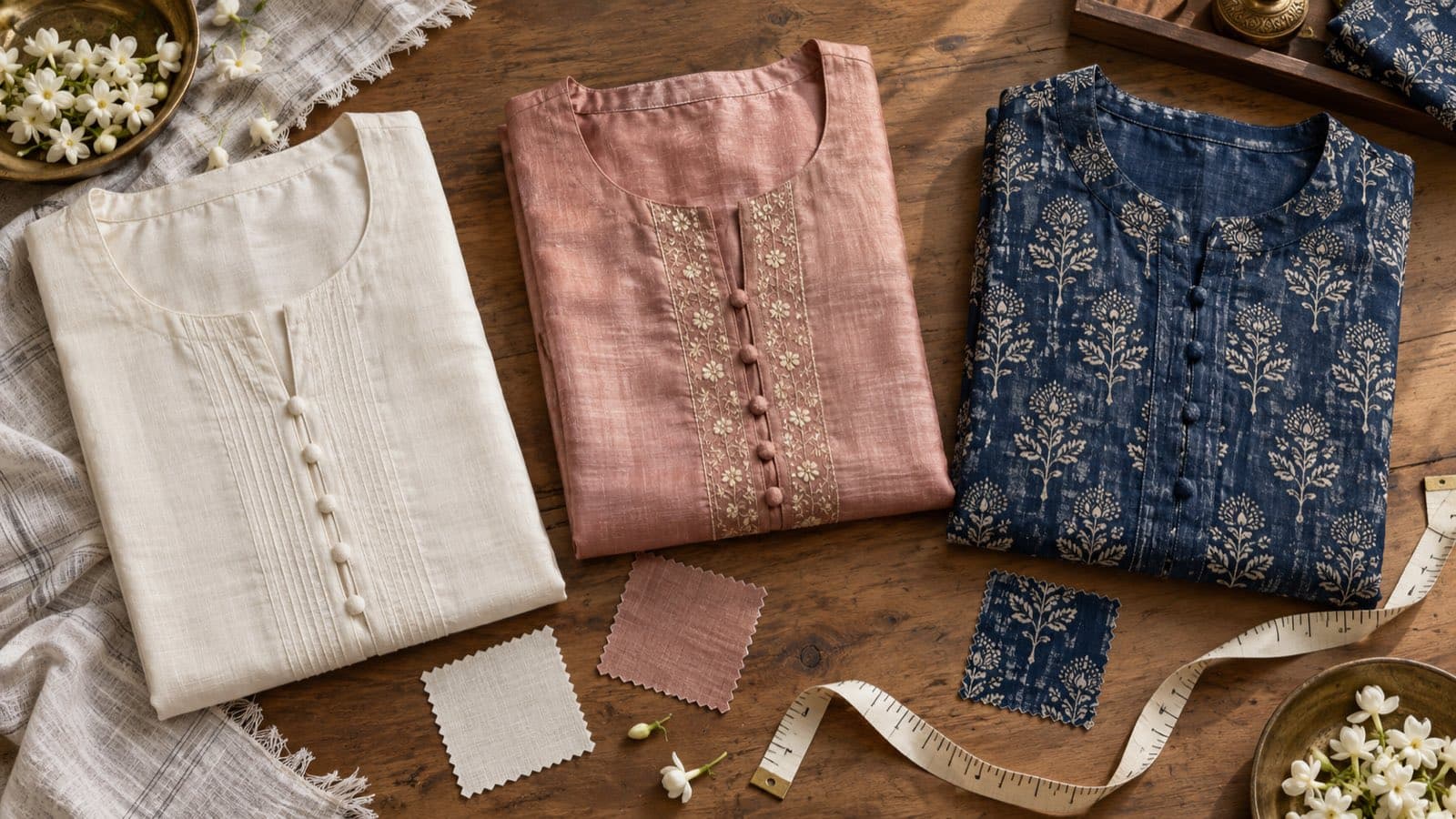
Which kurta material suits which day: pure cotton, cotton blend, silk blend, chanderi, georgette, crepe, rayon and organza compared for breathability, shrinkage, care and occasion.
The best kurta material for most days in India is pure cotton or a cotton blend. Pure cotton is the most breathable kurta cloth for summer, while a cotton blend creases less, dries faster and holds its colour longer. Silk blend, chanderi, georgette and organza are the premium fabrics you wear to functions, and crepe and rayon sit in between: soft and fluid, but fussier to wash. Choose the fabric for the day first, then the print.
Key takeaways
- Pure cotton is the coolest kurta fabric for Indian summers, but it typically shrinks 2–5% on a hot wash and creases within an hour of sitting.
- A cotton blend is cotton mixed with polyester or viscose; it creases far less than pure cotton and still breathes well when the synthetic share is under about 30%.
- Silk blend, chanderi, georgette and organza are occasion fabrics, and most of them want a cold hand wash or dry cleaning.
- Rayon (viscose) feels cooler and drapes better than cotton, but it is weak when wet and can shrink more than cotton if washed warm.
- Georgette and organza are sheer, so kurtas in either usually come lined or need a slip underneath.
- For one kurta that covers the office and a family dinner, a mid-weight cotton blend or a silk crepe is the safest buy.
Kurta material comparison table
| Fabric | Breathability | Feel | Shrink risk | Care | Season | Occasion | Price band |
|---|---|---|---|---|---|---|---|
| Pure cotton | High | Matte, soft, softens with washing | Medium to high (typically 2–5% on a hot wash) | Machine, gentle, cold | Summer, most of the year | Everyday, office | Low |
| Cotton blend | Medium to high | Smooth, holds a press | Low | Machine, gentle, cold | All year | Office, travel, everyday | Low to mid |
| Silk blend | Medium | Soft sheen, drapes | Low to medium | Cold hand wash or dry clean | Winter, evenings, AC venues | Festive, weddings | Mid to high |
| Chanderi | High (light and sheer) | Light, crisp, faint sheen | Low to medium | Cold hand wash or dry clean | Summer and festive | Puja, day functions | Mid to high |
| Georgette | Medium to low | Light, grainy, flowing | Low | Cold hand wash | Evenings, cooler months | Parties, sangeet | Mid |
| Crepe | Medium | Pebbly, fluid, resists creases | Low to medium | Cold hand wash | All year | Office, travel, day functions | Low to mid |
| Rayon / viscose | High | Cool, silky, heavy drape | High | Cold hand wash, no wringing | Summer, humid months | Everyday, casual | Low |
| Organza | Low to medium | Crisp, sheer, holds shape | Low | Dry clean or very gentle hand wash | Evenings, winter weddings | Weddings, festive | Mid to high |
Price bands are relative: the same fabric costs more once it carries heavy embroidery, a lining or a dupatta.
What is the best fabric for kurta in summer?
Pure cotton is the best fabric for a kurta in summer. It absorbs sweat, lets air through and does not cling. Within cotton, the lighter weaves are cooler still: mulmul and voile are usually around 60–90 GSM, while an everyday cotton kurta is typically 100–150 GSM. Anything heavier starts to feel warm by midday.
Close behind are chanderi, which is light and slightly sheer, and rayon, which feels cool against the skin. The fabrics to avoid on a hot commute are polyester georgette, satin and organza: they trap heat, and sweat shows on them.
Whatever the fabric, pick light colours, which reflect heat, and an unlined, relaxed cut with room at the underarm so air can move.
Pure cotton kurtas
Pure cotton is a natural fibre, woven on its own with no synthetic mixed in. It breathes, it takes block prints and dobby weaves cleanly, and it gets softer with every wash rather than worse. In a Delhi or Chennai summer, that is most of the argument.
The trade-off is creasing and shrinkage. Pure cotton wrinkles after an hour at a desk and comes out of a suitcase looking well travelled. It also shrinks most in the first one or two washes, which is why a slightly generous fit on a pure cotton kurta is not a mistake. Our guide on how to wash a cotton kurta without fading covers how to keep that shrinkage small.
The off white pure cotton kurta with trousers at ₹1,189 is a straightforward everyday example.
What about cotton blend?
A cotton blend is cotton woven with a share of polyester, viscose or another fibre so that it holds a press. It creases far less, dries faster and keeps its colour longer than pure cotton. It breathes a little less, but for anything under about 30% synthetic the difference is smaller than people expect.
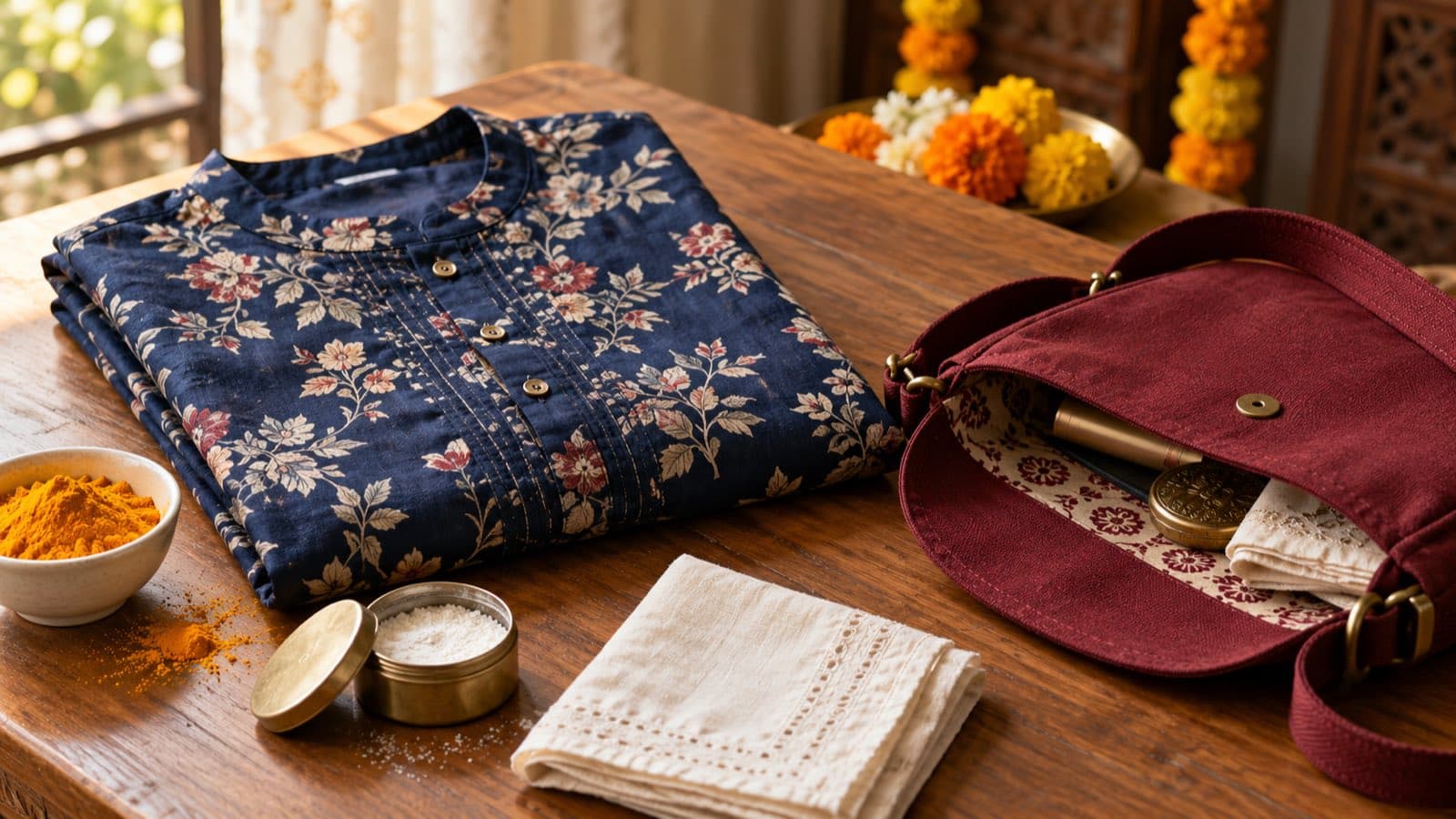
This is the practical everyday fabric, and it is the one most kurta sets are cut from. If you want one kurta that survives a commute, a desk and dinner without a change, buy the blend. The navy blue floral printed straight kurta set at ₹1,999 is a cotton blend that suits an office week.
Cotton vs cotton blend kurta
| Pure cotton | Cotton blend | |
|---|---|---|
| Breathability | Best | Good |
| Creasing | Creases quickly | Holds a press |
| Shrinkage | Typically 2–5% on a hot wash | Usually minimal |
| Colour | Fades faster in sun | Holds colour longer |
| Drying time | Slower | Faster, useful in the monsoon |
| Best for | Hot days, home, casual | Office, travel, long days |
Is silk blend good for kurta?
Yes, for occasions. A silk blend is silk mixed with polyester, viscose or cotton, which gives it a quiet sheen and a soft drape at a much lower price and weight than pure silk. It photographs well, which is not a small thing at a wedding.
It is not the right choice for a sweaty summer day. Silk blends hold heat, mark with water and sweat, and most want a cold hand wash or dry cleaning. Buy one for the function, not for the fortnight. The pink embroidered silk blend kurta with palazzos and dupatta at ₹1,800 is a typical festive silk blend set.
Chanderi
Chanderi is a lightweight, slightly sheer fabric from Madhya Pradesh, woven from cotton, silk or a mix of the two, often with fine zari or woven motifs. It is the rare festive fabric that also works in heat, because it is so light. Chanderi cotton is the more breathable version; chanderi silk has more sheen.
The rust floral printed chanderi cotton kurta with palazzos and dupatta at ₹1,949 sits neatly between everyday and festive.
Georgette
Georgette is a light, sheer fabric with a slightly grainy, crinkled surface that flows rather than standing away from the body. Most georgette today is polyester ("poly georgette"); silk georgette is rarer and costlier. It does not crease much and it packs well, but polyester georgette does not breathe, so it is better for evening functions and cooler months than for a summer afternoon.
The lavender yoke design georgette kurta with trousers at ₹1,398 shows how georgette drapes in a simple cut.
Crepe
Crepe is a fabric with a fine, pebbly texture created by tightly twisted yarns. It drapes fluidly, resists creasing and has a soft matte finish, which makes it one of the best fabrics for travel and long office days. Silk crepe has a gentle sheen; polyester crepe is easier to wash. Wash crepe cold, because heat can make it pucker or shrink.
The blue thread work silk crepe kurta with trousers at ₹1,189 is an easy everyday-to-evening piece.
Rayon vs cotton kurta
Rayon, also sold as viscose, is a semi-synthetic fibre made from wood pulp cellulose. It feels cooler and silkier than cotton and drapes in a heavier, more fluid way, which is why rayon kurtas look relaxed and flowing.
| Rayon / viscose | Cotton | |
|---|---|---|
| Feel | Cool, silky, fluid | Matte, crisp to soft |
| Breathability | High | High |
| Strength when wet | Weak; can stretch or tear | Strong |
| Shrinkage | Can shrink more than cotton if washed warm | Typically 2–5% on a hot wash |
| Creasing | Creases easily | Creases easily |
| Washing | Cold hand wash, no wringing | Machine, gentle, cold |
Choose rayon if you want drape and softness for summer and do not mind gentle washing. Choose cotton if you want a kurta that can go in the machine and last for years.
Organza
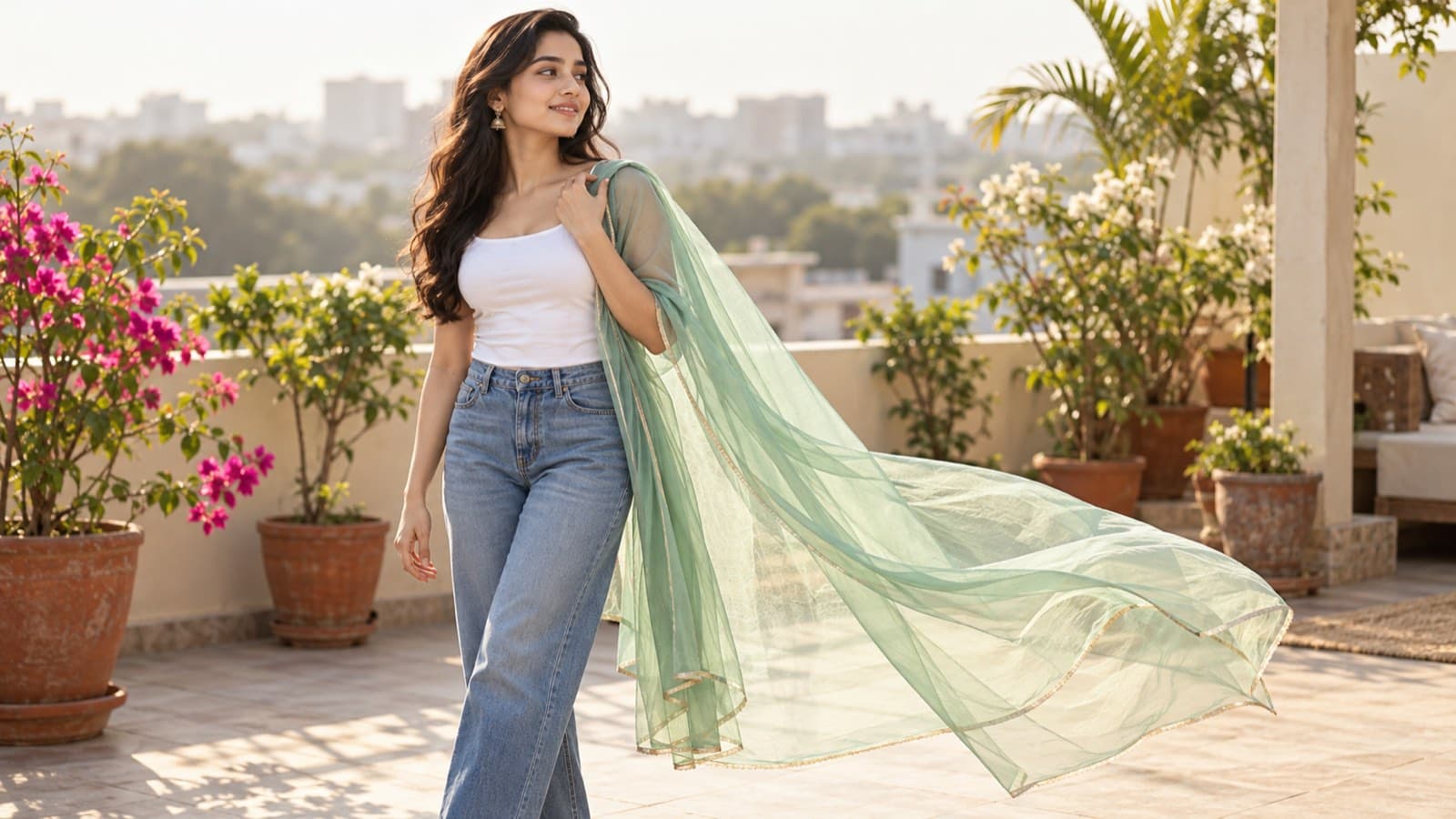
Organza is a thin, sheer, crisp fabric with a plain weave, traditionally made from silk and now often from polyester. It holds its shape rather than draping, so it gives volume to sleeves, dupattas and flared kurtas, and it is a favourite base for embroidery. Organza kurtas are usually lined, and they are best kept for evening and winter functions.
The blue embroidered organza kurta with trousers and dupatta at ₹1,999 shows organza's crisp, structured fall.
Premium fabrics for kurta: what you are paying for
When a kurta is described as made from premium fabric, the price usually reflects four things:
- Fibre. Silk, or a higher share of silk, costs more than polyester or viscose.
- Weave. Jacquard, woven zari and handloom chanderi take longer to make than a plain print.
- Work. Embroidery, sequins, gota patti and mirror work need a fabric stable enough to carry them.
- Finish. A lining, a matching dupatta and finished seams add both cost and comfort.
A premium fabric earns its price on a piece you will wear to several functions; for everyday wear, cotton or a cotton blend is better value.
How to choose kurta material
- Start with the season. Summer: pure cotton, chanderi cotton or rayon. Winter and evening: silk blend, georgette or organza.
- Then the occasion. Office and travel: cotton blend or crepe. Weddings and festivals: silk blend, chanderi silk or organza.
- Be honest about care. If it must go in the machine, buy cotton or a cotton blend.
- Match the fabric to the cut. An Anarkali needs a fabric that holds volume; our guide to A-line, Anarkali and straight kurtas explains which cut wants which fabric.
- Allow for shrinkage. For pure cotton and rayon, check the size chart and do not size down.
How to read the fabric label
Fabric is listed on every product page on Tussra, under the description, and you can filter kurtas by fabric. Read it before the photograph convinces you: the same silhouette in pure cotton and in silk blend are two different garments. Remember too that embroidery and sequins change the care rules whatever the base fabric; our guide to caring for embroidery and sequins covers them.
Shipping is free on orders over ₹799, and you have 7-day returns if the fabric is not what you expected in person.
Related guides
- Tone-on-Tone Kurta Sets: The Minimal 'Quiet Luxury' Ethnic Look
- Saree vs Lehenga vs Kurta Set for a Wedding Guest: Which to Choose
- What to Wear to a Job Interview in a Kurta Set: Do's and Don'ts
Frequently asked questions
Which kurta material is best for daily wear?
Pure cotton and cotton blend are the best kurta materials for daily wear. Pure cotton is cooler in summer, while a cotton blend creases less and survives more washes. Both can usually go in the machine on a gentle, cold cycle.
What is the best fabric for kurta in summer?
Pure cotton is the best summer kurta fabric because it breathes and absorbs sweat. Light weaves such as mulmul and voile are cooler still, and chanderi cotton and rayon are good alternatives. Avoid polyester georgette, satin and organza on hot days.
Is cotton blend better than pure cotton for a kurta?
It depends on your day. Pure cotton is more breathable, while a cotton blend creases less, shrinks less and keeps its colour longer. For office and travel the blend is usually more practical; for hot, dry weather pure cotton is more comfortable.
Is silk blend good for kurta?
Silk blend is a good kurta fabric for weddings, festivals and evening functions, because it has a soft sheen and drapes well. It is too warm for everyday summer wear and usually needs a cold hand wash or dry cleaning.
Is rayon or cotton better for a kurta?
Rayon is softer, cooler and more fluid, while cotton is stronger and easier to wash. Rayon can shrink and stretch if washed warm or wrung, so choose cotton if you want a kurta that can go in the machine.
Which kurta cloth does not shrink?
Cotton blends, polyester georgette, crepe and organza shrink very little. Pure cotton and rayon shrink most, especially in hot water or a dryer, so wash them cold and dry them on a hanger.