Lohri Outfit Ideas for Women 2027: Bright, Warm and Bonfire-Safe
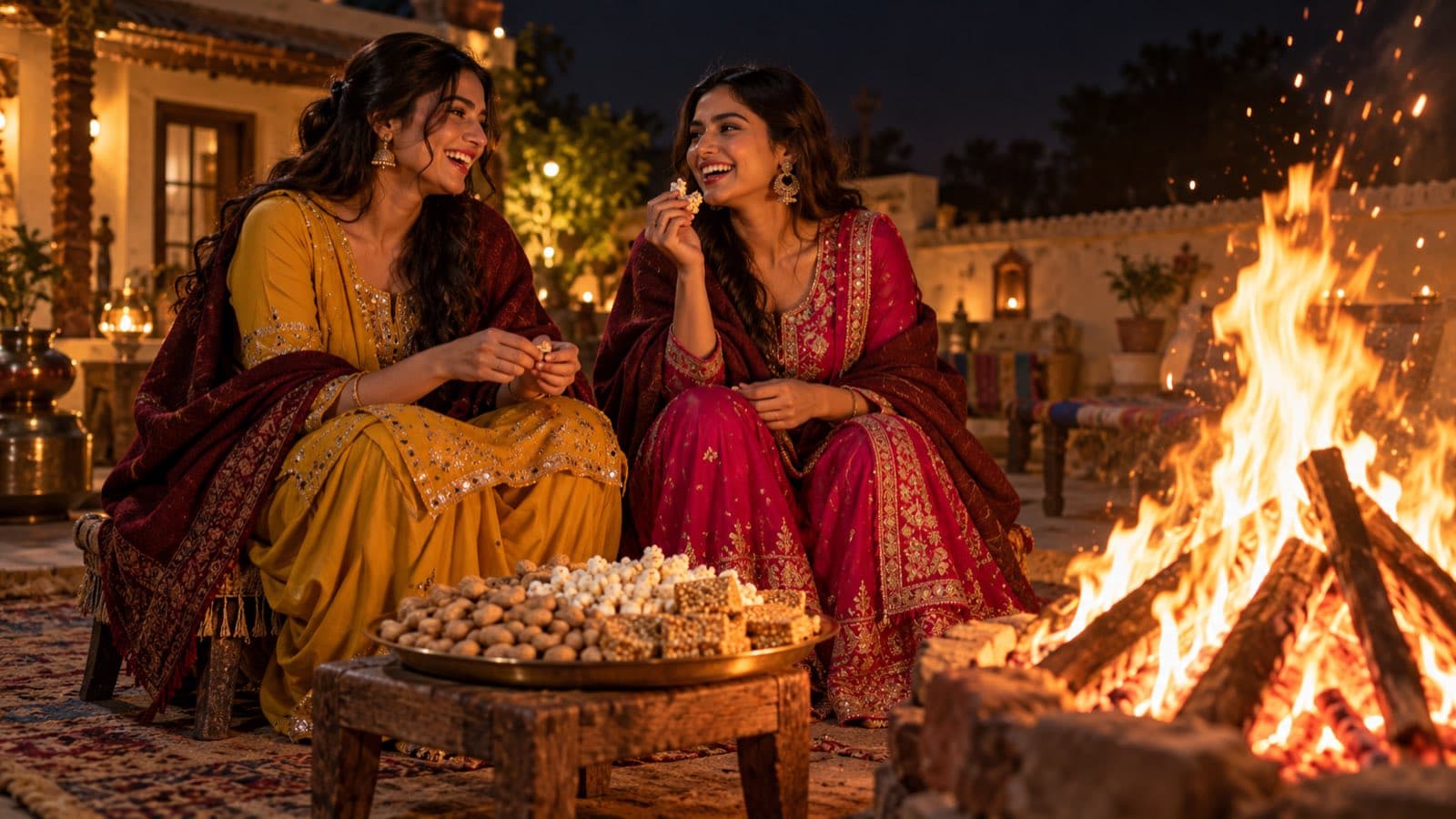
What to wear for Lohri 2027: bright Punjabi festive colours, patiala and sharara sets you can dance in, phulkari-style styling, warm layers for a cold night and how to wear a dupatta safely near the bonfire.
For Lohri, wear a bright Punjabi festive colour such as red, yellow, orange, magenta or pink in a kurta set that lets you move, then layer for a cold night outdoors. A patiala or sharara set in silk blend or silk crepe, a thermal underneath, a wool shawl on top and closed juttis will see you through the bonfire and the dancing. Pin your dupatta close to the body and keep your distance from the flames.
Key takeaways
- Lohri colours are warm and bright: red, yellow, orange, magenta, pink and deep green all look right by firelight.
- A patiala, sharara or palazzo set is the easiest Lohri outfit because you can dance bhangra and giddha in it.
- Phulkari-style embroidery is the classic Lohri inspiration; a plain bright kurta with an embroidered dupatta or shawl gets the same effect.
- Lohri is an outdoor January night, so wear a thermal under your kurta and a wool shawl over it.
- Pin your dupatta firmly or drape it over one shoulder near the fire; loose, flowing ends can catch a spark.
- Natural fabrics are the safer choice beside an open fire, as many synthetics melt when they get too hot.
When is Lohri 2027?
Lohri falls on the night before Makar Sankranti, in mid-January. For 2027 the calendars we checked do not agree on the exact day, so check your local calendar or ask your gurdwara or family elders before you plan. The outfit advice below holds whichever night it lands on.
What to wear for Lohri: a quick-reference table
| Family Lohri at home | Society or community bonfire | First Lohri (new bride or baby) | |
|---|---|---|---|
| Outfit | Cotton or silk crepe patiala or palazzo set | Silk blend sharara or palazzo set | Your most festive silk set, sharara or lehenga |
| Colours | Yellow, orange, pink | Red, magenta, green | Red, maroon, magenta with gold |
| Embroidery | Light gotta or print | Thread work or gotta patti | Heavier thread work, sequins or mirror work |
| Dupatta | Pinned over one shoulder | Pinned, or swapped for a shawl near the fire | Phulkari-style dupatta, pinned at the shoulder |
| Warm layer | Cardigan or shawl | Wool shawl plus thermal | Shawl draped over the dupatta |
| Footwear | Juttis | Closed juttis with socks | Embroidered juttis |
Lohri colours: why bright, warm shades work
Lohri is a harvest festival lit by a bonfire, and the colours people wear reflect that. Red, yellow, orange and magenta pick up the glow of the fire and photograph well after dark, when every picture is lit by flames and fairy lights. Mustard and yellow echo the mustard fields of a Punjabi winter. Deep green and royal blue are good alternatives if you want something less fiery.
Black and very pale pastels are the two shades to think twice about. Pastels can look washed out in firelight, and dark colours disappear into the night in photographs. Neither is wrong, but bright colours are the tradition for a reason.
Phulkari-style looks without a phulkari
Phulkari is the Punjabi craft of embroidering bright flowers in silk thread on a plain base, and it is the look most people picture for Lohri. You do not need a phulkari piece to borrow the feel of it.
- Plain kurta, embroidered dupatta: wear a solid bright kurta set and let an embroidered dupatta or shawl carry the colour and pattern.
- Contrast is the point: phulkari pairs a plain base with bright thread. Try a mustard set with a pink dupatta, or a green set with orange.
- Embroidery near the face: thread work or gotta at the neckline or yoke gives the same festive effect as an embroidered dupatta, and keeps the dupatta optional near the fire.
Treat phulkari as inspiration rather than a costume. A bright set with good embroidery reads as festive and Punjabi without trying too hard.
Patiala, sharara or palazzo: which suit for Lohri?
You will be standing, walking round the fire and very likely dancing, so choose a bottom you can move in.
- Patiala salwar: the classic Punjabi choice. The pleated, gathered salwar gives you room for bhangra and giddha, and it sits well over thermal leggings.
- Sharara: dressier, and it swirls when you dance. Keep the hem just off the ground so it does not drag through ash or damp grass.
- Palazzo: the easiest of the three. It is comfortable for a long evening and works with any kurta length.
For more on how these bottoms differ, see our guide to sharara vs gharara vs palazzo.
Lohri kurta sets in stock:
- The pink gotta patti silk crepe kurta with patiala and dupatta at ₹2,500 is the most traditional Lohri cut we have, a patiala set made for dancing.
- The yellow embroidered thread work kurta with trousers and dupatta at ₹2,704 is a silk blend set in the mustard-field colour of the season.
- The orange embroidered kurta with palazzos and dupatta at ₹2,854 is a warm bonfire shade with embroidery that catches the light.
- The red thread work kurta with sharara and dupatta at ₹2,304 is a silk blend sharara set for a community bonfire or a first Lohri.
- The magenta sequinned kurta with sharara and dupatta at ₹2,304 brings a little sparkle for the night.
- The maroon embroidered dupion silk kurta with palazzos and dupatta at ₹2,704 has the weight and depth of colour for a cold night.
Browse all kurta sets for more colours.
How to layer for a cold Lohri night
Lohri happens outdoors in the coldest weeks of a north Indian winter. The fire keeps the front of you warm while your back and feet go cold, so build warmth in from the inside.
Start underneath
- Thermal top and leggings: a thin, skin-toned or matching thermal is invisible under a kurta and a patiala or palazzo.
- Full or three-quarter sleeves: if your kurta is sleeveless or short-sleeved, a fitted full-sleeve inner in a matching colour adds real warmth.
Then the shawl
- Wool or pashmina-style shawl: drape it over your shoulders once you have pinned the dupatta. A shawl in a deep colour such as maroon, bottle green or mustard looks part of the outfit.
- A short jacket or cardigan: a cropped, fitted jacket over a kurta is practical if you will be outdoors for hours, and it has no loose ends to manage near the fire.
Then your feet
- Closed juttis or mojaris with thin socks underneath. Bare feet in open sandals go cold fast on a January lawn or terrace.
Our guide to winter wedding outfits that keep you warm goes further into thermals and shawls, and the same tricks work for Lohri.
Bonfire safety: dupattas, fabrics and hair
A Lohri fire is the centre of the evening, and people circle it, throw in sesame, peanuts and popcorn, and dance close by. A few habits keep the night safe.
- Pin your dupatta. Use two or three safety pins at the shoulder so the ends cannot swing towards the flames when you lean in to make an offering. A one-shoulder or a crossed-over drape keeps the fabric close. Our guide to draping a dupatta eight ways shows several secure drapes.
- Take the dupatta off before you go close. If you are feeding the fire or leading the circle, fold the dupatta away or hand it to someone and keep only the shawl, tucked in.
- Mind the shawl ends. Tuck the ends of a shawl into your arm or wrap them round rather than letting them hang loose.
- Choose natural fibres near the flames. Cotton, silk and wool are the safer choices. Many synthetics, including polyester and some georgettes and nets, can melt when they get too hot.
- Tie long hair back and keep loose sleeves clear when you throw offerings into the fire.
- Watch children's outfits most closely. Pin their dupattas or leave them off altogether.
A bag for Lohri night
Keep your hands free. A small bag that hangs from the wrist or across the body means you can hold a plate of revri and gajak, clap along and throw offerings without putting anything down.
- The red embroidered potli clutch at ₹3,333 hangs from the wrist and suits red, maroon and gold outfits.
Keep it light: phone, a few safety pins for the dupatta, a lip balm for the cold and a folded pair of socks.
Fit and sizing for layered outfits
If you will wear a thermal under your kurta, check that the set has a little room across the bust and arms. Compare your measurements with the size chart and size up if you are between sizes. Shipping is free over ₹799, and you have 7-day returns if the fit is not right.
Related guides
- How to Style a Lehenga Choli for a Small Function
- Dev Deepawali in Varanasi: What to Wear for the Ghats
- Tulsi Vivah Outfit Ideas 2026: What to Wear for the Evening Puja
Frequently asked questions
What should women wear for Lohri?
A bright kurta set in red, yellow, orange, magenta or pink is the classic choice. A patiala or sharara set with a dupatta is traditional, and a palazzo set is the most comfortable. Add a thermal underneath, a shawl on top and closed juttis for the cold.
Which colour is best for Lohri?
Warm, bright colours suit Lohri best: red, yellow, mustard, orange, magenta and pink. They glow in firelight and photograph well after dark. Deep green and royal blue are good alternatives if you prefer something cooler.
What should a new bride wear on her first Lohri?
Many brides wear red or maroon with gold, in a silk sharara set, a heavier kurta set or a lehenga. Choose embroidery that sits close to the body, and pin the dupatta securely, as a first Lohri usually means time close to the fire for blessings.
How do I stay warm in a suit on Lohri night?
Wear a thin thermal top and leggings under the kurta and salwar, and add a full-sleeve inner if your kurta has short sleeves. Drape a wool shawl over the dupatta, and wear closed juttis with socks.
Is it safe to wear a georgette dupatta near the Lohri bonfire?
Light, flowing dupattas swing easily, and many synthetic georgettes can melt in high heat. If you wear one, pin it firmly at the shoulder and take it off before you go close to the fire. Cotton, silk and wool are safer choices near open flames.