Women's Lehenga Choli and Dupatta Set: Attached vs Separate Dupatta
What a women's lehenga choli and dupatta set includes, attached vs separate dupattas compared, how to choose by occasion, fabric and height, and the drapes that suit a lehenga.
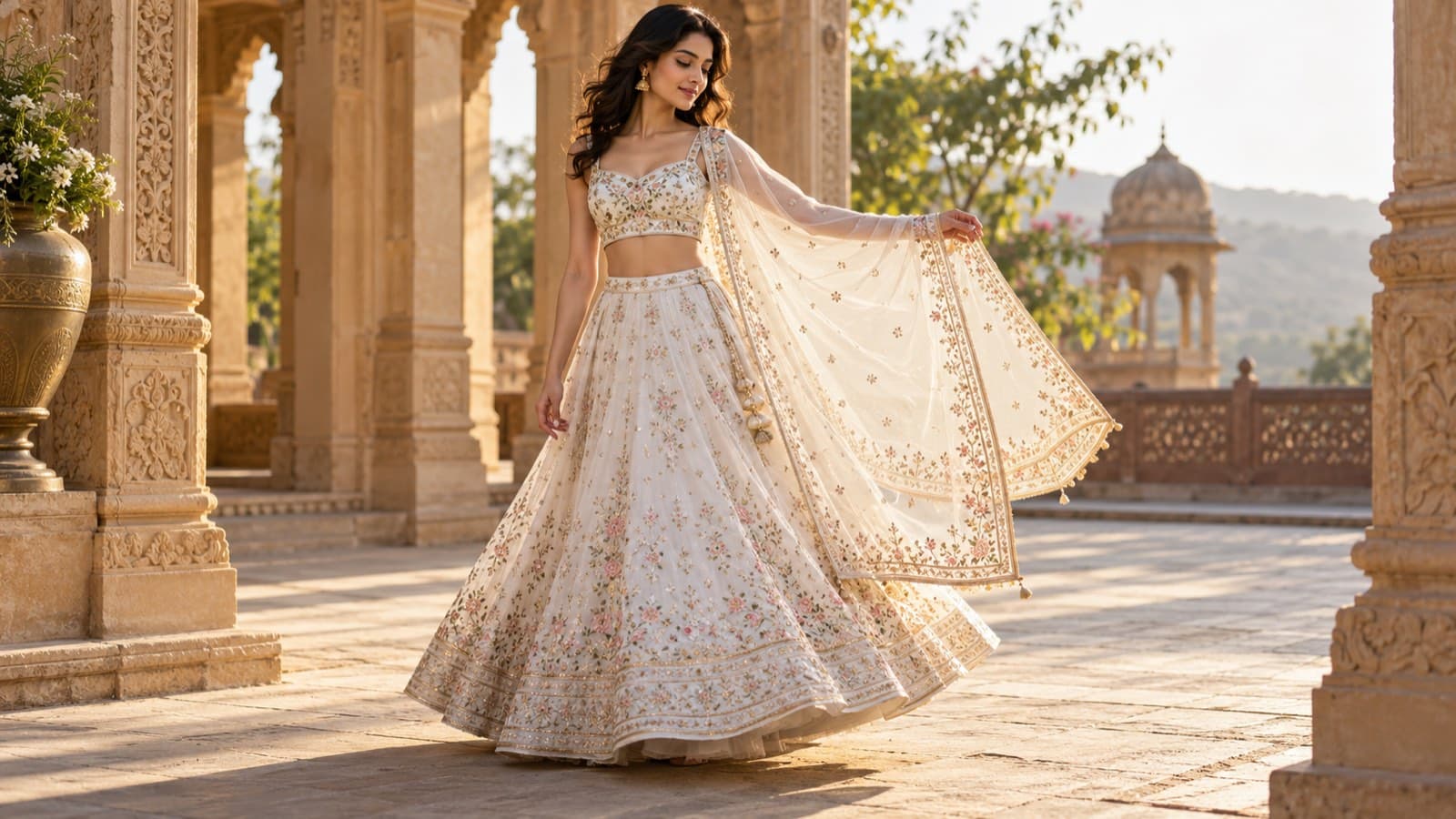
A women's lehenga choli and dupatta set is a three-piece outfit: a flared lehenga skirt, a fitted choli (a blouse or crop top) and a dupatta, sold together so the colours and work match. In most sets the dupatta is a separate piece that you drape and pin yourself. A lehenga choli with an attached dupatta has the dupatta stitched to the skirt waist or the choli shoulder, so it stays put but offers only one drape. Choose a separate dupatta if you want to restyle the set; choose attached if you want a no-fuss look for a long, busy function.
Key takeaways
- A lehenga choli set has three pieces: the lehenga skirt, the choli or crop top, and a matching dupatta.
- An attached dupatta is sewn to the skirt or the blouse, so it cannot slip, but it gives you one fixed drape.
- A separate dupatta takes a few minutes and some safety pins, but you can change the drape or take it off.
- Every lehenga set in stock at Tussra right now comes with a separate dupatta, priced from ₹3,886 to ₹20,387.
- A ready-to-wear lehenga is pre-stitched, so you only need to check your size on the listing and the size chart.
- Petite frames look taller in a lighter dupatta draped over one shoulder; tall frames carry a wide, open drape.
What comes in a lehenga choli and dupatta set?
A standard set has three pieces that are made to be worn together:
- The lehenga. A long, flared skirt that sits at the waist, usually closed with a drawstring, a hook or a zip. The amount of flare depends on how many panels or how much gathering the skirt has.
- The choli. The fitted top. It can be a traditional blouse with sleeves, a sleeveless blouse or a cropped top that shows a little more of the waist.
- The dupatta. A long stole, usually in a lighter fabric than the skirt, with a border or work that echoes the lehenga.
"Ready to wear" on a listing means the lehenga and blouse are already stitched to standard sizes. You do not need a tailor, though you may still want a small alteration at the waist or hem. Each of the in-stock sets below is listed in one size, so read the size in the title before you add it to your bag and compare it with the size chart.
Lehenga choli with attached dupatta vs separate dupatta
The term "attached dupatta" covers two constructions. In one, the dupatta is stitched into the waistband of the lehenga and you take the free end over your shoulder. In the other, it is stitched to the back or shoulder of the choli and falls like a cape or a pallu. Both stay in place without pins.
| Attached dupatta | Separate dupatta | |
|---|---|---|
| Getting ready | Fast; no pinning | Takes a few minutes and 3–5 safety pins |
| Stays in place | Yes, all evening | Only as well as it is pinned |
| Drape options | One, fixed by the stitching | Many: one shoulder, both shoulders, cape, head cover |
| Dancing | Nothing to lose or trip on | Pin it tightly or tie it at the waist |
| Taking it off | Not possible | Easy, for dinner or a long drive |
| Re-wearing the pieces | The skirt or choli carries the dupatta with it | Skirt, choli and dupatta each work alone |
| Head cover for a puja or the pheras | Usually not possible | Easy |
| Best for | Sangeet, cocktail, a long party | Weddings, pujas, several functions |
A separate dupatta is the more flexible choice for most women, because the same set can look different at two functions. An attached dupatta makes sense when you will be on your feet for hours, dancing, or getting ready in a hurry.
If you love the look of an attached drape but own a separate dupatta, you can fake it: pleat one end, pin it firmly at the left waist under the choli hem, and pin the other end at the shoulder. It will hold almost as well.
How to choose a lehenga set by occasion
The occasion decides how much work the set should carry and how heavy the dupatta can be.
| Occasion | What to look for | Dupatta |
|---|---|---|
| Puja or small family function | Thread work or print, a lighter skirt | Light; over one shoulder or as a head cover |
| Mehendi or haldi | Bright colour, cotton or light fabrics, a skirt that sits comfortably on the floor | Tied or pinned so it stays out of the mehendi |
| Sangeet | A skirt with movement, a fitted crop top or blouse | Pinned tightly, or tied across the body |
| Wedding ceremony | Richer work: sequins, embellishment, foil print | Fuller drape, often over the head for the pheras |
| Reception or cocktail | Sequins or a light, glossy fabric | Cape drape or a single shoulder |
For a home puja or a small get-together, our guide to styling a lehenga choli for a small function covers how to tone a set down.
How to choose by fabric
Fabric decides how the lehenga moves, how warm it is and how easy it is to look after.
- Viscose rayon is soft and drapes close to the body, with a gentle sheen. It is comfortable for a long function and lighter than silk.
- Georgette is light and floaty, so the skirt swings when you walk and the dupatta is easy to pin.
- Net and organza are sheer and crisp. They make a dupatta look fuller but can slip, so they need more pins.
- Silk and silk blends feel richer and hold embroidery well, but they are heavier and warmer.
Heavily sequinned or embellished lehengas weigh more, so pair them with a lighter dupatta to keep the outfit comfortable. To keep work looking new, read our guide to caring for embroidery and sequins.
How to choose by height
If you are petite, look for a lehenga with vertical panels or work that runs up and down rather than one heavy border at the hem. A crop top or short blouse with a high-waisted skirt lengthens the leg. Drape the dupatta over one shoulder so it falls in a single long line, and wear a small heel so the hem just clears the floor.
If you are tall, you can carry a wide flare, a heavy border and an open drape across both shoulders. A cape drape or a dupatta worn around the elbows suits a long frame. Check the skirt length in the listing, because a standard length can sit above the ankle on a tall frame.
For every height, the hem should brush the top of your footwear. Try the lehenga on with the shoes you will wear.
Dupatta drapes that suit a lehenga
You do not need to learn many drapes. These four cover almost every lehenga occasion:
- One shoulder. Pleat the dupatta lengthwise and pin it at the left shoulder, letting the back fall long. It shows off the choli and suits petite frames.
- Front and shoulder. Tuck one end into the left side of the lehenga waist, bring it across the front and pin it on the left shoulder. This is the closest to an attached-dupatta look and stays put while you move.
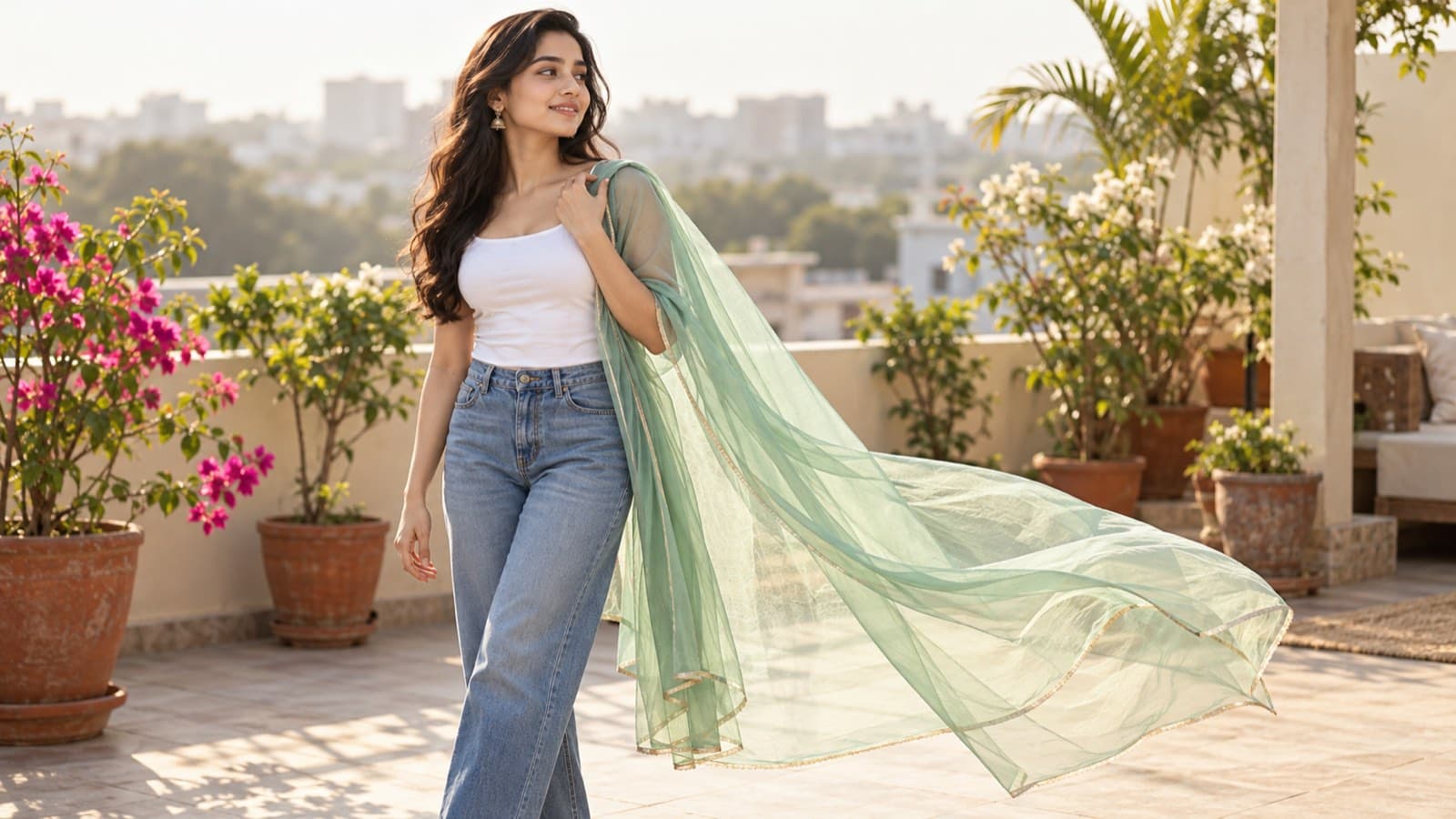
- Cape. Drop the dupatta over both shoulders so it hangs down the back, and pin it at each shoulder. It is modern and easy to dance in.
- Head cover. Pin the centre of the dupatta to your hair with a U-pin and let the sides fall over your arms. Use it for a puja, the pheras or a gurudwara visit.
For step-by-step instructions on these and four more, see how to drape a dupatta, 8 ways.
Lehenga choli and dupatta sets in stock
All of these sets come with a separate dupatta, and each listing is for the size shown.
Lehenga sets for a puja, mehendi or family function:
- The pink embroidered thread work lehenga and blouse with dupatta is ready to wear, at ₹3,886 in size XS.
- The olive embellished thread work lehenga and blouse with dupatta is ₹6,587 in size S, a quieter colour that suits a day function.
- The red foil print lehenga and blouse with dupatta is ₹6,637 in size S, and red is a natural choice for a wedding or Karwa Chauth.
White lehenga sets for a sangeet, reception or cocktail:
- The white peacock embroidered lehenga with crop top and dupatta is viscose rayon, at ₹17,999 in size 36.
- The white embroidered and printed crop top, lehenga skirt and dupatta set is viscose rayon, at ₹17,999 in size 30.
- The white printed thread work lehenga and blouse with dupatta is ready to wear, at ₹20,387 in size S.
- The white sequinned lehenga and blouse with dupatta is the most dressed-up of the range, at ₹20,387 in size XS.
Browse the full lehenga choli collection. Shipping is free over ₹799, and you have 7-day returns if the fit is not right.
Related guides
- Saree vs Lehenga vs Kurta Set for a Wedding Guest: Which to Choose
- How to Choose a Kurta Set for Your Body Shape
- How to Repeat Outfits at a Wedding: One Kurta Set, Three Looks
Frequently asked questions
What is included in a lehenga choli and dupatta set?
A set includes the lehenga skirt, the choli (a blouse or crop top) and a matching dupatta. In a ready-to-wear set, the skirt and blouse are already stitched, so you can wear them without a tailor.
What is a lehenga choli with attached dupatta?
It is a lehenga set where the dupatta is sewn to the skirt waist or to the shoulder or back of the choli. It stays in place without pins, but you cannot change the drape or take the dupatta off.
Is an attached or separate dupatta better for a lehenga?
A separate dupatta is better if you want to restyle the set, cover your head for a ceremony or re-wear the pieces. An attached dupatta is better for a long evening of dancing when you do not want to re-pin anything.
How do I keep a lehenga dupatta from slipping?
Pleat the dupatta lengthwise before pinning, use three to five safety pins, and pin through the choli strap or blouse seam rather than the fabric alone. Tucking one end into the lehenga waist also anchors it.
Which dupatta drape is best for a short height?
A single-shoulder drape, pleated narrow and falling straight down the back, creates one long line and makes a petite frame look taller. Avoid wide drapes across both arms, which shorten the silhouette.