How to Iron and Steam a Kurta Set Without Damaging Embroidery
Heat settings by fabric, the press-cloth and inside-out method, and when to steam instead of iron, so embroidery, sequins and gota stay intact.
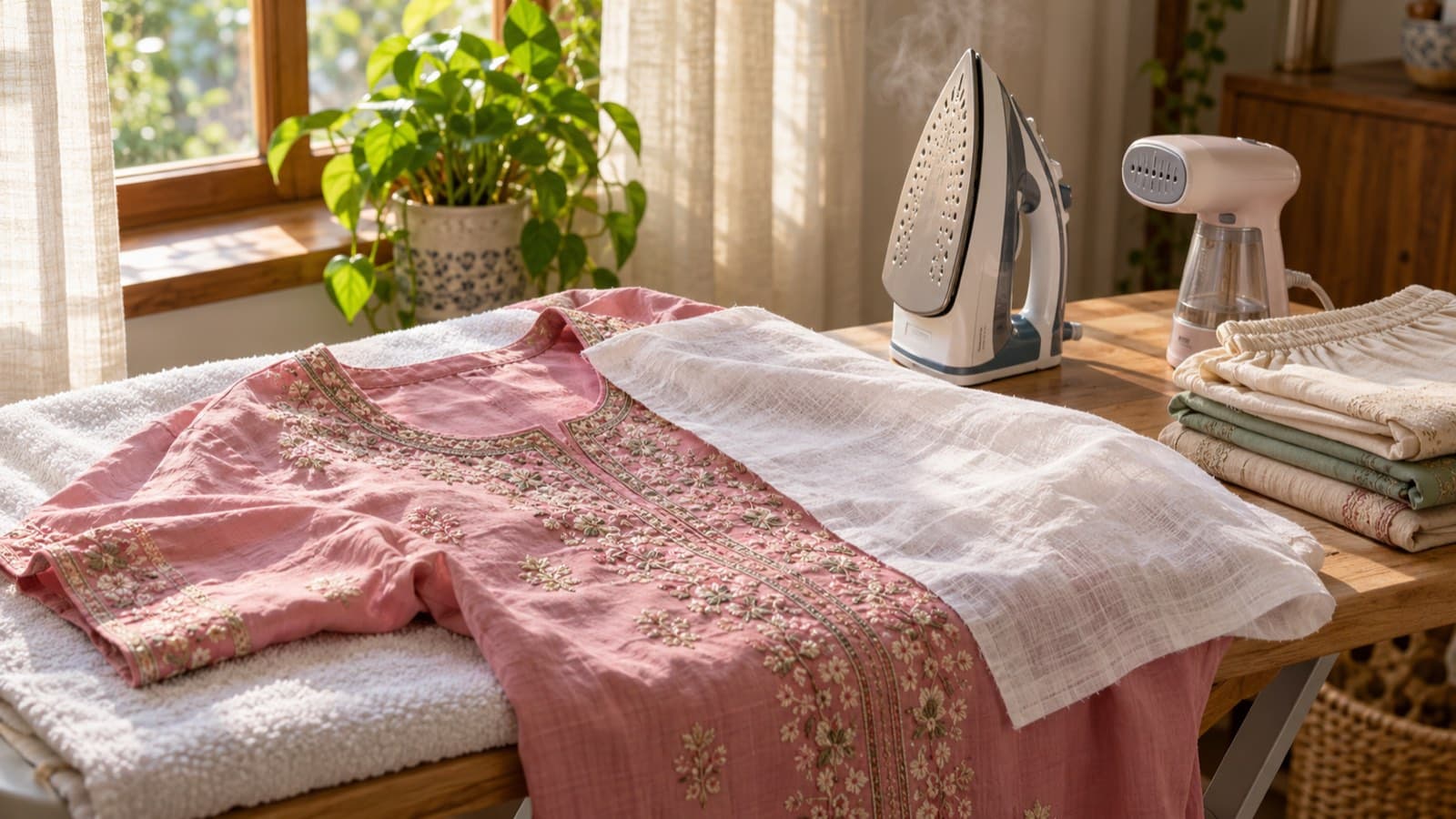
To iron a kurta set without damaging the embroidery, turn it inside out, set the iron to the lowest heat that suits the fabric, lay a thin cotton press cloth over the work, and press down and lift rather than sliding the iron across. Lay the embroidered area face down on a folded towel so the stitches keep their raised shape. For sequins, mirror work, gota patti and delicate fabrics like organza or georgette, a garment steamer held a few centimetres away is safer than an iron.
Key takeaways
- Always iron an embroidered kurta inside out, with the embroidery face down on a thick folded towel.
- Use a thin cotton press cloth between the iron and the fabric on silk, organza, satin, georgette and any embellished area.
- Press and lift; never slide a hot iron over embroidery, sequins or gota, which can snag, flatten or melt.
- Sequins and mirror work should never touch an iron directly; steam around them instead.
- A garment steamer is gentler than an iron for organza, georgette, chiffon and heavily embellished kurtas.
- The care label overrides any general heat guide; test on an inside seam first.
Iron heat by fabric: the quick-reference table
This is general guidance. Every iron's settings differ, and the care label on your kurta set always comes first. When in doubt, start low and go up one step.
| Fabric | Iron heat | Steam? | Press cloth? | Notes |
|---|---|---|---|---|
| Pure cotton | Medium to high | Yes | Only over embroidery | Iron while slightly damp for the crispest finish |
| Cotton blend | Medium | Yes | Over embroidery | Blends with polyester can shine at high heat |
| Chanderi cotton / chanderi silk | Low to medium | Light | Yes | Fine weave; press, do not drag |
| Silk blend / dupion silk | Low | No, or steamer only | Yes | Water drops can leave marks on silk; iron dry, inside out |
| Silk crepe / crepe | Low | Light | Yes | Too much heat or pressure flattens the texture |
| Georgette / chiffon | Low | Steamer preferred | Yes | Sheer and heat-sensitive; steaming is safer |
| Organza | Lowest | Steamer preferred | Always | Can pucker or melt; never iron directly |
| Satin / poly satin | Low | Light | Yes | Iron inside out to avoid shiny patches |
| Viscose / rayon / modal | Low to medium | Light | Yes | Iron while slightly damp; can shrink with high heat |
| Tissue | Lowest | Steamer only | Always | Metallic threads tarnish and flatten easily |
How to iron an embroidered kurta, step by step
- Check the label. Note the fabric and any "do not iron" or "dry clean only" instruction.
- Turn the kurta inside out. The back of the embroidery takes the heat instead of the front.
- Pad the board. Fold a thick bath towel in half and lay it on the ironing board. Place the embroidered part face down on the towel so the stitches sink into it rather than being crushed flat.
- Set the heat low. Start at the lowest setting your fabric allows and test on an inside seam.
- Add a press cloth. A thin, clean cotton cloth, such as an old dupatta or a cotton handkerchief, over the area you are pressing. Dampen it slightly for cotton; keep it dry for silk.
- Press and lift. Put the iron down, hold for two or three seconds, lift and move. Sliding drags embroidery threads and can catch on sequins.
- Iron the plain areas normally. Sleeves, side panels and the hem can be pressed with gentle strokes once you are past the work.
- Hang it immediately. Let the kurta cool on a hanger for ten minutes before wearing so creases do not set back in.
Embroidered kurta sets that need this method:
- The white thread-work chanderi silk kurta with trousers at ₹1,950 should be pressed inside out at low heat with a dry press cloth.
- The pink gotta patti silk crepe kurta with patiala and dupatta at ₹2,500 has metallic gota that is best steamed, not ironed.
How to iron a kurta with sequins, mirror work or gota patti
Embellishment needs the most care. Sequins are often plastic and can curl or melt under a hot iron. Mirror pieces can crack, and the threads holding them can loosen. Gota patti and zari are metallic and can flatten, tarnish or lose their shine with direct heat.
- Never let the iron touch embellishment directly, even through a press cloth if the heat is above low.
- Iron around it. Press the plain fabric right up to the edge of the work from the inside, and leave the embellished panel itself to the steamer.
- Steam from the inside. Hold the steamer against the reverse of the panel so the creases relax without the embellishment getting hot and wet.
- Smooth by hand. After steaming, gently pull the fabric flat with your fingers and let it cool.
Embellished kurta sets in stock:
- The lavender embroidered sequinned georgette kurta with trousers and dupatta at ₹1,533 is a case for steaming only on the sequinned areas.
- The pink mirror work dupion silk kurta with trousers and dupatta at ₹5,999 should be pressed around the mirror work, never over it.
For washing and storing embellished pieces, see our guide on caring for embroidery and sequins.
Steaming vs ironing a kurta set: which is better?
| Steaming | Ironing | |
|---|---|---|
| Best for | Organza, georgette, chiffon, tissue, sequins, mirror work, dupattas | Cotton, cotton blend, linen-like weaves, plain trousers and palazzos |
| Finish | Relaxed, soft; removes creases without sharp lines | Crisp, flat; sets pleats and edges |
| Risk to embroidery | Low, if kept a few centimetres away | Higher; heat and pressure can flatten or melt |
| Speed | Fast on a hanger | Slower, but sharper on cotton |
| Water marks | Can spot silk if it drips; keep the head moving | Less risk if ironed dry |
Most kurta sets do best with both: steam the kurta and dupatta, and iron the cotton trousers or palazzos for a crisp line.
How to steam a kurta set: hang it on a padded hanger, hold the fabric taut at the hem with one hand, and move the steamer head slowly from top to bottom a few centimetres from the fabric. Steam heavy embellishment from the inside. Let it dry fully before you wear or store it.
- The sea green embroidered organza kurta with palazzos and organza dupatta at ₹1,999 is the kind of piece that should only ever be steamed.
How to iron a cotton kurta set
Plain and printed cotton is the easiest to iron, and the only fabric here that takes medium to high heat. Iron it while it is still slightly damp from the wash, inside out to protect the print, and steam on. Press any embroidered yoke or neckline through a damp press cloth.
- The off white floral printed pure cotton kurta with trousers at ₹1,189 is an everyday set that irons crisply at cotton heat.
Our guide on washing a cotton kurta without fading covers the steps before the iron. For what each fabric is, see the kurta material guide.
How to iron a dupatta and palazzos
- Dupatta: fold it lengthwise in half and press in sections, working away from any embroidered border. For organza or chiffon, steam it on a hanger instead.
- Palazzos and trousers: iron inside out, legs flat, pressing a centre crease only on straight trousers. Pleated palazzos should be steamed so the pleats fall naturally.
- Sharara: steam it hanging up; the volume makes ironing awkward and creases the flare.
Common ironing mistakes that damage kurtas
- Ironing embroidery face up, which crushes the stitches flat.
- Using steam on silk without a press cloth, which can leave water spots.
- Sliding the iron over sequins or gota.
- Starting at high heat and testing on the front of the kurta.
- Folding the kurta while it is still warm, which sets new creases.
Related guides
- Saree vs Lehenga vs Kurta Set for a Wedding Guest: Which to Choose
- What to Wear to a Job Interview in a Kurta Set: Do's and Don'ts
- Kurta Set Colour Combinations That Always Work (Pairing Table)
Frequently asked questions
Can I iron directly on embroidery?
It is better not to. Turn the kurta inside out, place the embroidery face down on a folded towel and press through a thin cotton cloth at low heat. This keeps the stitches raised and protects them from heat damage.
Is it better to steam or iron an embroidered kurta?
For delicate fabrics and embellishment, steaming is safer because nothing presses on the work. Ironing gives a crisper result on cotton. Many kurta sets do best with the kurta and dupatta steamed and the trousers ironed.
What temperature should I iron a silk kurta at?
Use the low or silk setting on your iron, with the kurta inside out and a dry press cloth on top. Avoid spraying water on silk, as drops can leave marks. Always test on an inside seam first and follow the care label.
How do I remove creases from an organza kurta?
Steam it on a hanger, holding the steamer a few centimetres away and moving it slowly. If you must iron, use the lowest setting, inside out, through a press cloth, and press briefly without sliding.
Can you iron sequins on a kurta?
No. Sequins are often plastic and can curl or melt under heat. Iron the plain fabric around them from the inside, and use a steamer on the reverse of the sequinned panel to relax creases.