PU Bags vs Leather vs Canvas: What PU Is, Durability & Care
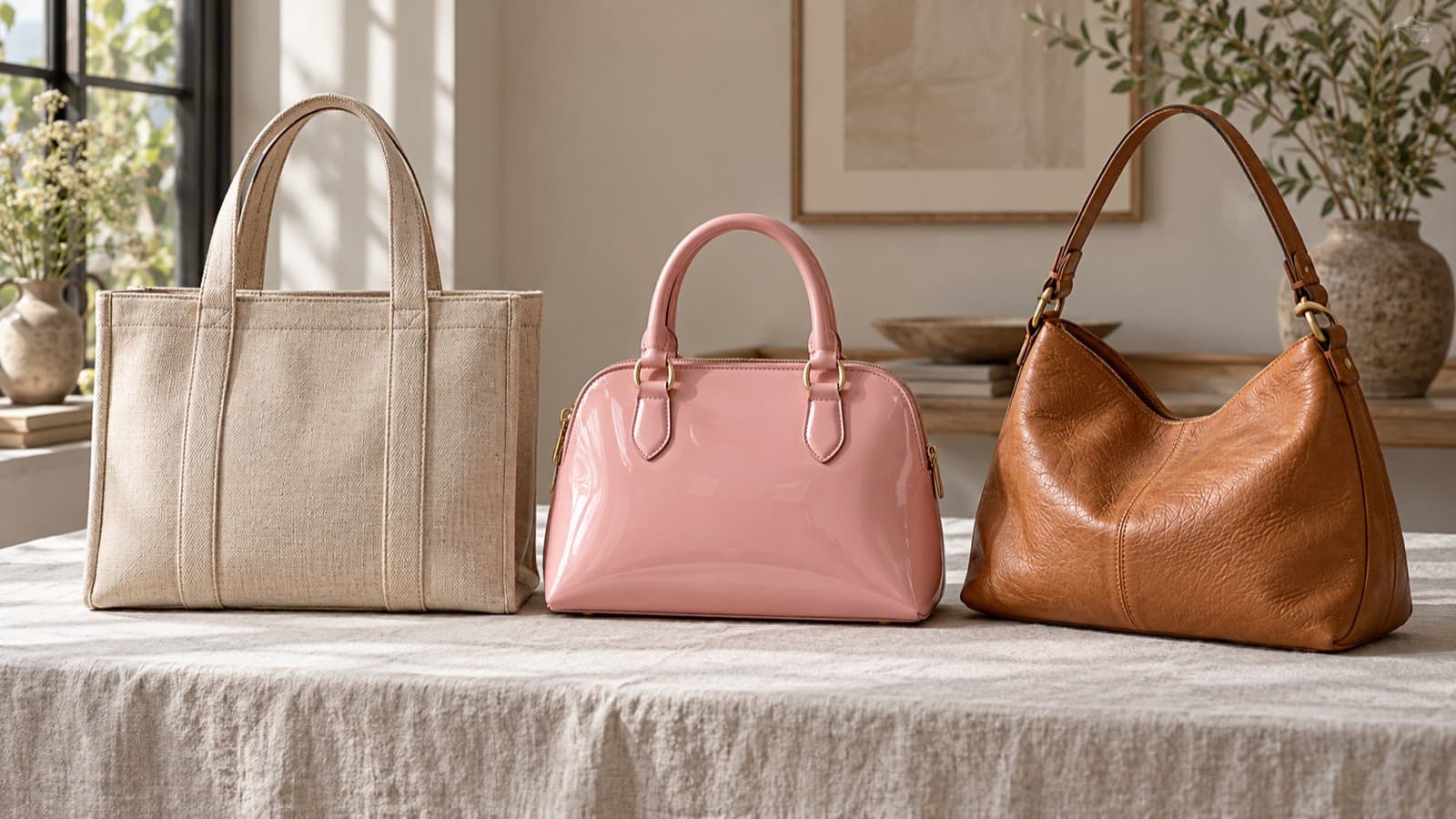
What PU material in bags actually is, how long a PU bag lasts, how to tell it from genuine leather, and where canvas beats both, compared side by side in one table.
PU (polyurethane) is a plastic coating spread over a fabric backing, usually polyester or cotton, and embossed to look and feel like leather. PU bags are light, affordable and easy to wipe clean, but the coating cracks with age and cannot be repaired. Canvas is a strong woven fabric that suits heavy everyday loads but stains and absorbs water. Genuine leather costs the most and weighs more, but it lasts the longest and improves with care.
Key takeaways
- PU in bags means polyurethane: a thin plastic coating on a polyester or cotton fabric base, sold as faux leather, vegan leather or PU leather.
- A PU bag typically lasts around two to three years of regular daily use, and longer if it is carried occasionally and stored cool and dry.
- PU fails by cracking and peeling at fold lines, handle joins and corners, and once it peels it cannot be repaired.
- Genuine leather shows irregular grain, fibrous suede-like edges and a leathery smell; PU shows a repeated pore pattern and a woven fabric backing at the edges.
- Canvas is the toughest of the three for heavy loads such as books and laptops, but it absorbs water and stains.
- Genuine leather is the only one of the three that can be reconditioned, and with care it can last ten years or more.
What is PU material in bags?
PU stands for polyurethane, a type of plastic polymer. In a PU bag, a thin layer of polyurethane is coated or laminated onto a fabric base, usually a woven or knitted polyester, sometimes cotton. The surface is then embossed with a grain and coloured, so the finished material looks like leather from the outside.
So if you are asking which material is PU in bags, the answer is: it is the outer, leather-look surface. Under it is ordinary fabric, which you can usually see at a cut edge or inside a seam allowance.
You will see PU sold under several names:
- PU leather or PU bag: the most precise label; the outer surface is polyurethane.
- Faux leather: an umbrella term for any synthetic leather look. It is usually PU, sometimes PVC.
- Vegan leather: a marketing term for leather made without animal hide. On everyday handbags it is almost always PU.
- Synthetic leather or leatherette: also umbrella terms for PU or PVC.
Faux leather vs PU: are they the same?
Not exactly. PU is one kind of faux leather. The other common kind is PVC (polyvinyl chloride), which is stiffer, shinier and less breathable. Among synthetic bag materials, PU is generally the softer, more flexible and more leather-like of the two, which is why most fashion handbags use it. If a label just says "faux leather", check the product page for the exact material.
Is PU leather good quality?
PU is good quality for what it is: a light, colourful, low-maintenance material at a fraction of the price of real leather. Quality varies with the thickness of the coating and the strength of the fabric behind it. A well-made PU bag has neat, evenly stitched seams, a firm handle join and no visible bubbling or thin patches on the surface.
PU vs leather vs canvas: the comparison table
| PU | Canvas | Genuine leather | |
|---|---|---|---|
| What it is | A fabric base coated with polyurethane to look like leather | A tightly woven cotton or cotton-poly fabric | Tanned animal hide |
| Typical lifespan | Around 2–3 years of daily use; longer with light use | Several years; frays slowly at corners | 10 years or more with care |
| How it ages | Cracks or peels; does not improve | Softens and fades | Softens and develops a patina |
| Weight | Light | Light to medium | The heaviest |
| In the rain | Shrugs off a light shower; wipe it dry | Absorbs water and can stain | Marks if soaked; dry it slowly |
| Cleaning | Wipe with a dry or barely damp cloth | Spot clean; some can be hand washed | Wipe, then condition once or twice a year |
| Shape | Holds a structured shape well | Soft; slouches unless lined | Holds shape and softens with use |
| Can it be repaired? | No, once the coating peels | Seams and straps, yes | Yes; can be reconditioned |
| Price on Tussra | About ₹1,250 to ₹3,200 for bags | About ₹1,150 to ₹2,750 | ₹3,999 to ₹6,999 for HODI slings and totes |
| Best for | Work totes, occasion bags, trend colours | College, travel, daily commutes | A bag you plan to carry for years |
Prices are for bags in stock at the time of writing.
PU vs genuine leather: how to tell
Use this checklist in a shop or when a bag arrives. No single sign is conclusive, so check three or four.
- Read the label and the product page. The material is listed on every bag's product page on Tussra. "PU", "faux leather", "vegan leather" and "synthetic" all mean the bag is not genuine leather.
- Look at a cut edge. Genuine leather edges look dense and fibrous, or are painted and smoothed. PU edges often show a thin coating sitting on top of a woven or knitted fabric.
- Look at the back of the material. Inside a pocket or seam, leather has a suede-like, fuzzy underside. PU shows fabric.
- Study the grain. Real leather grain is irregular, with pores of different sizes and the odd small mark. A perfectly repeated pattern of pores usually means an embossed coating.
- Press and bend it. Leather wrinkles and creases naturally under your thumb, and the creases soften when you let go. PU tends to dimple evenly or spring straight back.
- Smell it. Leather has a distinctive, slightly earthy smell. PU smells faintly of plastic or of nothing at all.
- Feel the temperature. Leather warms quickly in your hand. PU stays cooler and smoother for longer.
- Check the price. A full-size bag sold as genuine leather at a PU price deserves a closer look at the label.
Avoid the "burn test" you may read about online. It damages the bag and tells you little that the checks above do not.
How long does a PU bag last?
A PU bag typically lasts around two to three years of regular daily use. A bag carried once or twice a week, or kept for occasions, can last considerably longer. The failure is almost always the same: the coating cracks along fold lines and handle joins, then begins to flake.
Three things decide how quickly that happens:
- Heat and sun. Car dashboards, window sills and hot cupboards dry out the coating.
- Damp. Long storage in a humid room or inside a plastic cover weakens the bond between the coating and the fabric.
- Flexing. The same crease bent every day, such as a soft bag folded in half, cracks first.
Caring for PU: wipe it with a clean, dry or barely damp cloth, as the care label on most PU bags advises. Do not use leather conditioner, alcohol or solvent cleaners. Keep it away from heaters and never store it inside a plastic cover.
PU bags in stock:
- The pink PU structured tote bag at ₹2,459 has a zip closure, two handles and multiple inner pockets.
- The black colourblocked PU structured tote bag at ₹2,459 is a structured work tote that holds its shape on a desk.
- The brown PU bucket sling bag with quilting at ₹2,103 has a drawstring closure and an adjustable strap.
Canvas bags: durability and care
Canvas is a tightly woven fabric, usually cotton or a cotton-poly blend. It carries weight without complaint and does not crack the way PU does.
Canvas does stain, it absorbs water, and it will not hold a rigid shape unless it is lined or structured. That makes it best for totes, slings and backpacks rather than formal evening bags.
Caring for canvas: brush off dust and spot clean marks with a damp cloth and a little mild soap in cool or lukewarm water, around 30°C. Dry it in the shade, not in direct sun, which fades colour. Check the care label before you wash a whole bag, since structured canvas bags can lose their shape in water.
Canvas bags in stock:
- The beige floral printed canvas structured tote at ₹2,459 has a zip closure for everyday errands.
- The beige colourblocked canvas sling bag at ₹1,218 has two external pockets and an adjustable strap.
- The olive canvas oversized sling bag at ₹1,471 has two main compartments and a detachable sling strap.
Genuine leather bags: durability and care
Genuine leather is tanned animal hide. It is heavier and more expensive than PU or canvas, and it is the only one of the three that improves with age: the surface develops a patina, and a well-made leather bag can be repaired and reconditioned.
It does need a little care. Keep it out of direct heat, condition it once or twice a year with a leather cream, and if it gets soaked, let it dry slowly at room temperature, never next to a heater or in the sun.
Leather bags in stock: the HODI range on Tussra is listed as genuine leather with a snake-print foil finish and a faux suede lining.
- The blue snake-print leather box sling bag at ₹3,999 is a compact sling with a top zip.
- The olive snake-print leather tote at ₹5,999 is a larger everyday tote.
Which material should you buy?
- College, travel, a heavy daily load: canvas, or a sturdy backpack. Our guide to the best bag for college compares the shapes.
- Office, with a laptop: a structured PU tote, which holds its shape and wipes clean, or a backpack that works at work.
- Occasions and trend colours: PU. The money goes further on design, and the bag will not see daily wear.
- One bag to carry for years: genuine leather, looked after.
Browse handbags, sling and cross-body bags and hobos and shoulder bags. Each shelf has a material filter, so you can see what is in stock in PU, canvas or leather. Our guide to choosing a handbag you will actually carry covers size and shape.
Making any bag last longer
- Empty it before storing it. A loaded bag deforms in a cupboard.
- Stuff it lightly with paper or cloth so it keeps its shape.
- Store it upright, out of sunlight, in a breathable dust bag rather than plastic.
Shipping is free over ₹799, and you have 7-day returns if the material is not what you expected.
Related guides
- How to Clean a PU Leather Bag (and Store It So It Won't Peel)
- Destination Wedding Packing List: Outfits and Bags for Every Function
- Types of Wallets for Women: Which One Fits Your Cards and Cash
Frequently asked questions
What is PU material in bags?
PU is polyurethane, a plastic coating applied over a fabric base such as polyester and embossed to look like leather. It is the outer, leather-look surface of the bag. It is also sold as faux leather, vegan leather or PU leather.
Is PU leather good quality?
PU is good value for a light, low-maintenance bag in fashion colours, and a well-made one has neat stitching and an even surface. It is not as durable as genuine leather, because the coating eventually cracks and cannot be repaired.
How long does a PU bag last?
A PU bag typically lasts around two to three years of regular daily use, and longer if it is carried occasionally. Keeping it away from heat, sun and damp, and storing it in a breathable dust bag, slows down cracking.
What is the difference between PU and genuine leather?
PU is a synthetic coating on fabric; genuine leather is tanned animal hide. Leather is heavier, costs more, can be repaired and improves with age, while PU is lighter, cheaper and easier to clean but cracks with time.
Is faux leather the same as PU?
Faux leather is a general term for any leather-look synthetic. Most faux leather bags are PU, but some are PVC, which is stiffer and shinier. The product page or label tells you which one it is.
How can I identify a genuine leather bag?
Check the label first, then look at a cut edge and the underside of the material. Genuine leather has fibrous edges, a suede-like back and an irregular grain, while PU shows a fabric backing and an evenly repeated pore pattern.